

What Is an October Birthstone Necklace, and Which Stone Is Right for You?
An oct birthstone necklace features one of two stunning gemstones: opal or pink tourmaline. Here's a quick overview:
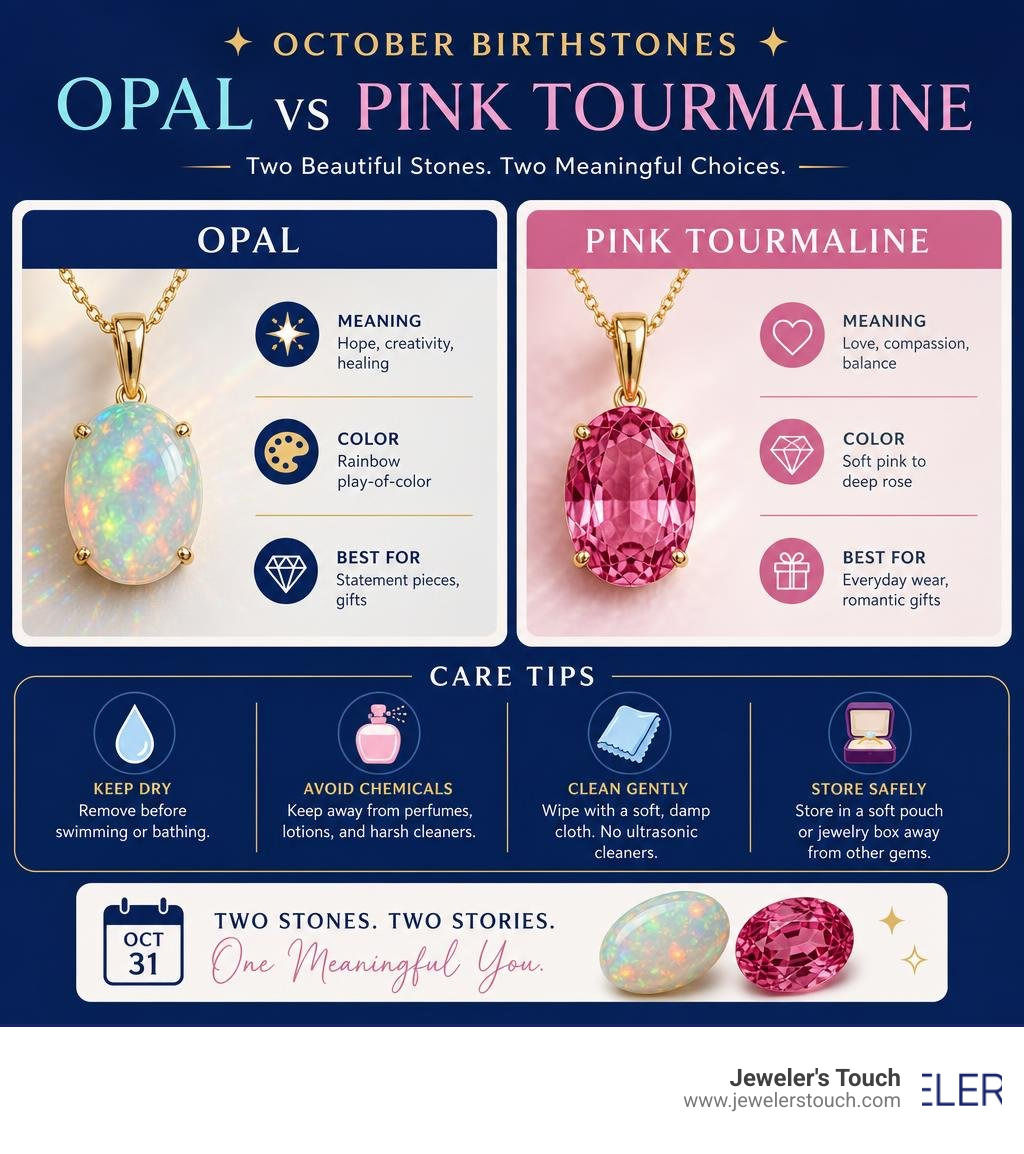
| Gemstone | Color | Meaning | Best For |
|---|---|---|---|
| Opal | Rainbow play-of-color | Hope, creativity, healing | Statement pieces, gifts |
| Pink Tourmaline | Soft pink to deep rose | Love, compassion, balance | Everyday wear, romantic gifts |
| Rose Quartz | Pale pink | Unconditional love | Soft, romantic styles |
| Pink Sapphire | Vivid pink | Wisdom, loyalty | Durable daily wear |
Opal is the traditional October birthstone. Its signature shimmer comes from light refracting off tiny silica structures inside the stone, creating a rainbow-like "play-of-color" that no other gem can match. Pink tourmaline is the modern alternative, loved for its rich pink tones and emotional symbolism.
Both stones are available in necklace styles ranging from simple solitaire pendants to diamond halo designs, in metals like 14K gold, sterling silver, and gold vermeil, with prices to fit nearly every budget.
I'm Ken Rutz from Jeweler's Touch, a fine jewelry specialist with decades of experience helping customers find the perfect oct birthstone necklace for gifts, personal milestones, and custom designs. Let's walk through everything you need to know to choose the right one.
Choosing the Perfect Oct Birthstone Necklace

When you set out to buy an oct birthstone necklace, you are not just purchasing a beautiful piece of jewelry; you are choosing a wearable work of art steeped in centuries of folklore, magic, and symbolism. Whether you are celebrating an October birthday, honoring a loved one, or treating yourself in 2026, finding the right piece requires balancing personal style with the unique properties of these gemstones.
For centuries, October’s gems have been celebrated for their deep symbolic meanings. Opal, with its flashing play-of-color, has historically been associated with hope, purity, truth, and creativity. Ancient civilizations believed opals fell from the heavens in flashes of lightning, carrying the colors of the rainbow. Meanwhile, pink tourmaline represents emotional healing, compassion, self-love, and peace. It is often referred to as a stone of the heart, helping to dissolve old emotional wounds and promote a sense of calm.
For a deeper dive into how these two stunning gems compare, take a look at our comprehensive October Birthstone Guide: Opal & Tourmaline. If you are looking to align your jewelry with your astrological chart, you can also explore our October Birthstone Zodiac Guide: Finding Your Cosmic Gemstone Match to discover how Libra and Scorpio energies connect with these beautiful stones.
Selecting the Best Gemstone for Your Oct Birthstone Necklace
While opal and pink tourmaline are the most widely recognized options, modern jewelry lovers actually have a few different directions they can go. Let's break down the primary choices for an oct birthstone necklace:
- Traditional Opal: The undisputed king of color play. Natural opals display a shifting spectrum of hues that dance across the surface when caught by the light. If you love unique, eye-catching jewelry where no two stones are identical, opal is your perfect match.
- Pink Tourmaline: Known for its incredible clarity and rich, saturated pinks ranging from pastel blush to deep, dramatic cranberry. Tourmaline is significantly more durable than opal, making it an excellent candidate for daily wear.
- Rose Quartz: A soft, translucent, pastel-pink gemstone that radiates gentle, soothing energy. It is an affordable and romantic alternative that pairs beautifully with casual outfits.
- Pink Sapphire: For those who want maximum brilliance, durability, and luxury, pink sapphire offers a vivid, sparkling pink hue that stands the test of time.
To understand how these different options came to define the month of October, you can read our guide on the October Birthstone Color. Additionally, the Gemological Institute of America offers an excellent traditional October birthstone guide detailing the historical background of these stones.
Styling and Layering Your Oct Birthstone Necklace
An oct birthstone necklace is incredibly versatile, but how you style it depends on the design of the pendant and the neckline of your outfit.
If you prefer a minimalist look, a delicate solitaire pendant on a thin 14K gold chain sits beautifully right at the collarbone. For a bolder fashion statement, try layering your birthstone necklace with multiple chains of varying lengths and textures. A 16-inch delicate opal pendant pairs beautifully with an 18-inch gold paperclip chain and a 20-inch textured medallion.
When styling your necklace, always keep your clothing's neckline in mind. A V-neck or scoop-neck top provides the perfect frame for a drop pendant, while a crew neck looks best with a slightly longer chain that allows the gemstone to sit on top of the fabric. For expert tips on finding the perfect fit, read our guide on How to Choose the Right Necklace. And if you are shopping for a milestone event, we have also created a specialized guide on How to Choose a Bridal Necklace for a V-Neck Wedding Dress.
Popular Jewelry Styles and Metal Settings

The design and metal setting of your oct birthstone necklace do more than just hold the gemstone in place—they define the entire aesthetic of the piece. Modern jewelers offer a wide range of designs to suit every personality, from vintage-inspired classics to sleek, contemporary silhouettes.
- Solitaire Pendants: A timeless style that lets the natural beauty of the opal or pink tourmaline take center stage. A simple four-prong or bezel setting is perfect for everyday wear and highlights the natural shape of the stone, whether it is an oval, pear, round, or emerald cut.
- Halo Designs: Surrounding your center October birthstone with a ring of sparkling white diamonds or white sapphires creates a dramatic, light-catching effect. Halo settings not only add brilliant sparkle but also provide a protective border around delicate stones like opals.
- Station Necklaces: Instead of a single hanging pendant, station necklaces feature multiple smaller gemstones spaced evenly along the chain. This style offers a modern, elegant look that is perfect for layering.
- Art Deco Style: Vintage-inspired designs featuring geometric shapes, milgrain detailing, and octagonal halos bring a touch of old-world glamour to your birthstone jewelry.
The choice of metal is equally important. Warm 14K yellow gold beautifully complements the fiery orange and red flashes within an opal, while also bringing out the rich warmth of pink tourmaline. Sterling silver and white gold offer a cool, crisp contrast that accentuates the blue and green play-of-color in opals. For a budget-friendly option that still offers the luxurious look of solid gold, gold vermeil (heavy gold plating over sterling silver) is an excellent choice.
If you are wondering which metal and stone combination will look best on you, check out our guide on How to Choose Gemstone Earrings to Match Your Skin Tone, which shares valuable color-matching principles that apply perfectly to necklaces as well.
Natural vs. Lab-Created Opals and Essential Care Tips
As you shop for an oct birthstone necklace, you will quickly notice that opals are offered in both natural and lab-created varieties. Understanding the differences between these two options is crucial for making an informed purchase that aligns with your budget, lifestyle, and values.
Natural opals are formed over millions of years as water trickles down through the earth, dissolving silica and depositing it into underground cavities. This slow, natural process results in a highly unique internal structure of microscopic silica spheres. When light passes through these spheres, it refracts to create the signature "play-of-color." Because they are rare and require extensive mining, high-quality natural opals carry a premium price tag.
Lab-created opals (also known as synthetic or grown opals) are chemically, physically, and optically identical to natural opals. They are grown in controlled laboratory environments that mimic the natural heat and pressure of the earth. Because they are grown under perfect conditions, lab-created opals often exhibit incredibly vibrant, consistent color patterns and are more structurally stable than natural opals, which are prone to microscopic fractures. They are also highly budget-friendly and have a significantly lower environmental impact.
| Feature | Natural Opal | Lab-Created Opal |
|---|---|---|
| Origin | Mined from the earth (primarily Australia, Ethiopia, Brazil) | Grown in controlled laboratory environments |
| Chemical Composition | Hydrated silica | Hydrated silica |
| Durability | Fragile (Mohs hardness 5.5 - 6.5); sensitive to temperature | Slightly more resilient; less prone to cracking |
| Price | Premium to luxury pricing based on color play | Highly affordable and accessible |
| Appearance | Highly unique, organic, and irregular patterns | Exceptionally vibrant, uniform play-of-color |
To learn more about the scientific properties of these unique stones, explore the GIA's detailed breakdown of opal gemstone properties. If you decide that opal is too delicate for your lifestyle, you can read about durable alternatives in their guide on alternative October birthstone options.
Cleaning and Storing Your Delicate Gemstones
Opals are unique among gemstones because they contain a significant amount of water (often between 3% and 10%). This makes them relatively soft—ranking at a 5.5 to 6.5 on the Mohs hardness scale—and highly sensitive to sudden changes in temperature, dehydration, and chemical exposure.
To keep your oct birthstone necklace looking as radiant as the day you bought it, follow these essential care rules:
- Clean gently: Never use harsh chemical jewelry cleaners, bleach, or baking soda. Instead, wipe your necklace with a soft, clean, damp cloth.
- Avoid ultrasonic cleaners: The high-frequency vibrations of ultrasonic and steam cleaners can cause natural opals to crack or shatter instantly.
- Store properly: Store your opal necklace in a soft fabric pouch or a separate compartment in your jewelry box. Keep it away from dry, hot environments (like direct sunlight or radiator vents) to prevent the stone from drying out and cracking—a process known as "crazing."
- Put it on last: Apply your perfume, hairspray, makeup, and lotions before putting on your necklace. The chemicals in these products can dull the polish of the gemstone and damage its color play.
For more lifestyle tips on wearing delicate jewelry, read our article on The Most Versatile Gemstones You Can Wear Everyday. If you live in or around Southern California, you can also find localized advice in our guide on Everything You Need to Know About Opal Birthstone Jewelry in Orange County.
Frequently Asked Questions About October Birthstone Jewelry
What is the traditional birthstone for October?
The traditional birthstone for October is opal. Known for its mesmerizing play-of-color, opal has been celebrated for centuries as a symbol of hope, creativity, and purity. In 1912, the National Association of Jewelers officially adopted opal as the primary birthstone for October, while pink tourmaline was later added as a modern alternative to offer a more durable, pink-hued option.
Can you wear an opal necklace every day?
Yes, but you must treat it with care. Because opals have a Mohs hardness rating of 5.5 to 6.5, they are much softer than diamonds or sapphires. We recommend taking your opal necklace off before exercising, swimming, showering, or sleeping. For a deeper understanding of opal care, read our dedicated article on the Opal Birthstone.
What does a pink tourmaline necklace symbolize?
A pink tourmaline necklace symbolizes love, compassion, emotional healing, and peace. It is believed to open the heart chakra, helping the wearer release stress and embrace positive, joyful energy. This makes it an incredibly meaningful gift for anniversaries, Mother's Day, or romantic milestones.
Conclusion
Finding the perfect oct birthstone necklace is an exciting journey, whether you fall in love with the fiery, shifting colors of an opal or the romantic, heart-warming blush of a pink tourmaline. Because these gemstones, especially opals, are so unique and delicate, it is essential to work with a jeweler you can trust.
At Jeweler's Touch, we have been helping families in Orange County, Brea, CA, and the surrounding areas celebrate life's most precious moments since 1992. As a family-owned business, we pride ourselves on our exceptional service and expertise. Our team features on-site GIA gemologists and expert goldsmiths who can help you select the perfect gemstone, design a completely custom piece, or care for your heirloom jewelry.
If you are shopping for a special occasion or preparing for a wedding, we invite you to read our guide on How to Shop for Bridal Jewelry.
Ready to find the perfect October gemstone? Explore our October Birthstone Guide or stop by our showroom today in Brea, CA, to view our stunning collection in person!