

Gemstone Colors by Month at a Glance
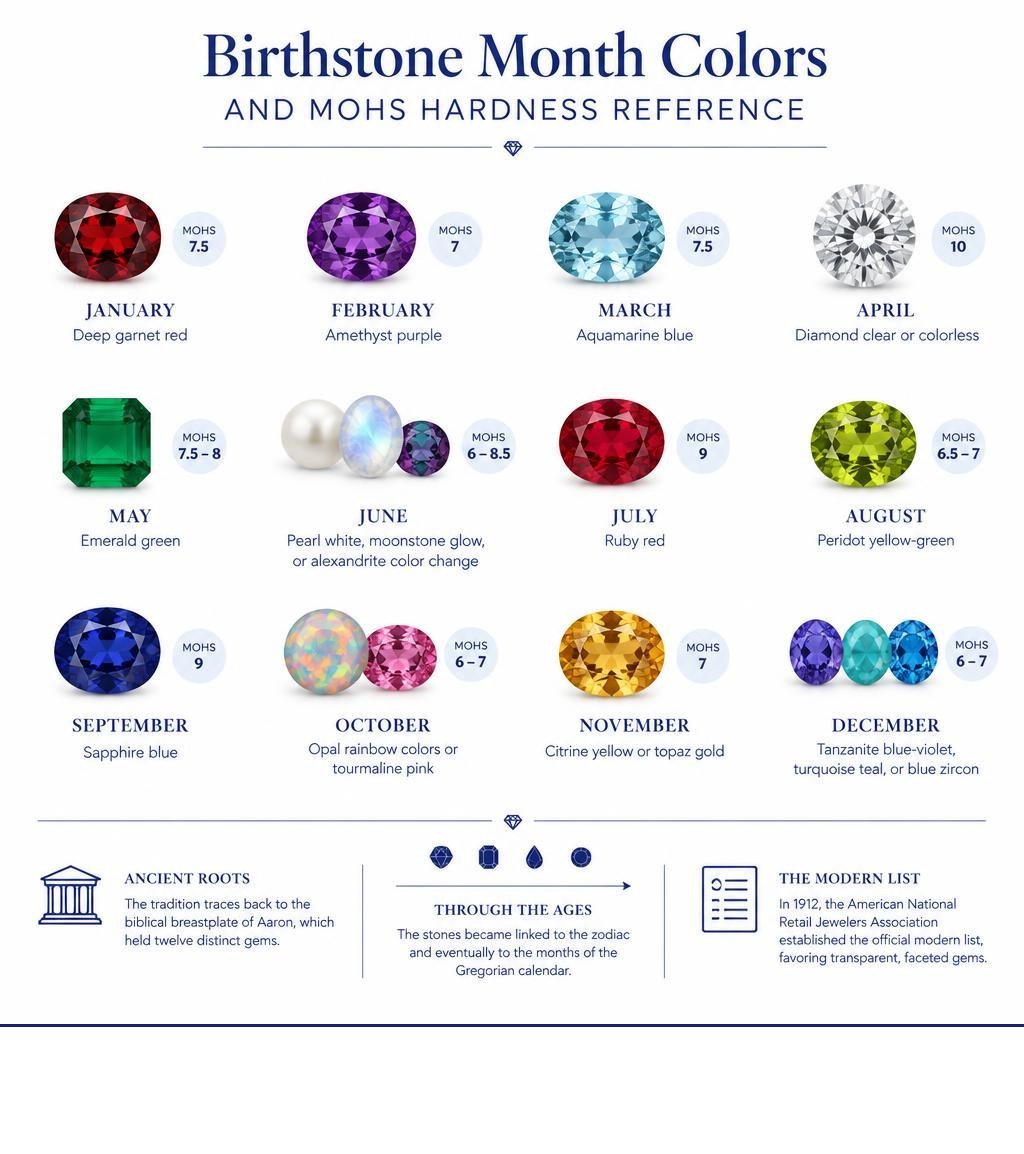
The main gemstone colors by month are: January red, February purple, March pale blue, April colorless, May green, June white or color-changing, July red, August yellow-green, September blue, October multicolor, November golden yellow, and December blue to teal.
| Month | Primary birthstone color |
|---|---|
| January | Deep garnet red |
| February | Amethyst purple |
| March | Aquamarine blue |
| April | Diamond clear or colorless |
| May | Emerald green |
| June | Pearl white, moonstone glow, or alexandrite color change |
| July | Ruby red |
| August | Peridot yellow-green |
| September | Sapphire blue |
| October | Opal rainbow colors or tourmaline pink |
| November | Citrine yellow or topaz gold |
| December | Tanzanite blue-violet, turquoise teal, or blue zircon |
Birthstone colors are a simple way to make jewelry feel personal. They can shape the look of an engagement ring, a custom pendant, or a family birthstone design. Some months also offer more than one stone, which gives you more room to balance color, durability, and budget.
I am Ken Rutz of Jeweler's Touch, a fine jewelry store specializing in custom designs, engagement rings, and jewelry repair. I help clients compare gemstone colors by month so they can choose a meaningful stone that fits their style and the way they plan to wear it.
The Evolution of Birthstone Traditions: Modern vs. Traditional Lists
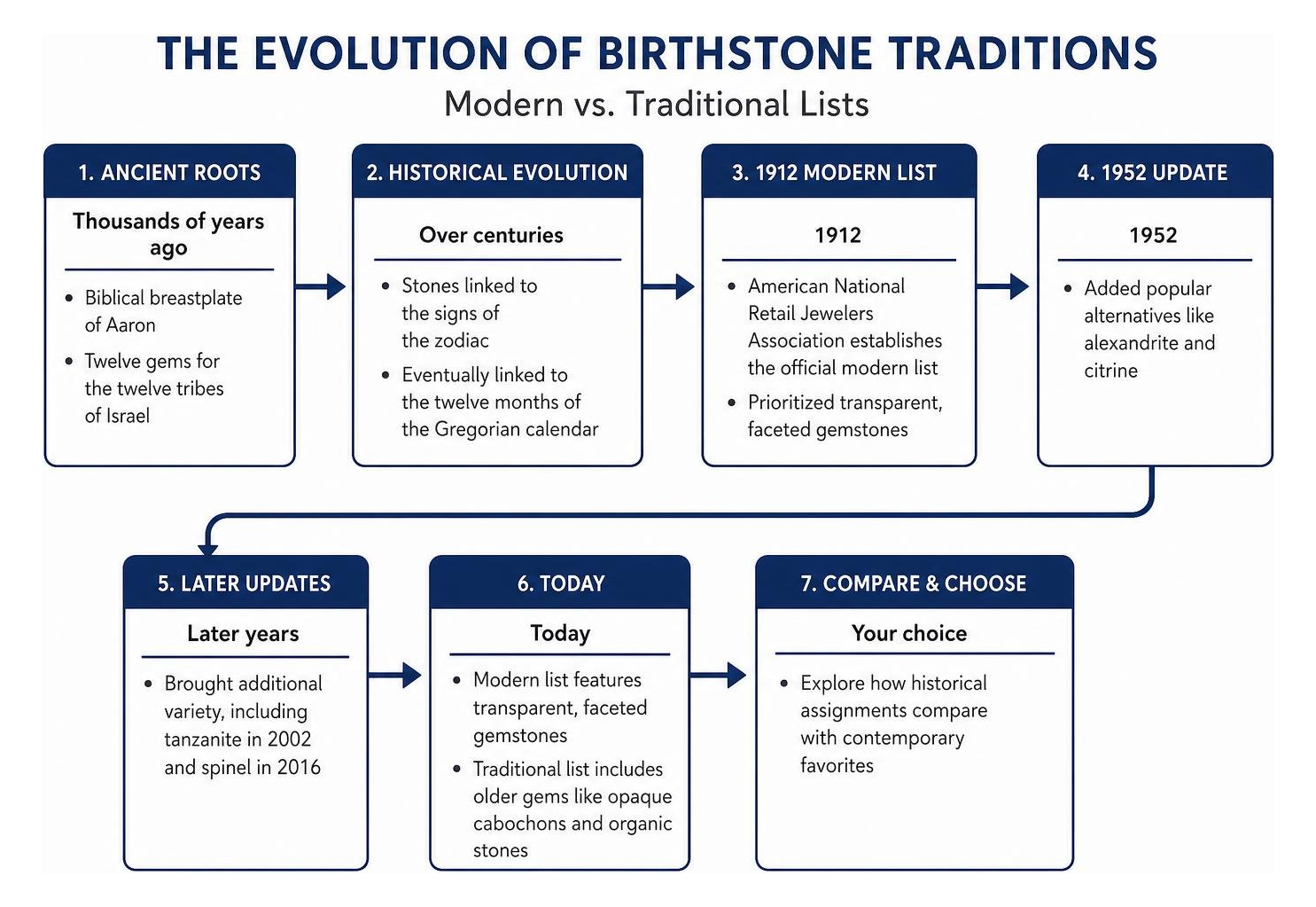
The tradition of assigning specific stones to calendar months stretches back thousands of years. Historical roots trace back to the biblical breastplate of Aaron, which held twelve distinct gems representing the twelve tribes of Israel. Over centuries, these stones became linked to the signs of the zodiac, and eventually, to the twelve months of the Gregorian calendar.
In the early twentieth century, jewelers sought a standardized guide to help customers select gems. In 1912, the American National Retail Jewelers Association (now known as Jewelers of America) established the official modern list. This updated standard prioritized transparent, faceted gemstones over the opaque cabochons and organic gems seen in older lore.
The industry revisited the chart in 1952 to add popular alternatives like alexandrite and citrine. Later updates brought additional variety, including tanzanite in 2002 and spinel in 2016. Today, you can explore the Birthstone Chart - Modern and Traditional to see how historical assignments compare with contemporary favorites.
The Definitive Guide to Gemstone Colors by Month
To help you find the right stone for any occasion, this comprehensive breakdown highlights the primary shades, traditional alternatives, and mineral hardness for every calendar month.
| Month | Modern Gemstone | Traditional Gemstone | Signature Color Hue | Mohs Hardness |
|---|---|---|---|---|
| January | Garnet | Garnet | Deep Crimson, Forest Green, Orange | 6.5 – 7.5 |
| February | Amethyst | Amethyst | Royal Purple, Lilac, Violet | 7.0 |
| March | Aquamarine | Bloodstone | Pastel Sea-Blue, Deep Green with Red Spots | 7.5 – 8.0 (Aqua) / 6.5 – 7.0 |
| April | Diamond | Diamond | Brilliant Colorless, Fancy Yellow, Pink | 10.0 |
| May | Emerald | Emerald | Deep Verdant Green, Bluish-Green | 7.5 – 8.0 |
| June | Alexandrite | Pearl, Moonstone | Color-Change Teal to Plum, Cream White | 8.5 (Alex) / 2.5 – 4.5 (Pearl) |
| July | Ruby | Ruby | Pigeon-Blood Red, Vivid Crimson | 9.0 |
| August | Peridot, Spinel | Sardonyx | Sunny Lime Green, Fiery Red, Cobalt | 6.5 – 7.0 (Peridot) / 8.0 (Spinel) |
| September | Sapphire | Sapphire | Velvet Royal Blue, Pink, Yellow, Peach | 9.0 |
| October | Pink Tourmaline | Opal | Bright Magenta, Iridescent Rainbow | 7.0 – 7.5 (Tourmaline) / 5.5 – 6.5 (Opal) |
| November | Citrine | Topaz | Golden Amber, Imperial Orange-Peach | 7.0 (Citrine) / 8.0 (Topaz) |
| December | Blue Topaz, Tanzanite | Turquoise, Blue Zircon | Violet-Blue, Sky Blue, Robin's Egg Teal | 8.0 (Topaz) / 6.0 – 7.5 (Others) |
Understanding Spring and Summer Gemstone Colors by Month
The first half of the year brings a radiant transition from deep winter tones to bright summer hues.
- January (Garnet): While most people picture a rich, pomegranate red pyrope garnet, this gem family includes fiery orange spessartite and vibrant green tsavorite. Garnets have served as symbols of loyalty and safe travel since ancient times.
- February (Amethyst): This regal quartz variety exhibits tones ranging from delicate lavender to deep royal violet. Ancient lore held that amethyst promoted clarity of mind and emotional balance.
- March (Aquamarine & Bloodstone): Aquamarine reflects the crisp shades of the sea, making an aquamarine wedding ring set a popular choice for brides seeking an ocean-inspired look. Traditional bloodstone offers an earthy contrast with dark green chalcedony flecked with red jasper.
- April (Diamond): Renowned as the hardest natural mineral on Earth, diamonds offer unmatched brilliance. While classic colorless diamonds remain timeless, fancy yellow, pink, and champagne diamonds provide striking color variations.
- May (Emerald): May captures the lush fullness of spring with vivid green emeralds. Treasured by Cleopatra and royal dynasties, fine emeralds often display soft bluish undertones that amplify their rich saturation.
- June (Alexandrite, Pearl & Moonstone): June offers diverse aesthetics. Alexandrite is famous for its natural color-change phenomenon, appearing green in daylight and shifting to ruby-red under warm incandescent lighting. For a deeper dive into these options, check out our June birthstones complete guide.
- July (Ruby): Composed of red corundum, the ruby represents love, passion, and vitality. The most prized rubies display a glowing crimson hue known in the trade as pigeon-blood red.
- August (Peridot, Spinel & Sardonyx): The classic August birthstone peridot offers an olive to lime green sparkle. Spinel provides another durable option in vivid red, cobalt blue, or lavender, which makes August birthstone engagement rings versatile for everyday luxury.

Decoding Fall and Winter Gemstone Colors by Month
The latter half of the year features moody blues, spectral light displays, and cozy golden tones.
- September (Sapphire): Like rubies, sapphires belong to the corundum mineral family. While velvet royal blue is the quintessential standard, fancy sapphires appear in stunning pink, yellow, peach, and green hues.
- October (Opal & Tourmaline): The dynamic October birthstone color spectrum includes both the kaleidoscopic flash of a natural birthstone opal and the pink shades of tourmaline. If you love astrology, our October birthstone zodiac guide finding your cosmic gemstone match offers extra insight into choosing between these distinct gems.
- November (Citrine & Topaz): November radiates warmth with golden citrine quartz and rich amber imperial topaz. These sunny tones bring an inviting brilliance to both vintage and contemporary settings.
- December (Tanzanite, Turquoise, Blue Zircon & Blue Topaz): December delivers an array of cool blues. Tanzanite shows a mesmerizing blend of blue and violet pleochroism, while blue zircon sparkles with diamond-like fire. Sky, Swiss, and London blue topaz provide options across every price point, complemented by the opaque, robin's egg blue of natural turquoise. Learn more by browsing the Birthstones by Month: Chart and Photos.
Gemstone Durability and Everyday Wear: Interpreting the Mohs Scale
When choosing a gem for daily wear, durability is just as important as color. Mineral hardness is measured on the Mohs scale, which runs from 1 (soft talc) to 10 (diamond).
Stones rating 7.5 or higher, such as diamonds, sapphires, rubies, and spinels, resist scratches from airborne dust and everyday contact. They are well suited for center stones in engagement rings and stacking bands.
Softer or organic gems require thoughtful design choices:
- Protective Bezel Settings: Surrounding delicate gems like opals (5.5 to 6.5) or tanzanite (6.0 to 7.0) with a rim of precious metal shields vulnerable edges from bumps.
- Halo Reinforcement: Encircling a colored center gem with small diamonds adds an extra buffer against side impacts while enhancing total brilliance.
- Alternative Jewelry Formats: Gems like pearls and turquoise are well suited for pendants, brooches, and earrings, where they avoid the rough contact that rings often experience.
How to Style and Pair Gemstone Jewelry by Color and Metal Tone
Choosing the right metal enhances the natural fire and body tone of your gemstones:
- Yellow Gold Settings: Warm yellow gold complements earthy and fiery stones. It accentuates the rich red of pyrope garnets, the sunny glow of citrine, and the lime sparkle of peridot.
- White Gold and Platinum: Cool metals provide a mirror-like backdrop that sharpens crisp tones. They pair well with pastel aquamarine, deep blue sapphire, and diamond accents.
- Rose Gold: The blush undertones of rose gold flatter pastel pink tourmaline, morganite, and opals with warm red flashes.
When building a layered look or designing a mother's ring that combines multiple birth months, focus on gemstone tone and saturation. Balancing deep, velvety gems with lighter accent stones creates visual harmony across your piece.
Frequently Asked Questions About Gemstone Colors and Birthstones
Why do certain months have more than one birthstone color option?
Over the past century, jewelry associations expanded historical charts to provide better accessibility, affordability, and wearability. Months like June, August, October, and December include multiple stones so you can choose between classic organic gems, durable faceted stones, or specific color tones that fit your budget.
Can you wear a birthstone jewelry piece that is not from your birth month?
Yes. Modern jewelry is an expression of personal style. Many people wear stones representing the birth months of their children, partners, or parents. Others simply choose gems based on color preference, wardrobe coordination, or personal symbolism.
Which monthly gemstone color is considered the rarest and most valuable?
Natural alexandrite (June) with strong color change is among the rarest gemstones in the world. Unheated, high-clarity pigeon-blood rubies (July) and high-carat fancy colored diamonds (April) also rank at the top of the market in terms of value per carat.
Conclusion: Finding Your Signature Birth Month Jewelry
Whether you love the deep crimson of garnet, the calm blues of aquamarine, or the vivid fire of tanzanite, birthstones bring a personal touch to fine jewelry.
At Jeweler's Touch, we have helped our Orange County clients celebrate their milestones since 1992. Our master goldsmiths craft custom heirlooms right in our Brea studio, with behind-the-scenes evaluation supported by our team of 3 GIA Graduate Gemologists.
If you are ready to design a custom piece, browse our showroom, or explore our detailed August birthstone guide for more inspiration on choosing a gemstone that fits your story.