

Choosing Garnet Jewelry for Women
Choosing garnet for women starts with two questions: Which color feels right, and how often will the piece be worn? Deep red is a classic choice for January birthstone jewelry, but garnet also comes in pink, orange, and vivid green. For a ring worn often, choose a low-profile setting that helps protect the stone. For a special occasion, a larger garnet can make a bold statement.
Garnet's range of colors makes it worth exploring beyond the familiar crimson. I'm Ken Rutz of Jeweler's Touch. My experience with fine jewelry and custom engagement rings shapes this guide to garnet for women, from choosing a stone to caring for it.
The Meaning, History, and Symbolism of Garnet for Women
Garnet is best known as the traditional January birthstone, symbolizing protection, vitality, and perseverance. If you are exploring how birthstones connect with personal milestones, our Birthstone Selection Complete Guide 2026 covers the historical roots of these gems across the calendar year.
The name garnet comes from the Latin word granatus, meaning "seed," because rough red crystals look like the juicy seeds of a pomegranate. In Greek mythology, Hades offered pomegranate seeds to Persephone to guarantee her safe return, linking the gem to fidelity, eternal devotion, and safe travels. Ancient Saxon, Celtic, and Roman warriors wore red garnets into battle as protective talismans, believing the stones could ward off wounds and light up the darkness.
During the Victorian era, jewelers used flat rose-cut Bohemian garnets clustered closely together into delicate hair combs, brooches, and rings. For a modern woman, this gemstone carries an empowering heritage. It is traditionally associated with emotional healing, boosting self-confidence, grounding the heart, and strengthening deep friendships.
Why Red Garnet for Women Remains a Classic Choice
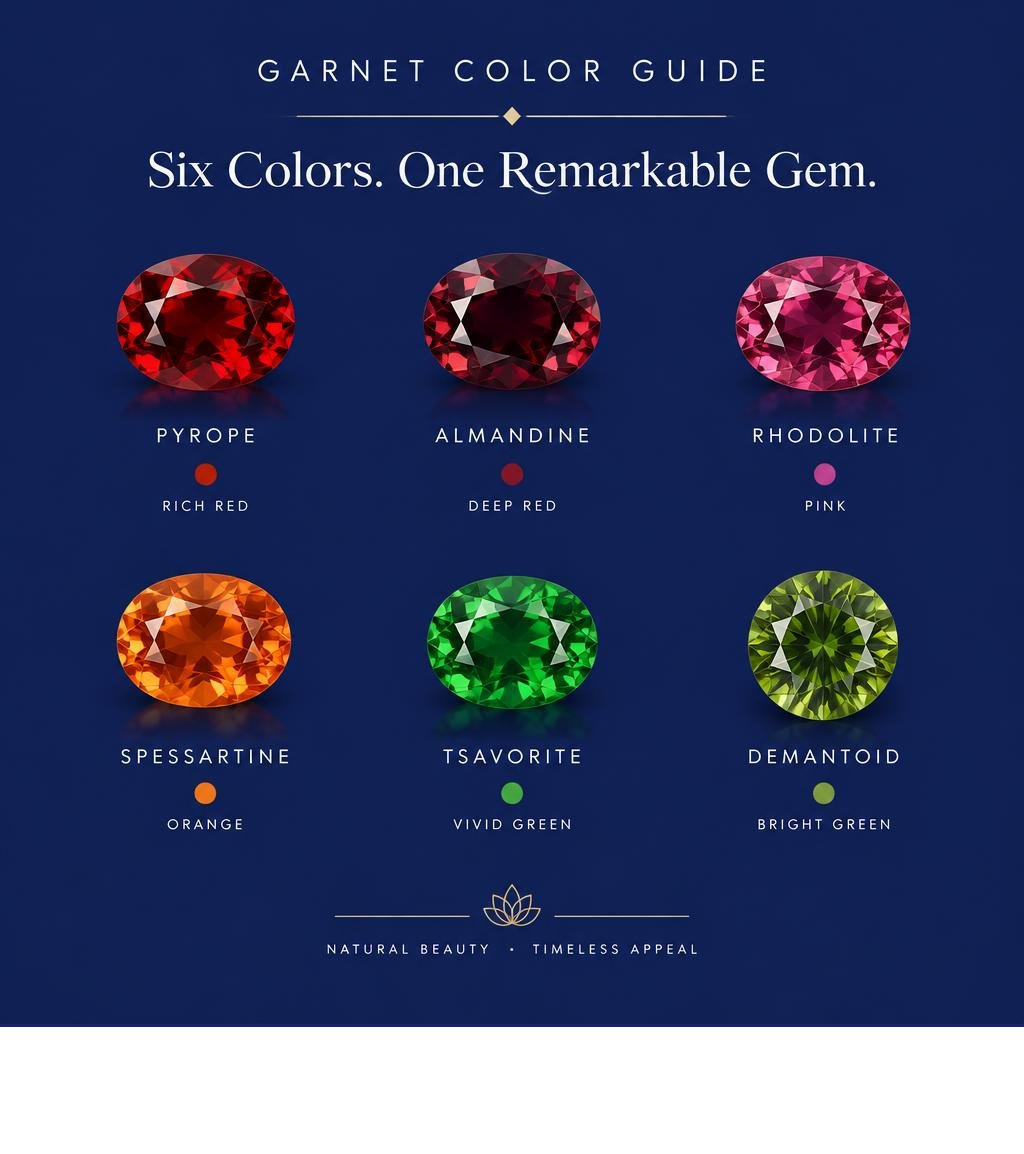
Red remains the cornerstone of garnet jewelry. In mineralogy, classic red stones belong primarily to the pyrope and almandine species (or a natural blend of both). Pyrope offers a fiery, deep crimson with subtle hints of black or ruby, while almandine displays rich earthy reds with purple or brownish undertones.
Understanding gemstone colors by month helps highlight why red garnet is such a cherished holiday and birthday gift. Its deep red tone brings warmth to winter wardrobes, matches festive holiday attire, and serves as a classic present for second-anniversary milestones.
Rare and Vibrant Varieties: Tsavorite, Spessartine, and Demantoid
Many people are surprised to learn that garnet is not just a red gemstone. It is a diverse mineral family that spans nearly every color of the rainbow:
- Tsavorite: A vivid emerald-green grossular garnet discovered in East Africa. In 2017, an extraordinary 238-carat rough crystal was unearthed in Tanzania and cut into the world-famous "Lion of Merelani," weighing 116.76 carats.
- Demantoid: An andradite variety renowned for intense lime-to-forest green colors. The name comes from the Danish root demant, meaning diamond-like, because its dispersion (fire) exceeds that of a diamond.
- Spessartine (Spessartite): Celebrated for electric mandarin orange and fiery amber hues, this variety brings remarkable brightness to modern jewelry.
- Rhodolite: A natural blend of pyrope and almandine that yields vibrant raspberry, purplish-pink, and rose tones.
- Color-Change Garnets: Extremely rare specimens found in regions like Madagascar that shift from blue-green in daylight to rich amethyst purple under incandescent indoor lighting.
Ring Styles, Settings, and Metal Pairings

Garnets rank between 6.5 and 7.5 on the Mohs hardness scale. While durable enough for regular wear, their longevity depends on selecting the right setting for your daily lifestyle.
| Setting Style | Everyday Durability | Best Suited For | Key Aesthetic Appeal |
|---|---|---|---|
| Bezel Setting | Maximum | Active lifestyles, hands-on careers | Sleek, modern, snag-free protection |
| Halo Setting | Moderate to High | Special occasions, vintage lovers | Accents center stone color with diamond sparkle |
| Low-Profile Solitaire | Moderate | Daily wear, minimalist fashion | Highlights gemstone shape and color purity |
| High-Prong Cocktail | Occasional Wear | Evening events, statement pieces | Maximizes light exposure through the stone |
For women looking to incorporate colored stones into their wedding stack, our Wedding Rings Complete Guide 2026 offers insights into balancing gemstone hardness with long-term wear.
Metal Choices: Yellow Gold, White Gold, Rose Gold, and Platinum
The metal framing a garnet dramatically alters its visual personality:
- Yellow Gold (14K or 18K): Deepens the natural warmth of pyrope, almandine, and spessartine, creating a regal, vintage appeal. Our team creates bespoke mountings for custom gold jewelry in Brea to complement these rich hues.
- White Gold and Platinum: Provide a clean, silvery contrast that makes deep red garnets pop. Platinum and white gold are also the premier choices for green tsavorites and demantoids, mimicking classic emerald mountings without distracting warm tones.
- Rose Gold: Pairs seamlessly with pinkish rhodolite and lighter pyrope stones, softening the contrast and lending a modern, romantic aura.
- Sterling Silver: An accessible, bright metal for fashion rings, pendants, and bohemian designs, though it requires occasional polishing to manage natural tarnish.
Styling and Stacking Garnet for Women Across Occasions
Garnet easily transitions between casual, professional, and formal settings. Slim, bezel-set garnet bands layer beautifully alongside diamond bands. If you are curating a custom stack, our Diamond Rings Ultimate Guide 2026 covers setting profiles that sit flush together without rubbing.
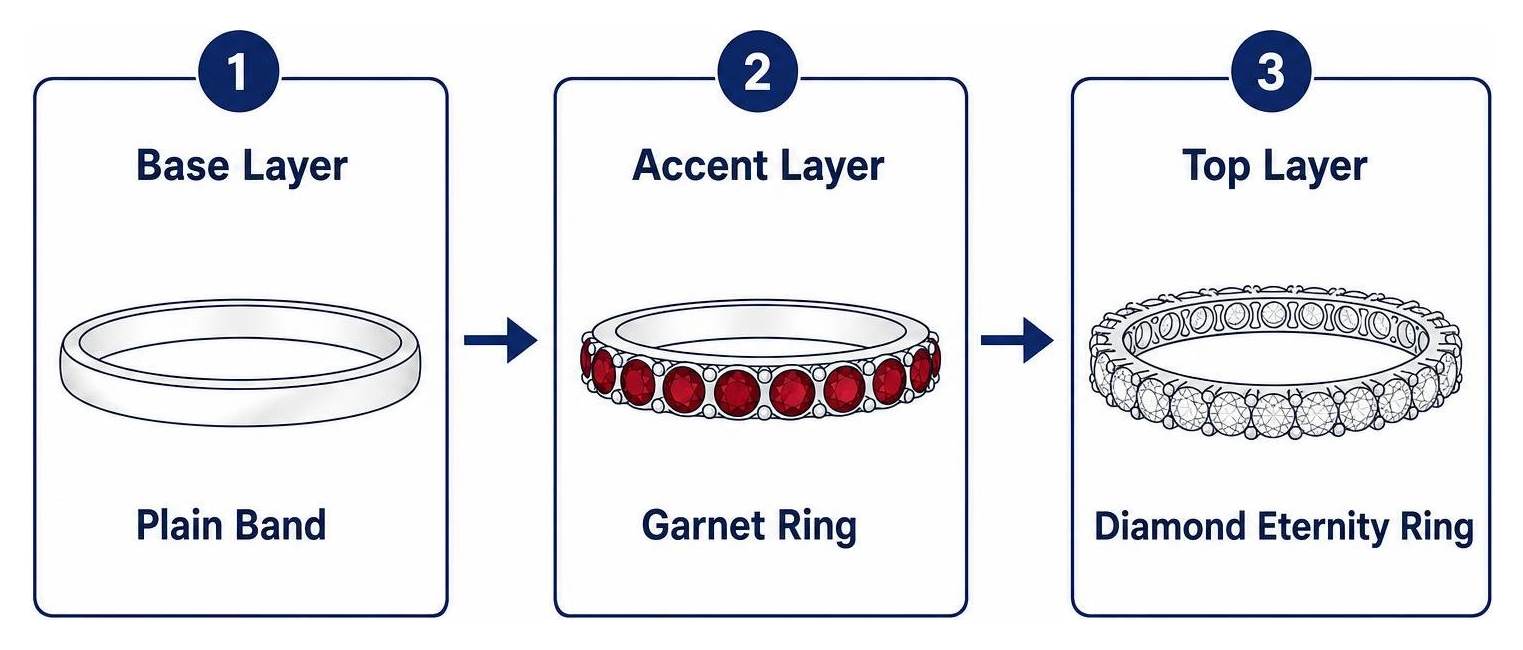
For daytime business attire, a rhodolite pendant or a simple solitaire ring brings a subtle pop of color against neutral suits and blazers. When dressing for an evening gala, a wide cocktail ring featuring a cushion-cut spessartine or a deep red halo ring creates an eye-catching focal point alongside jewel-toned fabrics.
Garnet vs. Ruby: Value, Durability, and Buying Factors
Because high-quality red garnet and ruby share a rich crimson color, many buyers weigh the differences in cost, durability, and optical character before purchasing.
| Feature | Natural Red Garnet | Natural Fine Ruby |
|---|---|---|
| Mohs Hardness | 6.5 to 7.5 | 9.0 (Extremely durable) |
| Typical Treatments | None (100% natural color) | Routinely heat-treated or glass-filled |
| Primary Color Cast | Deep crimson, burgundy, earthy undertones | Fiery red with strong pink/fluorescent undertones |
| Refractive Index | Single refractive (deep, smooth brilliance) | Double refractive (lively pleochroic sparkle) |
| Price (approx. 1 Carat) | $100 to $1,000 depending on variety | $1,500 to $10,000+ for fine quality |
Natural garnets are rarely treated in laboratories, meaning their color and clarity are natural straight from the earth. A 1-carat standard pyrope-almandine gem typically costs between $100 and $300, while a vibrant rhodolite of the same size may reach around $1,000. Rare pastel peach garnets and fine tsavorites can command well over $400 to $1,500+ per carat.
When evaluating colored gemstones or protecting family heirlooms, professional jewelry appraisals verify authenticity, stone measurements, and accurate replacement values for your insurance coverage.
Garnet as an Alternative Engagement or Promise Ring
Modern brides frequently look beyond traditional diamonds to express individuality through colored stones. Garnet serves as an intimate, symbolic center stone representing steadfast devotion and emotional security.
When choosing a garnet engagement or promise ring, select a protective setting such as a half-bezel, full bezel, or a six-prong low basket. Reviewing our Ultimate Custom Jewelry Guide 2026 can help you plan band thicknesses, prong structures, and everyday design choices tailored to your routine.
Essential Care, Cleaning, and Storage for Garnet Jewelry
Maintaining the brilliance of your garnet jewelry requires straightforward, gentle care. Because garnet is sensitive to thermal shock and strong vibrations, keep the following guidelines in mind:
- Routine Home Cleaning: Mix warm water with a few drops of mild liquid dish soap in a small bowl. Soak your jewelry for 10 to 15 minutes to loosen trapped lotions and oils.
- Gentle Brushing: Use a soft-bristled baby toothbrush to clean beneath the gemstone and around the prongs. Never scrub aggressively.
- Rinse and Dry: Rinse the piece thoroughly under lukewarm running water (ensure the sink drain is covered) and pat it dry with a clean, lint-free microfiber cloth.
- Avoid Ultrasonic and Steam Cleaners: Ultrasonic vibrations and high-heat steam cleaners can fracture stones with microscopic inclusions or loosen settings.
- Smart Storage Habits: Store garnet pieces in individual soft fabric pouches or separate compartments within your jewelry box. Harder gems like diamonds and sapphires can scratch garnet surfaces if stored together.
- Schedule Regular Inspections: Have a trusted jeweler inspect your prongs, channels, and bezel walls once a year to ensure your gemstones remain secure.
For broader care tips, you can also review GIA's educational resources on Garnet Care and Cleaning.
Frequently Asked Questions About Garnet Jewelry
Can garnet rings be worn every day safely?
Yes, garnet rings can be worn daily with mindful care. Ranging from 6.5 to 7.5 on the Mohs scale, garnets are durable but less scratch-resistant than diamonds, rubies, or sapphires. To keep your ring pristine, choose a protective bezel or low-set mounting, and remove it before exercising, lifting weights, gardening, or cleaning with household chemicals.
Are garnets typically natural and untreated?
Almost all garnets used in fine jewelry are natural and untreated. Unlike sapphires, rubies, and tanzanites, which frequently undergo heat treatments or fracture filling to enhance their color and clarity, garnet displays its natural color straight from the earth. What you see is the mineral's genuine, unaltered hue.
How do I find the correct ring size when purchasing online?
To get an accurate measurement, use a physical, wide-plastic ring sizing gauge or visit a local jeweler in person. Measure your finger at room temperature near the end of the day when your hands are slightly larger. That wider bands (over 4 mm) fit more snugly than thin solitaire bands, often requiring you to order a half size larger for a comfortable fit.
Conclusion
From the timeless, pomegranate reds of pyrope to the brilliant greens of tsavorite, garnet offers remarkable versatility, authentic natural beauty, and a rich history. Whether you are choosing a January birthstone gift, building a personalized ring stack, or designing a one-of-a-kind engagement piece, garnet combines everyday wearability with classic elegance.
At Jeweler's Touch, we have served clients across Orange County since 1992. Our on-site expert goldsmiths craft pieces designed to last for generations, backed by the deep gemological knowledge of our 3 GIA Graduate Gemologists on staff. Visit our Brea, CA showroom or explore our January Birthstone Guide to find a garnet piece tailored to your personal style.