

Why Buying Diamond Rings Requires More Than Just a Budget
Quick Answer: What to Know Before Buying a Diamond Ring
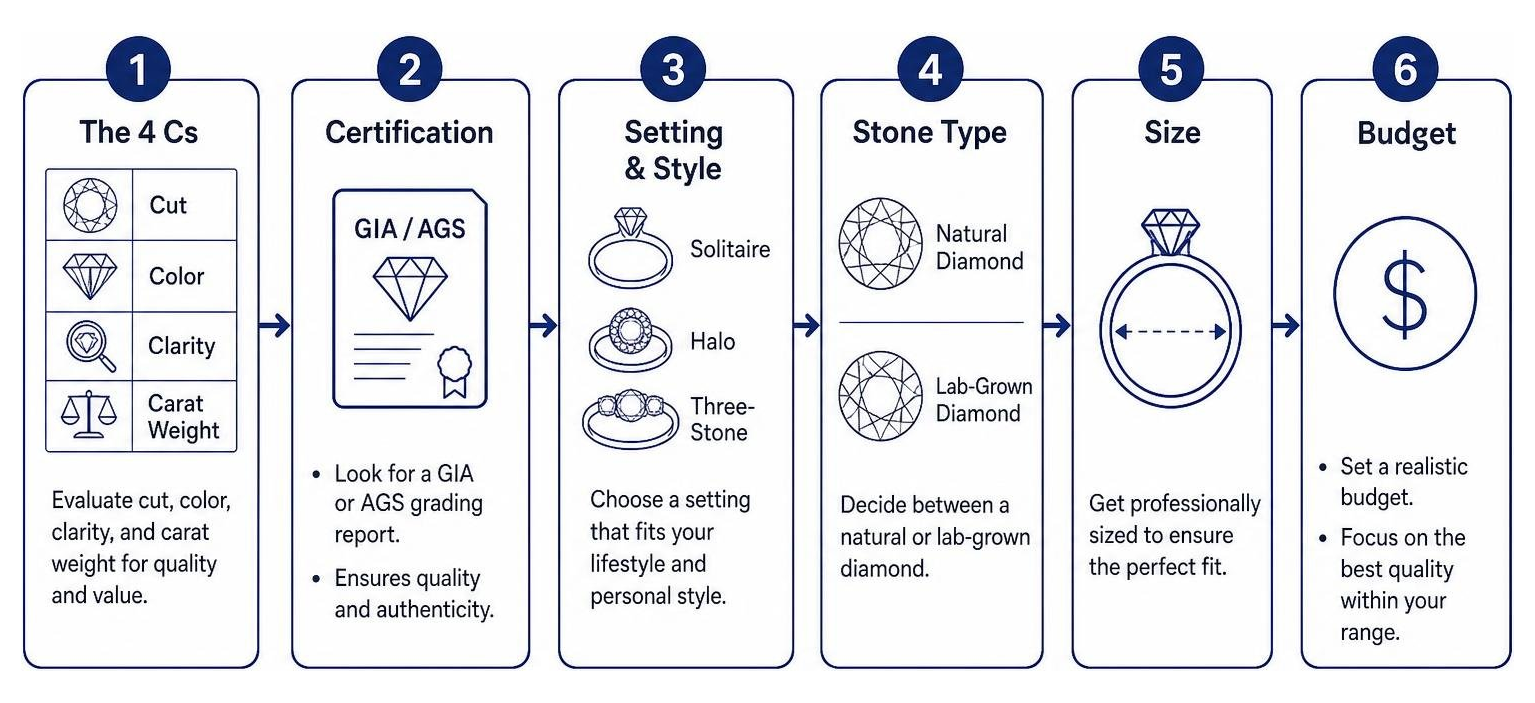
- Quality: Evaluate the 4 Cs: cut, color, clarity, and carat weight
- Certification: Look for a GIA or AGS grading report
- Style: Choose a setting (solitaire, halo, three-stone) that fits your lifestyle
- Stone type: Decide between a natural or lab-grown diamond
- Size: Get professionally sized before purchasing
- Budget: The average U.S. engagement ring costs around $5,500
- Ethics: Confirm the diamond is conflict-free and responsibly sourced
- Care: Plan for regular cleaning and professional inspections
Few purchases carry as much meaning as diamond rings. Nearly 75% of brides in the U.S. receive one, and the global diamond jewelry market is on track to hit $116 billion by 2030. Yet for most buyers, it's unfamiliar territory, and the stakes feel high.
There's a lot to sort through. The 4 Cs. Natural vs. lab-grown. Settings, metals, certifications, sizing, and financing. It's easy to feel overwhelmed before you've even walked into a store.
This guide cuts through the noise. You'll get a clear, practical checklist covering everything you need to make a confident, informed purchase.
I'm Ken Rutz of Jeweler's Touch, a premier jewelry store specializing in fine jewelry, custom engagement rings, and expert repairs since our founding in Orange County. Over the years, I've helped countless couples navigate diamond rings and find pieces that truly last. Let's walk through it together.
Diamond Quality Essentials: The 4 Cs and Certification
Understanding Cut, Color, Clarity, and Carat in Diamond Rings
When you start shopping for diamond rings, the four standards created by the Gemological Institute of America (GIA) are your primary roadmap. Known as the 4 Cs, these criteria define every center stone's beauty, rarity, and price point.

1. Cut (The Sparkle Factor)
Cut is often confused with shape, but cut actually refers to how well a diamond's facets reflect light. A poorly cut diamond looks dull even if it has flawless clarity and bright white color. Cut grades range from Excellent to Poor. We always recommend prioritizing an Excellent or Very Good cut grade because maximum light reflection creates the brilliant fire everyone wants to see on their finger.
Different shapes also handle light uniquely. If you are exploring various silhouettes, check out our guide on 10 Different Diamond Shapes for Engagement Rings Explained to see how cuts like brilliant round, oval, emerald, and princess differ in personality.
2. Color (The Search for Whiteness)
Diamonds are graded on a scale from D (colorless) to Z (noticeable yellow or brown tint). Colorless stones (grades D through F) command a premium, but near-colorless diamonds (grades G through J) usually look bright white to the naked eye, especially when set in precious metals.
3. Clarity (The Freedom from Blemishes)
Clarity measures the presence of internal inclusions or surface blemishes. The grading scale ranges from Flawless (FL) down to Included (I1-I3):
- FL / IF: Flawless / Internally Flawless
- VVS1 / VVS2: Very, Very Slightly Included
- VS1 / VS2: Very Slightly Included
- SI1 / SI2: Slightly Included
- I1 / I2 / I3: Included
For most buyers, finding an "eye-clean" diamond in the VS2 to SI1 range is the sweet spot. These stones show no visible inclusions without gemological magnification, allowing you to stretch your budget toward a larger carat or superior cut.
4. Carat Weight (The Overall Size)
Carat measures weight, not physical dimensions. One carat equals 0.2 grams. Because carat weight scales exponentially in price, dropping just under major thresholds (such as choosing a 0.90-carat diamond instead of a full 1.00-carat diamond) can deliver substantial cost savings with virtually no visible difference in size.
Diamond Certifications and Sourcing Ethics
Never buy a center diamond without an independent grading report. A certification acts as a blueprint, confirming the exact specifications of your gem.
- **GIA**: The strict gold standard worldwide for impartial grading.
- AGS (American Gem Society): Highly respected for detailed cut assessment and light performance analysis.
Having a certified gemologist verify your report ensures you get exactly what you pay for. Beyond grading, ethical sourcing matters just as much. The Kimberley Process Certification Scheme was established to prevent conflict diamonds from entering the global market. Today, ethical jewelers go beyond basic compliance, ensuring full supply-chain transparency so you can wear your ring with peace of mind.
Comparing Styles and Settings for Diamond Rings
Popular Ring Settings and Metal Choices
The setting holds the gemstone securely and shapes the overall personality of diamond rings. Selecting the right setting involves balancing personal aesthetics with practical daily wear.
Solitaire Settings
The classic solitaire focuses attention entirely on a single centerpiece diamond. Held by delicate metal prongs, this timeless profile maximizes light entry from all angles. It is minimalist, classic, and extremely easy to clean.
Halo Settings
A halo setting surrounds the main stone with a border of smaller accent diamonds. This style dramatically boosts brilliance and creates the visual illusion of a significantly larger center stone. If you want to learn more about how halos enhance brilliance, read our detailed overview on What is a Halo Engagement Ring?.
Three-Stone Settings
Representing a couple's past, present, and future, the three-stone design features a center gem flanked by two side stones. Side stones can be smaller brilliant diamonds, tapered baguettes, or colorful gemstones.
Choosing the Right Metal
Your choice of metal impacts ring longevity, maintenance schedules, and tone:
- Platinum: Hypoallergenic, exceptionally dense, and naturally white. It develops a subtle patina over time rather than wearing away.
- White Gold: Offers a bright white shine at a lower price point than platinum, though it requires occasional rhodium re-plating.
- Yellow Gold: A classic warm option that creates beautiful contrast against bright white diamonds.
- Rose Gold: A romantic, vintage-inspired alloy containing copper. To find out which diamond silhouettes complement blush tones best, explore our advice on the Best Diamond Shapes for Rose Gold Rings.
Pairing Bands with Engagement Styles
Your engagement ring and wedding band should work together seamlessly, both visually and functionally.
Elongated shapes like the oval cut have become immensely popular in recent years, but pairing them with a band requires thoughtful attention. An elongated stone needs a band that sits flush beneath the crown or a custom contour band designed to curve snugly around the prongs. For inspiration on finding a harmonious pairing, take a look at our expert ideas on Diamond Wedding Band Ideas for Your Oval Engagement Ring.
Prong security is another crucial durability detail. A four-prong design offers a clean, squared look and lets in plenty of light, while six prongs provide extra structural security for active lifestyles.
Natural vs. Lab-Grown Diamonds
Natural vs. Lab-Grown Diamond Rings: Key Differences
One of the biggest choices modern buyers face when selecting diamond rings is deciding between natural and lab-grown stones. Both are optically, physically, and chemically identical real diamonds, but their origins, pricing, and long-term value profiles differ.
| Feature | Natural Diamonds | Lab-Grown Diamonds |
|---|---|---|
| Origin | Formed deep within the Earth's mantle over billions of years. | Created in weeks using advanced high-pressure technology (HPHT or CVD). |
| Price Difference | Higher price point due to natural scarcity and mining costs. | Typically 60% to 80% lower cost for comparable size and quality. |
| Chemical Structure | Pure crystallized carbon (Mohs hardness of 10). | Pure crystallized carbon (Mohs hardness of 10). |
| Resale Value | Historically retains a portion of market value over long periods. | Lower long-term resale potential due to expanding manufacturing capacity. |
| Environmental Impact | Requires physical mining; mitigated by regulated modern conservation. | High energy usage during creation, often offset by renewable energy practices. |
If historical rarity and traditional origin matter most to you, natural diamonds remain the classic pick. If maximizing size and quality for a specific budget is your top goal, lab-grown options offer impressive value.
Sizing, Budgeting, and Maintenance Checklist
Sizing and Budget Planning
When planning your purchase, having a clear budget and an accurate ring size eliminates stress.

Budgeting Realities
The average cost of a diamond engagement ring in the U.S. rests around $5,500. Forget outdated guidelines like spending two or three months of salary. Your budget should reflect your personal financial situation, comfort level, and preferences. For a complete breakdown of smart shopping strategies, reference our detailed Diamond Engagement Ring Guide.
Flexible financing plans and layaway programs can help spread payments out comfortably without compromising quality.
Determining the Correct Size
A properly fitted ring slides over the knuckle with slight resistance and rests securely at the base of the finger without spinning.
- Visit a local jeweler for an in-person measurement using standard metal sizing bands.
- Account for seasonal shifts. Fingers naturally swell in warm weather and shrink in cold conditions.
- Choose wider bands in a quarter-size larger, as wider metals cover more skin and fit tighter.
Ring Care and Preservation
Your diamond ring is built to last a lifetime, but regular home care and periodic maintenance are essential to keep it shining.
Home Cleaning Routine
Lotions, soaps, and natural skin oils quickly build up underneath settings, dulling your diamond's natural sparkle.
- Soak your ring in warm water mixed with mild dish soap for 15 to 20 minutes.
- Gently scrub around the prongs and underside of the center stone using a soft-bristled toothbrush.
- Rinse thoroughly under warm running water (make sure the sink drain is covered!).
- Pat dry with a clean microfiber cloth.
For more helpful upkeep tips, review our step-by-step masterclass on How to Properly Clean a Diamond Engagement Ring.
Professional Maintenance and Insurance
- Bi-Annual Inspections: Have your jeweler inspect prong security, metal wear, and stone tightness every six months.
- Insurance Protection: Add your ring to a dedicated jewelry insurance policy or home policy rider right after purchase. This protects your investment against theft, accidental loss, or damage.
Frequently Asked Questions
How much should I budget for an engagement ring?
There is no strict percentage rule. While the U.S. national average is approximately $5,500, you should spend what feels comfortable for your finances. Prioritizing cut quality over pure carat size often yields a stunning ring at a lower price point.
Which diamond shape makes a ring look larger?
Elongated diamond shapes like oval, marquise, pear, and emerald cuts cover more surface area on the finger than traditional round brilliants of the same carat weight. This creates a larger visual footprint for your money.
How can I find my partner's ring size secretly?
You can secretly borrow a ring they currently wear on their ring finger and bring it to a local jeweler for measuring. Alternatively, trace the inner circle on a piece of paper or enlist the help of a close friend or family member to ask casually.
Conclusion
Buying a piece of fine jewelry should be a joyful, rewarding milestone. By evaluating the 4 Cs, selecting an authentic grading report, choosing a secure setting, and sticking to a sensible budget, you can pick out a diamond ring that brings a smile to your face every single day.
At Jeweler's Touch, our family-owned business in Orange County has guided couples through life's special moments since 1992. With our on-site GIA gemologists and expert goldsmiths, we are always here to offer warm, expert advice and custom design services. Ready to start your journey? Explore Engagement Ring Guides or visit our showroom in Brea, CA today.