

Why a 14k Gold Necklace with Pearl Deserves More Care Than You Think
A 14k gold necklace with pearl is one of the most elegant and timeless pieces you can own, but it's also one of the most misunderstood when it comes to durability and daily wear.
Quick answer: How durable is a 14k gold pearl necklace?
- Gold setting: 14k gold is strong (58.5% pure gold) and resists scratches well
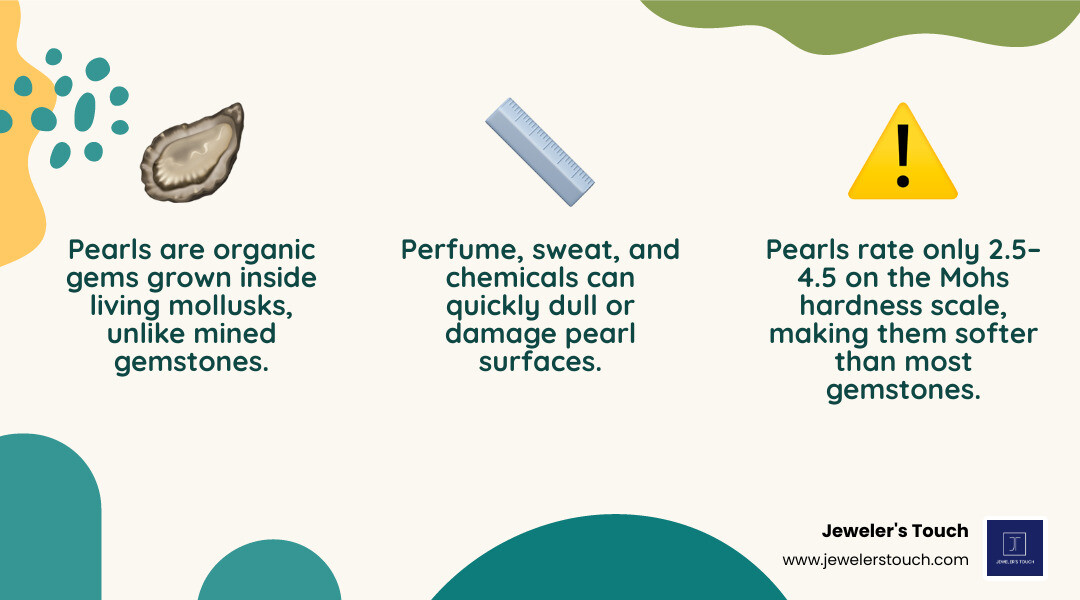
- Pearls: Soft and organic, they rate only 2.5–4.5 on the Mohs hardness scale
- Biggest risks: Perfume, sweat, chemicals, and rough handling can dull or damage pearls quickly
- Care rule: Put your pearl necklace on last when getting ready, and take it off first
- Cleaning: Wipe gently with a damp soft cloth, no ultrasonic cleaners, ever
Pearls aren't like diamonds or sapphires. They're grown inside living mollusks, which makes them beautiful, and vulnerable. That organic origin means they need a different kind of attention than your average gold chain.
Most people don't realize this until the luster starts to fade.
In May 2026, pearl jewelry is having a major style moment, from minimalist freshwater station necklaces to diamond-accented Akoya pendants. But the more you wear them, the more important proper care becomes.
I'm Ken Rutz from Jeweler's Touch, a fine jewelry specialist with decades of experience helping customers find, style, and protect pieces like the 14k gold necklace with pearl. In this guide, I'll walk you through everything you need to know, from pearl types and gold settings to care routines that keep your necklace looking stunning for generations.
Understanding the Anatomy of a 14k Gold Necklace with Pearl
When we look at a 14k gold necklace with pearl, we aren't just looking at metal and stone; we are looking at a marriage of geology and biology. Unlike gemstones that are mined from the earth, pearls are organic, created by living oysters and mussels. This unique origin is why they feel warm to the touch and possess a glow, known as "orient" that no other gem can replicate.
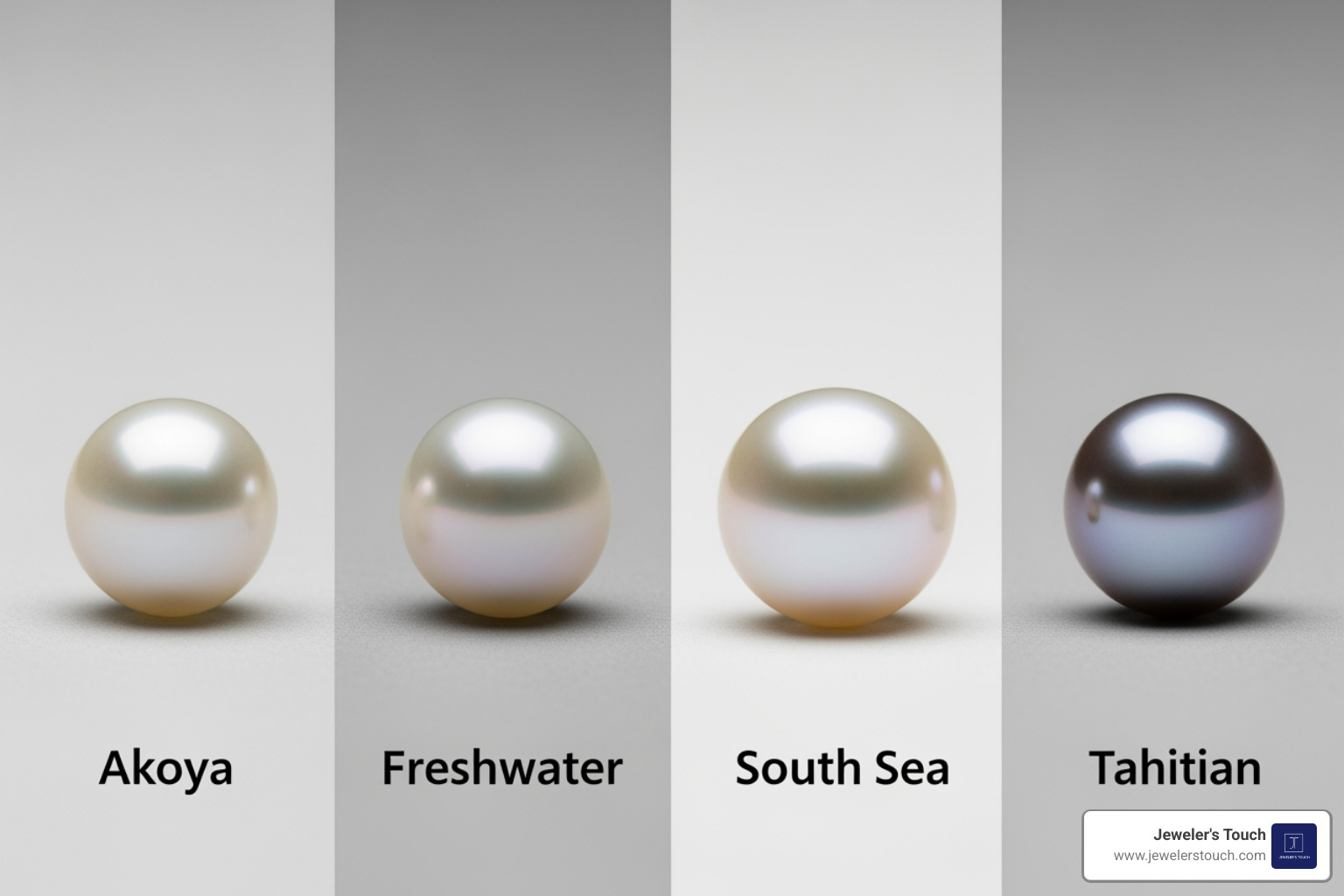
To choose the right necklace, you first need to understand the four primary "families" of cultured pearls. Each has a distinct personality, size range, and price point. For a deeper dive into these varieties, you can explore our Types of Pearls guide.
Comparing Akoya, Freshwater, South Sea, and Tahitian Pearls
At Jeweler's Touch, we often help customers navigate these four main types:
- Freshwater Pearls: These are the most versatile and affordable. Typically ranging from 5mm to 10mm (with 7-8mm being the "sweet spot"), they are grown in mussels in freshwater lakes. They come in a variety of natural pastel shades and are known for their solid nacre, making them quite durable for daily wear.
- Akoya Pearls: The classic "saltwater" pearl. If you picture a perfectly round, white, high-luster pearl, you're likely thinking of an Akoya. They usually range from 6mm to 9mm. Because they are bead-nucleated, they are almost perfectly spherical, making them the gold standard for traditional pearl bridal jewelry.
- South Sea Pearls: Often called the "Queen of Pearls," these are the largest and rarest. Found in white and golden hues, they typically range from 10mm to 13mm, though some can reach 20mm. Their satin-like luster and impressive size make them a true investment piece.
- Tahitian Pearls: Known for their "black" color, these pearls actually display a range of peacock green, silver, and eggplant tones. They usually range from 8mm to 12mm. A 14k gold necklace with pearl featuring a Tahitian center stone offers a modern, edgy alternative to the classic white strand.
For more details on the sheer variety available, check out How Many Types of Pearls Are There.
The Facts and Myths About Pearls
As the birthstone for June, pearls are steeped in legend. However, in our Orange County workshop, we deal in facts. One common myth is that pearls are "tough" because they come from the sea. In reality, pearls are quite soft. On the Mohs scale of mineral hardness, a diamond is a 10, while a pearl is a mere 2.5 to 4.5. This means a stray copper penny in your jewelry box can actually scratch the surface of your pearl.
Another fact to remember: pearls are "thirsty." They contain a small amount of water and organic protein. If stored in a completely airtight, dry environment (like a bank safety deposit box) for years, they can actually dehydrate and crack. They love to be worn because they absorb trace amounts of moisture from your skin. To separate the truth from the lore, visit our article on The Facts and Myths About Pearls.
Choosing the Right Metal: Yellow vs. White 14k Gold
The metal you choose for your 14k gold necklace with pearl does more than just hold the gem in place; it sets the entire mood of the piece and dictates its maintenance schedule. 14k gold is our preferred choice at Jeweler's Touch because it contains 58.5% pure gold mixed with durable alloys. This blend is significantly stronger than 18k gold, making it ideal for a necklace you plan to wear frequently.

White Gold Maintenance and Rhodium Plating
White gold is a popular choice for Akoya and Freshwater pearls because it enhances their cool, bright reflections. However, white gold isn't naturally white; it's an alloy of yellow gold and white metals (like nickel or palladium) that is then plated with rhodium.
Over time, this plating can wear thin, especially on the chain where it rubs against your skin. If you notice your necklace looks a bit "warm" or yellowish, it’s likely time for a professional re-plating. We discuss this process in detail in our guide: Are Your White Gold Rings Starting to Look Yellow. For those looking for a naturally white metal that never needs plating, you might also consider Platinum vs White Gold, though 14k white gold remains the industry standard for pearl pendants due to its light weight and affordability.
Matching Pearls to Your Skin Tone
Choosing between yellow, white, or rose gold often comes down to your complexion.
- Yellow Gold: Complements warm skin tones and brings out the creamy, ivory overtones in pearls. It’s the traditional choice for a 14th Wedding Anniversary Gold Jewelry gift.
- White Gold: Looks stunning on cool skin tones and creates a crisp, modern aesthetic.
- Rose Gold: A romantic choice that works beautifully with pink-toned freshwater pearls.
For a deeper dive into matching metals to your look, see How to Choose Gemstone Earrings to Match Your Skin Tone.
Factors That Define Quality and Value
Not all pearls are created equal. When shopping for a 14k gold necklace with pearl, several factors determine why one necklace costs $200 while another costs $2,000.
| Feature | Low Range | High Range | Why it Matters |
|---|---|---|---|
| Luster | Soft, blurry reflection | Mirror-like, sharp reflection | Luster is the "soul" of the pearl. |
| Surface | Visible pits or spots | Clean, smooth to the eye | Blemishes lower the value and durability. |
| Nacre | Thin (may peel) | Thick (long-lasting) | Thick nacre ensures the pearl lasts for decades. |
| Gold Weight | Lightweight/Thin chain | Substantial/Solid gold | Affects the "heft" and security of the piece. |
Luster and Surface Quality of a 14k Gold Necklace with Pearl
Luster is the most important value factor. When you look at a high-quality Akoya pearl, you should be able to see your own reflection on the surface. If the reflection is dull or chalky, the pearl is of lower quality. Surface quality refers to how many "birthmarks" (blemishes) are on the pearl. While a few tiny marks prove the pearl is natural, a clean surface is much more highly prized.
Many of our customers in Brea choose to customize their pieces, selecting a specific AAA-grade pearl to mount on a custom chain. This allows for a personalized diamond necklace feel even when the star of the show is a pearl.
Diamond Accents and Chain Styles
Adding diamonds to a 14k gold necklace with pearl is a fantastic way to bridge the gap between "everyday" and "evening wear." A popular configuration we see involves a 7-8mm Akoya pearl topped with a small diamond accent (around 0.08 CTW).
The chain style also matters.
- Cable Chains: The classic choice, offering a delicate but sturdy link.
- Rolo Chains: Feature rounder links that catch the light differently.
- Station Styles: Where pearls are "floated" along the chain at intervals, rather than hanging as a single pendant.
Styling and Sizing for Every Occasion
A pearl necklace is no longer just for "Sunday best." In 2026, we are seeing pearls worn with everything from bridal gowns to denim jackets.
Selecting the Perfect Length for Your 14k Gold Necklace with Pearl
The length of your necklace can completely change your silhouette.
- 16-inch (Choker length): Sits just above the collarbone. Perfect for V-necks or boat-neck tops.
- 18-inch (Princess/Standard length): The most popular choice, as it sits beautifully on almost any neckline.
- 20-24 inch (Matinee length): Great for layering or wearing over sweaters.
If you are unsure which to choose, our guide on How to Choose the Right Necklace offers a complete breakdown of lengths and how they interact with different body types.
Modern Ways to Wear Classic Pearls
One of the biggest trends right now is layering. Don't be afraid to pair your pearl pendant with a gold paperclip chain or a natural diamond necklace. Mixing textures, the smooth glow of the pearl against the sparkle of diamonds and the shine of gold, creates a sophisticated, curated look. For tips on how to master this, see our article on How to Stack Your Jewelry.
Why Your Pearl Jewelry Needs a Break: Care and Maintenance
This is the most critical part of our guide. Because pearls are organic, they are highly sensitive to the world around them. If you treat your pearl necklace like a gold ring, you will eventually ruin it.
The "Last On, First Off" Rule:
- Last On: Apply your hairspray, perfume, and makeup before putting on your necklace. The chemicals in these products can eat away at the pearl's nacre, leading to a permanent loss of luster.
- First Off: As soon as you get home, remove your pearls. This prevents them from being exposed to sweat or household cleaners.
For a step-by-step cleaning routine, read How to Clean Pearls Without Ruining Them.
Professional Cleaning and Inspection
While you can wipe your pearls with a soft, damp cloth at home, they need professional eyes once a year. Warning: Never put a pearl necklace in an ultrasonic cleaner. The vibrations and heat can shatter the pearl or cause it to "die" (lose all luster).
At Jeweler's Touch, our expert goldsmiths inspect the "peg" that holds the pearl to the 14k gold setting. Over time, the jeweler's epoxy can weaken. We ensure your gem is secure so you don't lose it. Learn more about general maintenance in our Ultimate Guide to Cleaning Jewelry.
Safe Storage Solutions
Pearls should never be tossed into a tangled pile with other jewelry. Harder gemstones like diamonds or even the edges of a 14k gold chain can scratch the soft surface of a pearl.
- Store separately: Use a soft silk or chamois pouch.
- Avoid plastic: Plastic bags can emit chemicals that damage the organic surface.
- Stay away from heat: Don't store them near a heater or in direct sunlight, which can dry out the nacre.
For more on protecting your high-value items, see How to Properly Clean a Diamond Engagement Ring, which also covers storage best practices.
Frequently Asked Questions about Pearl Necklaces
What is the price range for a 14k gold pearl necklace?
Prices vary wildly based on the pearl type and gold weight.
- A simple 14k gold necklace with pearl featuring a freshwater gem might start around $100 - $300.
- A high-luster Akoya pendant with a diamond accent typically ranges from $400 - $900.
- Large South Sea or Tahitian pearls set in substantial 14k gold can reach $1,300 or more. While they may not appreciate like a 2-carat diamond, high-quality pearls hold their value well as heirloom pieces.
Is a pearl necklace a good gift for Mother's Day or anniversaries?
Absolutely. Pearls symbolize wisdom, purity, and new beginnings. Since they are the June birthstone, they are a favorite for Mother's Day jewelry gifts. They are also the traditional gift for the 3rd and 30th wedding anniversaries, though a gold and pearl combination is a stunning way to celebrate a 14th wedding anniversary.
Can I wear my 14k gold pearl necklace every day?
You can, but with caveats. If you work in an environment with high physical activity or exposure to chemicals, it's better to save the pearls for after-hours. If you do wear them daily, you must be diligent about wiping them down every evening to remove skin oils. For a more "durable" daily look, you might consider choosing pearl earrings, which tend to take less of a beating than a necklace.
Conclusion
A 14k gold necklace with pearl is more than just an accessory; it’s a delicate piece of nature’s art. By understanding the different types of pearls, from the accessible Freshwater to the prestigious South Sea, and committing to a simple but strict care routine, you can ensure your necklace remains as lustrous as the day you bought it.
At Jeweler's Touch, we’ve been the trusted jewelry experts for Orange County and Brea, CA, since 1992. Whether you're looking for a classic Akoya pendant or a custom-designed masterpiece, our on-site GIA gemologists and expert goldsmiths are here to help you make an informed choice.
Stop by our showroom to explore our collection. Let us help you find your next "pearl of wisdom."