

What Is the March 27 Birthstone?
The March 27 birthstone is aquamarine, March's modern birthstone. Bloodstone is the traditional alternative. March 27 falls under Aries, but zodiac gem choices vary and do not replace these monthly birthstones.
Aquamarine offers a clear, sea-blue look, while bloodstone is usually deep green with red spots. Both can make a meaningful birthday gift or a personal choice for custom jewelry.
I'm Ken Rutz of Jeweler's Touch, a family-owned Orange County jeweler specializing in fine and custom jewelry. From our team's experience since 1992, I'll help you explore march 27 birthstone choices, from their meaning to how they wear.
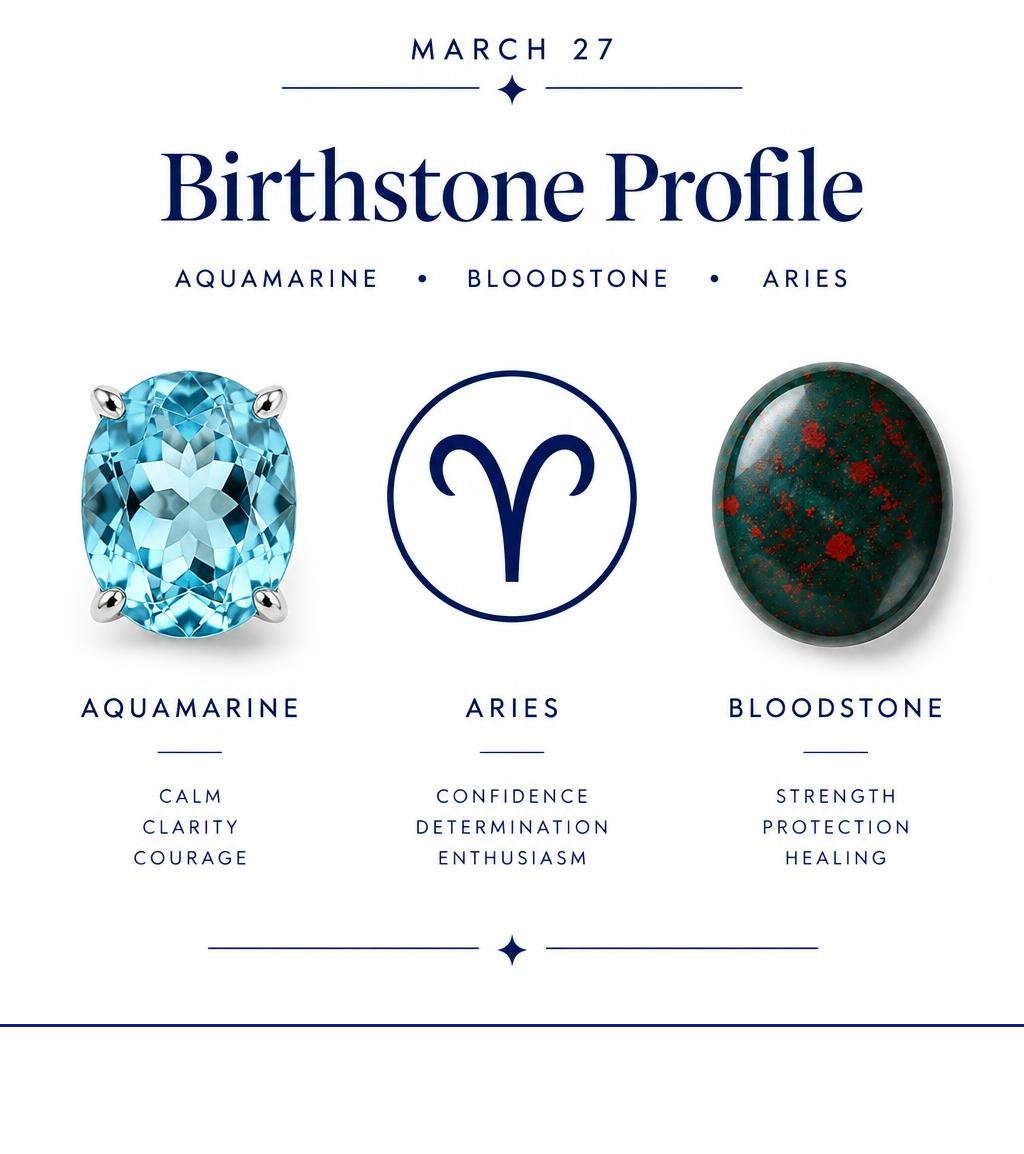
Modern and Traditional Choices for the March 27 Birthstone
When choosing jewelry for a late March birthday, you have two primary mineral options with centuries of history. Modern birthstone charts recognize aquamarine as the definitive primary gem for March, while traditional historical lists highlight bloodstone.
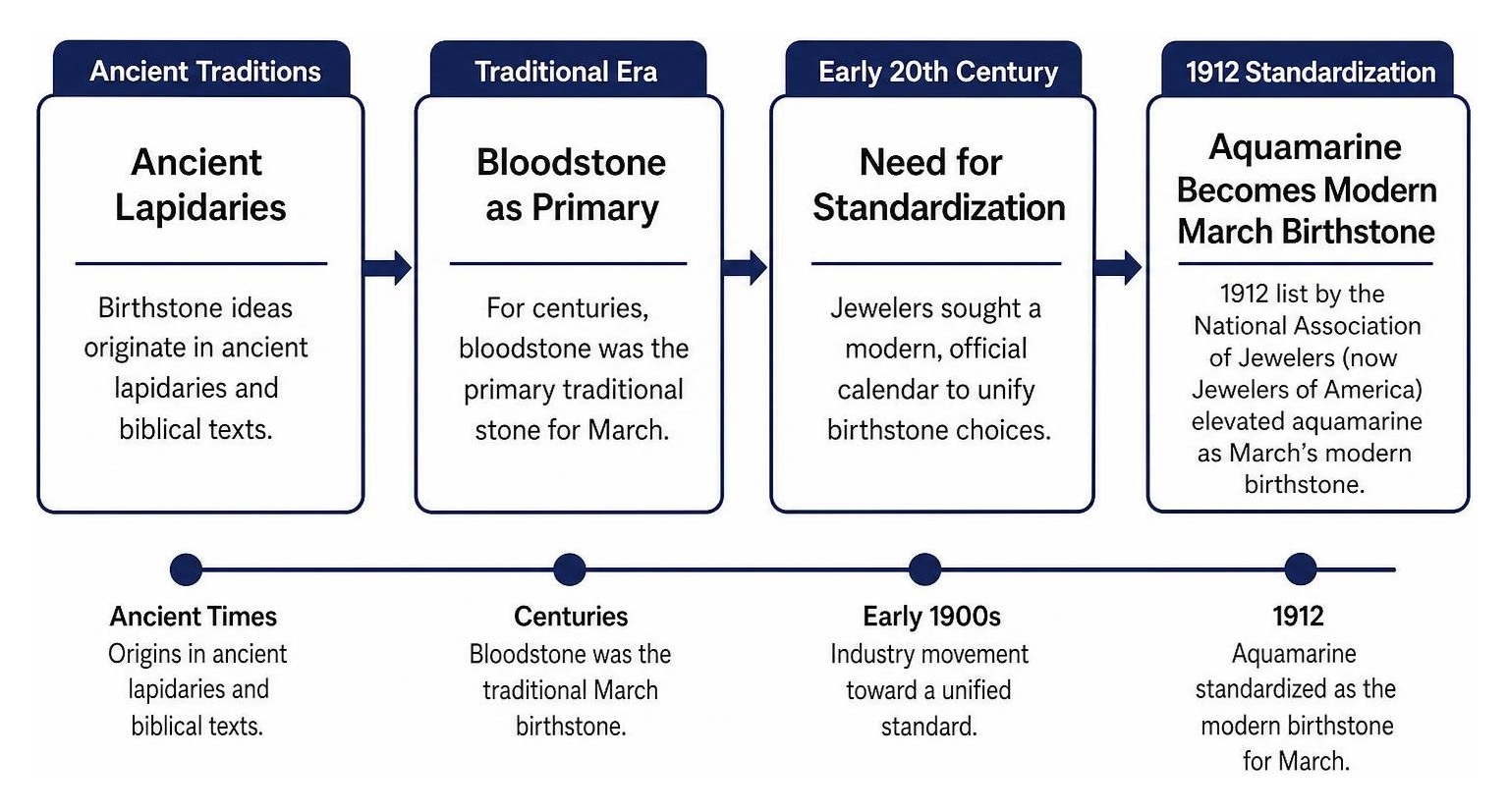
The birthstone system we use today was standardized in 1912 by the National Association of Jewelers (now known as Jewelers of America). This effort created an official, universally recognized calendar to modernize older traditions rooted in ancient lapidaries and biblical texts. While bloodstone was the primary traditional stone for centuries, the 1912 list elevated aquamarine to the modern favorite due to its transparent clarity, stunning color range, and versatile beauty in fine jewelry.
Exploring our birthstone selection complete guide 2026 can help you navigate how monthly stones compare across different eras and styles.
| Gemstone Property | Aquamarine | Bloodstone (Heliotrope) |
|---|---|---|
| Mineral Species | Beryl | Chalcedony (Quartz group) |
| Chemical Formula | Beryllium aluminum silicate | Silicon dioxide with mineral inclusions |
| Mohs Hardness | 7.5 to 8.0 | 6.5 to 7.0 |
| Color Spectrum | Pastel sky blue, deep sea blue, blue-green | Dark green to dark green-blue with red spots |
| Transparency | Transparent to translucent | Opaque |
| Primary Meaning | Tranquility, clarity, marital harmony | Vitality, courage, physical strength |
| Standard Setting Style | Faceted solitaires, halo rings, prongs | Cabochons, signet rings, bezel settings |
Aquamarine: The Modern March 27 Birthstone
Aquamarine belongs to the prestigious beryl mineral species, making it a direct gemological sibling to emerald and morganite. Its name originates from the Latin words aqua (water) and marina (of the sea), perfectly describing its tranquil blue-to-greenish-blue color.
Unlike emerald, which naturally forms with numerous surface-reaching fractures and internal inclusions, aquamarine often grows into large, exceptionally clean crystals. This exceptional clarity allows cutters to facet large, brilliant gems with high brilliance and transparency. In addition to being the modern gem for March, aquamarine is also the traditional gemstone used to celebrate a 19th wedding anniversary.
You can read more essential details in our breakdown of aquamarine birthstone facts, or review the comprehensive GIA guide on March birthstones.
Bloodstone: The Ancient Heliotrope Alternative
Bloodstone is a distinct variety of opaque chalcedony quartz. It consists of a dense, dark green jasper base speckled with distinctive red inclusions caused by iron oxide minerals, typically hematite.
Known historically as heliotrope, bloodstone derives its classical name from ancient Greek words meaning "to turn the sun." Ancient observers believed that immersing this gem in water would turn the sun's reflected rays a deep crimson red. For millennia before aquamarine became the modern standard, bloodstone served as the premier March amulet, prized across the ancient Mediterranean, Babylonia, and India for signet seals, protective talismans, and decorative carvings.
Aries Zodiac Connections and Historical Lore
Those born on March 27 celebrate their birthdays during the first week of the Aries zodiac cycle (March 21 through April 19). Because March 27 follows immediately after the spring equinox, it marks a seasonal period of renewal, rapid growth, and fresh beginnings.
While aquamarine and bloodstone are monthly birthstones, astrological traditions assign additional gems to the fire sign of Aries. Historically, lapis lazuli and red jasper were linked to late March birthdays before modern standardization solidified. Understanding our guide to gemstone colors by month provides extra perspective on how seasonal shifts influenced gem assignments over time.
Aries Zodiac Synergy with the March 27 Birthstone
Aries is a cardinal fire sign ruled by the planet Mars, an astrological placement that signifies bold ambition, high energy, direct action, and fiery enthusiasm.
For an individual born on March 27, aquamarine offers a complementary visual and energetic balance. Its cool, soothing blue tones offer a tranquil visual contrast to the fiery, high-energy nature of Aries. Conversely, bloodstone resonates directly with the ruling planet Mars. Its earthy green field and blood-red flecks historically symbolized physical courage, vitality, and unyielding focus, making it a classic masculine or signet gem for the Aries personality.
Ancient Legends, Mariner Lore, and Healing Symbolism
Across ancient Greek and Roman civilizations, sailors carried aquamarine amulets engraved with the likeness of Poseidon or Neptune. Mariners believed the gem originated in the treasure chests of mermaids and held the power to calm turbulent seas, prevent seasickness, and ensure safe voyages across unpredictable waters. Beyond oceanic travel, Renaissance lore held that aquamarine reawakened love between married couples, promoted mental clarity, and shielded the wearer from deception.
Bloodstone gathered its own legendary folklore. Ancient Greek and Roman athletes wore it as an amulet for endurance, physical strength, and protection during high-stakes athletic competitions. Medieval European legends associated bloodstone's red spots with the drops of blood shed during the Crucifixion, cementing its place as a sacred stone for religious carvings, royal seals, and protective jewelry.
For a deeper dive into the symbolic heritage of these gems, explore our march birthstone meaning guide.
Gemological Properties, Sourcing, and Famous Gems

Aquamarine is a beryllium aluminum silicate mineral that crystallizes in the hexagonal system. Its signature blue to blue-green color is produced by trace amounts of ferrous iron occupying the hexagonal crystal channels.
One of aquamarine's most defining optical traits is strong pleochroism. When viewed down different crystallographic axes, a single aquamarine crystal can show two distinct tones, varying from nearly colorless or pale sky blue to a rich, saturated oceanic blue. Expert gem cutters always align the crystal's deepest blue direction perpendicular to the gem's table facet to maximize visual color face-up.
To explore more gemological research on this stone, visit the International Gem Society's aquamarine overview.
Geological Durability and Global Mining Locations
Aquamarine rates 7.5 to 8.0 on the Mohs hardness scale, giving it excellent resistance to scratches and making it ideal for everyday fine jewelry settings.
The world's most productive gem-quality aquamarine pegmatites are located in Brazil, particularly in the state of Minas Gerais. Other significant deposits yielding high-clarity material include the high-altitude Karakoram mountains of Pakistan (where crystals are mined at elevations up to 13,000 feet), Madagascar, Mozambique, Nigeria, Zambia, and China. In the United States, fine aquamarine crystals are found in pegmatite pockets high in the Colorado Rockies (where it serves as the official state gem) and in Southern California.
Bloodstone, rating 6.5 to 7.0 on Mohs hardness, forms primarily in low-temperature silica-rich hydrothermal cavities and riverbeds. Today, the world's primary commercial source of fine bloodstone is India, with smaller deposits scattered across Brazil, Australia, China, and the western United States.
Famous Historic Aquamarines and Legendary Specimens
Several historic aquamarines have captured the world's imagination due to their immense scale, flawless clarity, and masterful faceting:
- The Dom Pedro Aquamarine: Housed at the Smithsonian Institution's National Museum of Natural History in Washington, D.C., this is the largest faceted aquamarine in the world. Carved by master gem artist Bernd Munsteiner into an obelisk-shaped sculpture titled "Ondas Marinhas" (Sea Waves), it weighs an astounding 10,363 carats (approximately 4.6 pounds) and stands over 14 inches tall.
- The Eleanor Roosevelt Aquamarine: In 1936, the Brazilian government presented First Lady Eleanor Roosevelt with a magnificent 1,298-carat rectangular step-cut aquamarine during President Franklin D. Roosevelt's state visit. Cut from a rough crystal that weighed over 2.8 pounds, it is now preserved in the Franklin D. Roosevelt Presidential Library in Hyde Park, New York.
- The Brazilian Aquamarine Parure of Queen Elizabeth II: Commissioned from royal jewelers using exceptional gems gifted by the President of Brazil in 1953, this historic collection grew to include a stunning tiara, necklace, earrings, and bracelet featuring intense Santa Maria blue aquamarines.
Jewelry Buying Guide, Treatments, and Care Tips
When selecting aquamarine jewelry, color saturation, crystal clarity, and precision of cut are your main quality drivers. Fine aquamarine should be eye-clean, meaning it shows no visible inclusions to the naked eye. While smaller aquamarines (under 2 carats) naturally display delicate, pastel ice-blue shades, larger stones exceeding 5 carats showcase deeper, richer blue saturation.
If you are planning an engagement ring or special occasion piece, viewing a custom aquamarine wedding ring set can give you great inspiration for pairing cool blue beryl with white diamonds and platinum.
Value Factors and Treatment Identification
In the gemstone trade, pure blue stones with moderate to dark tone and intense saturation command the highest market prices per carat. Stones with pale greenish-blue or brownish-green secondary tones generally sit at lower price tiers.
Almost all modern faceted aquamarines undergo gentle, controlled heat treatment (typically heated to around 700 to 800 degrees Fahrenheit). This permanent, industry-standard thermal enhancement removes greenish or yellowish secondary iron components, transforming the stone into a stable, pure sky-blue hue. Because heat treatment is permanent, undetectable by standard gem testing, and completely stable under normal wearing conditions, it is widely accepted throughout the international gem market.
Cleaning and Maintenance Best Practices
To keep your March birthstone looking radiant, follow these essential care practices:
- Use Warm, Soapy Water: Mix mild liquid dish soap with lukewarm water in a small bowl.
- Brush Gently: Use a soft-bristled baby toothbrush to gently clean behind the setting, removing accumulated body oils, lotions, and dust.
- Rinse and Dry: Thoroughly rinse the jewelry in clean, warm water and pat dry using a lint-free microfiber polishing cloth.
- Ultrasonic Cleaning Precautions: Aquamarine is generally safe for ultrasonic cleaning only if the stone has no surface-reaching liquid inclusions or internal fractures. When in doubt, stick to gentle hand washing.
- Protect from Thermal Shock: Avoid exposing aquamarine to sudden, drastic temperature shifts, which can induce internal cleavage fractures.
- Separate Storage: Store your aquamarine and bloodstone pieces in individual soft fabric pouches or lined jewelry compartments to prevent harder stones (like diamonds and sapphires) from scratching them.
Frequently Asked Questions About March 27 Birthstones
What is the primary birthstone for someone born on March 27?
The primary modern birthstone for someone born on March 27 is aquamarine. Bloodstone serves as the traditional, historical alternative birthstone for the entire month of March.
How do aquamarine and bloodstone compare in durability?
Aquamarine is noticeably harder, rating 7.5 to 8.0 on the Mohs hardness scale compared to bloodstone's 6.5 to 7.0 rating. Aquamarine is well-suited for everyday rings and engagement jewelry, while bloodstone is softer and best protected in bezel settings, pendants, or signet rings.
Are aquamarine gemstones routinely heat-treated for color?
Yes. Gentle, low-temperature heating is standard practice across the gem industry to reduce greenish undertones and permanently enhance the pure, watery blue color that consumers love.
Conclusion
Whether you prefer the crisp, oceanic brilliance of aquamarine or the ancient, earthy strength of bloodstone, the gems representing March 27 offer extraordinary beauty, rich history, and versatile styling options.
At Jeweler's Touch, we have served clients across Southern California from our Brea, California jewelry store since 1992. Our team includes 3 GIA Graduate Gemologists (GGs) on staff providing gemological identification and appraisal expertise, alongside expert on-site goldsmiths dedicated to creating unforgettable custom designs, repairs, and fine jewelry heirlooms.
If you are looking to design a custom birthstone piece or explore some of the world's most prized gemstones, we invite you to visit our showroom in Orange County to begin crafting your ideal piece today.