

Is a 24k Gold Wedding Ring Right for Everyday Wear?
A 24k gold wedding ring offers nearly pure gold and a rich, luminous yellow color that stands out from any standard alloy. Its primary trade-off is natural softness: it scratches, burnishes, and dents much more readily than lower-karat gold rings. A pure gold ring can certainly be worn every day, but it is best suited for someone who appreciates developing a living patina and is willing to remove it during intense gym sessions, sports, or demanding hands-on work. If you prefer a wedding band that resists surface marks and keeps a factory-smooth finish under heavy use, choosing a lower-karat gold alloy is usually the more practical path.
I am Ken Rutz of Jeweler's Touch. Our extensive background in fine jewelry, bespoke creations, and expert bench repairs across Southern California guides this comprehensive resource. In this article, I will explain what our practical bench experience means when you are selecting, wearing, and caring for a genuine 24k gold wedding ring.
Understanding the Allure and Reality of a 24k Gold Wedding Ring
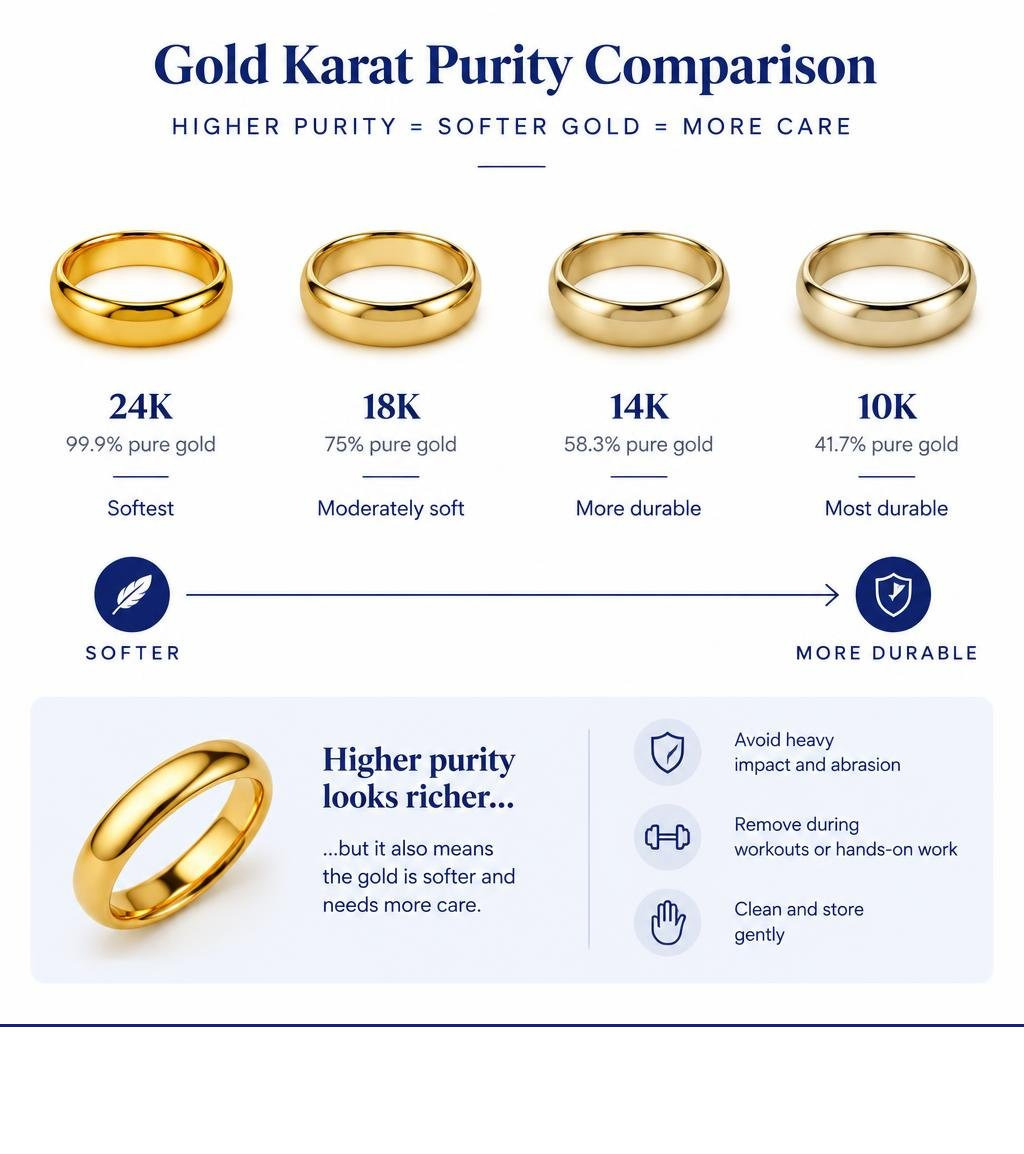
Pure gold holds a celebrated position in fine jewelry traditions across the United States. Formally marked with a 999.9 fineness stamp, 24 karat gold contains 99.9% pure elemental gold without any added base metals or hardening alloys. This unalloyed composition produces an unmistakable, warm orange-yellow radiance that 10k, 14k, or even 18k alloys cannot completely replicate.
Beyond its striking aesthetic appeal, pure 24k gold is entirely hypoallergenic. Because it contains zero traces of nickel, copper, brass, or zinc, it will never trigger allergic contact dermatitis, skin redness, itching, or dark skin discoloration on your finger. For American couples seeking meaningful heirloom symbolism, exchanging solid 24k gold wedding bands represents untarnished devotion, longevity, and timeless value.
However, selecting a pure gold ring requires an honest understanding of practical realities. Without harder metals integrated into its internal crystal lattice, 24k gold remains naturally malleable and soft. When exploring our wedding rings complete guide, you will discover that physical durability is a crucial factor in everyday ring selection. A pure gold band will evolve throughout your marriage, collecting subtle surface impressions, micro-scuffs, and softened contours that reflect your shared life experiences together over the years.
Purity and Material Comparison: Pure Gold vs Gold Alloys
Understanding how gold karat ratings work clarifies why pure gold behaves so differently from standard commercial jewelry alloys. Karat designations measure the exact proportion of pure elemental gold compared to alloyed metals across twenty-four total parts.
| Gold Type | Gold Purity (%) | Common Alloyed Metals | Relative Hardness | Daily Wear Profile |
|---|---|---|---|---|
| 24k Gold | 99.9% | None | Very Soft (2.5 Mohs) | Needs gentle handling, bends under heavy pressure |
| 22k Gold | 91.7% | Copper, Silver, Zinc | Soft to Medium | High luster, slightly firmer than 24k |
| 18k Gold | 75.0% | Copper, Silver, Nickel/Palladium | Medium Hard | Rich color balance with solid durability |
| 14k Gold | 58.3% | Copper, Silver, Nickel, Zinc | Hard (3.5 to 4 Mohs) | Highly scratch-resistant, great for active lifestyles |
As explained in the official U.S. Geological Survey guide on gold jewelry karat marks, karat stamps provide consumers with a legally verified standard of precious metal content. As alloy proportions increase, the finished precious metal becomes notably harder while decreasing in overall density.
24k vs 22k, 18k, and 14k Gold Alloys
Blending base metals such as copper, silver, and zinc into gold creates essential structural rigidity. An alloy such as 14k gold utilizes roughly 41.7% non-gold metals to forge a tough metallic matrix capable of withstanding rough impacts and securing delicate diamond prongs reliably.
When evaluating high-purity options such as an 18k gold chain or a premium wedding band, you achieve deeper yellow color saturation than 14k while retaining sufficient hardness for intricate settings and daily abrasion resistance. Pure 24k gold, by comparison, lacks this protective alloy network. Its metallic bonds yield when subjected to direct force, meaning slender profiles or raised decorative prongs can bend or shift out of position under heavy pressure.
Durability of Pure Gold Compared to Gold Alloys

Pure gold bands feel noticeably heavier and more substantial on your hand because of gold's high elemental density, which sits at approximately 19.3 grams per cubic centimeter. While this luxurious heft feels wonderful on the finger, 24k gold exhibits relatively low tensile strength.
When pressed against hard everyday materials such as granite kitchen counters, steel gym weights, ceramic tile, or metal steering wheels, 24k gold will compress, burnish, or dent rather than resist surface deformation. Lower-karat alloys sacrifice pure elemental saturation in order to deliver everyday scratch resistance and long-term structural firmness.
Aesthetic Finishes, Band Styles, and Pricing Factors
The finished appearance, comfort, and total investment of a pure gold wedding ring depend on design complexity, metal thickness, artisan labor, and the prevailing spot price of precious metals. Because 24k gold is valued directly by weight on commodity markets, wider and thicker profiles carry higher raw material costs.
Design Variety and Finishes for a 24k Gold Wedding Ring
Pure gold adapts beautifully to several specialized artisan textures and surface treatments:
- High Polish: Provides a gleaming, molten glow that accentuates the unmatched color intensity of unalloyed gold.
- Satin or Brushed Matte: Subtly tempers high reflectivity, creating an understated modern look that gracefully conceals early surface scuffs.
- Hammered or Chiseled Texture: Introduces organic, hand-faceted dimples across the band. Hammered patterns are exceptionally practical on 24k gold rings because each deliberate facet effortlessly camouflages minor dings accumulated from regular wear.
For clients interested in commissioning a personalized heirloom band, reviewing our custom gold jewelry options helps you select exact band proportions, tailored comfort-fit interiors, and custom hand engravings. As time passes, pure gold develops a soft, satiny patina that imparts authentic character and heirloom prestige to the piece.
Band Widths, Weight, and Cost Determinants
Ring width and profile depth significantly influence both tactile presence and final price. A modest 3mm to 4mm classic band uses less raw gold, whereas an imposing 6mm to 8mm comfort-fit design requires substantial gram weight. Checking our men's wedding band size guide ensures an ideal balance between finger dimensions, ring thickness, and daily comfort.
Pricing for solid 24k bands combines two core factors: current market gold spot price per gram and master artisan fabrication fees. In the US market, solid 24k handcrafted wedding bands generally range from $1,000 to over $3,500 based on ring size, total gram weight, and custom detailing.
Sizing, Care, and Daily Wear Practicalities
Wearing a 24k gold wedding ring successfully requires recognizing how pure precious metal responds to environmental pressure, physical contact, and bench resizing techniques.
Everyday Longevity and Sizing Limitations for a 24k Gold Wedding Ring
Adjusting the size of a pure gold band calls for specialized bench craftsmanship. Because unalloyed gold is exceptionally ductile, stretching or compressing it excessively can thin the shank unevenly or misshape the band's circular symmetry.
When evaluating how gold rings are resized, our master bench jewelers carefully calibrate torch heat, laser welding parameters, and mandrel shaping to preserve uniform wall thickness and structural integrity throughout the band.
To safeguard your pure gold ring against accidental bending or flattening, we strongly advise taking it off prior to:
- Lifting free weights, kettlebells, or heavy gym machinery.
- Performing demanding home renovations, automotive work, or landscaping.
- Handling dense metal hand tools, iron cookware, or heavy luggage with rigid metallic handles.
Cleaning, Maintenance, and Warranty Coverage
Pure 24k gold does not tarnish, rust, or corrode from exposure to air or moisture, but hand lotions, natural skin oils, soaps, and dust can diminish its bright luster over time.
Safe at-home cleaning requires only gentle steps:
- Add a few drops of mild liquid dish soap to a small bowl of warm water.
- Let your ring soak for 10 to 15 minutes to loosen oils.
- Clean the surfaces gently using a clean microfiber cloth or a soft cosmetic brush.
- Rinse thoroughly with warm running water and pat dry with a lint-free towel.
Never use abrasive scouring pads, harsh chemical cleaners, or ultrasonic tanks with loose gemstone mounts. When your band needs professional re-rounding or deep refinishing, relying on professional ring repair techniques restores its shape safely. Scheduling periodic visits for in-store ring cleaning keeps your ring inspected and maintained by trusted bench specialists.
Frequently Asked Questions About 24k Gold Rings
Is a 24k gold wedding ring durable enough for everyday wear?
Yes, a pure 24k gold wedding band can be worn every day if you appreciate its evolving physical nature. Pure gold will not crack or corrode, but it will gradually conform to your lifestyle by gathering soft marks and tiny indentations. Removing your band before vigorous gym workouts, sports, or heavy manual labor ensures it maintains its round shape.
How do I safely clean a pure gold wedding band at home?
Submerge your band in lukewarm water blended with mild dish soap, allow it to soak briefly, and wipe it gently with a clean microfiber cloth. Avoid stiff brushes, abrasive powders, and chlorine bleach, as these can easily scratch or mar the soft gold surface.
What should I look for in a 24k gold ring warranty?
Choose jewelers whose warranties explicitly cover fabrication quality, porosity issues, and joint weld integrity. Because high-purity gold represents a valuable personal asset, obtaining comprehensive jewelry appraisal documentation is also recommended for insurance coverage and official valuation records.
Conclusion
A solid 24k gold wedding ring is a remarkable celebration of commitment, presenting rich golden warmth, substantial hand feel, and exceptional metal purity. While pure gold demands mindful daily wear compared to harder commercial alloys, its hypoallergenic comfort and magnificent glow make it an unforgettable choice for couples across the United States.
At Jeweler's Touch, we have proudly assisted clients throughout Southern California since 1992. Our dedicated jewelry consultants and on-site master bench jewelers are ready to help you discover, personalize, and care for your ideal wedding band. We warmly invite you to explore our wedding rings collection or stop by our Brea, CA showroom to experience the warmth of 24k gold firsthand.