

Why Diamond Jewelry Remains One of the Most Meaningful Purchases You'll Ever Make
Diamond jewelry has been a symbol of love, commitment, and lasting value for centuries, and in 2026, it's more accessible and diverse than ever.
Whether you're shopping for an engagement ring, a milestone gift, or an everyday piece you'll wear for decades, the options can feel overwhelming. What's the right style? Natural or lab-grown? Which retailer? How much should you spend?
Here's a quick answer to help you get started:
| What You Need | Best Diamond Jewelry Choice |
|---|---|
| Engagement or wedding | Solitaire ring, eternity band, or custom design |
| Anniversary or milestone | Tennis bracelet, diamond studs, or eternity ring |
| Mother's Day or graduation | Pendant necklace, initial piece, or diamond hoops |
| Everyday wear | Bezel solitaire necklace, stud earrings, or huggie hoops |
| Unsure of their style | Classic diamond studs or a simple solitaire pendant |
This guide covers everything, from understanding the 4Cs to comparing natural and lab-grown diamonds, spotting quality craftsmanship, and navigating the best styles for every occasion.
I'm Ken Rutz of Jeweler's Touch, a premier fine jewelry store specializing in custom designs, expert repairs, and curated diamond jewelry for every milestone. With years of hands-on experience helping couples and families find pieces they'll treasure for generations, I'll walk you through everything you need to buy with confidence.
How to Choose Diamond Jewelry for Any Occasion
The best diamond gift is not always the largest one. It is the piece that fits the moment, the person, and the way they actually live.
Before choosing, ask:
- Is this for daily wear or special occasions?
- Do they prefer yellow gold, white gold, rose gold, or platinum?
- Do they wear subtle jewelry or bold statement pieces?
- Is the gift romantic, personal, spiritual, or celebratory?
- Would engraving, birthstones, or custom design make it more meaningful?
When in doubt, choose timeless over trendy. Diamond studs, solitaire pendants, tennis bracelets, and simple bands have survived every fashion cycle for a reason: they go with almost everything.

Most Popular Diamond Jewelry Gifts for Anniversaries and Milestones
For anniversaries and major life moments, the most popular diamond jewelry gifts are pieces with lasting symbolism.
Top milestone choices include:
- Eternity bands: Diamonds around the band symbolize love with no beginning or end.
- Tennis bracelets: Elegant, wearable, and meaningful for major anniversaries.
- Diamond studs: Classic enough for daily wear and special enough for a milestone.
- Solitaire pendants: A single diamond close to the heart is simple and romantic.
- Diamond hoops: A stylish upgrade from everyday earrings.
- Anniversary rings: Often chosen to celebrate a 5th, 10th, 25th, or 50th anniversary.
- White diamond jewelry: Especially meaningful for major wedding anniversaries.
White diamonds are traditionally connected with enduring love, purity, and long-lasting commitment, which makes them especially fitting for major anniversaries. For more inspiration, see our guide to the 60th Wedding Anniversary Gift - White Diamonds.
Best Diamond Jewelry Gifts When You’re Unsure of Their Style
If you are not sure what they like, avoid anything too large, too ornate, or too trend-specific. This is not the moment to guess on a dramatic cocktail ring unless you are very confident. Jewelry surprises are romantic. Jewelry mysteries are risky.
Safe, beautiful choices include:
- Classic diamond studs
- A small bezel-set pendant
- A delicate solitaire necklace
- A simple tennis bracelet
- Small huggie hoops
- A slim diamond bangle
- A neutral metal such as platinum, white gold, or yellow gold
Diamond studs are often the safest gift because they work with jeans, workwear, evening dresses, and everything in between. They also do not require knowing ring size or necklace length preferences. That is why we often recommend them first for surprise gifts. Learn more in Why Diamond Stud Earrings Never Go Out of Style.
If you are truly unsure, work with a jeweler who offers guidance, inspections, and service after the purchase. At Jeweler’s Touch in Orange County, we help clients choose pieces that fit both the recipient and the occasion.
Meaningful Diamond Jewelry for Mother’s Day, Weddings, and Graduations
Some diamond gifts are beautiful because they sparkle. Others are beautiful because they say something.
Meaningful ideas include:
- Mother’s Day: Initial pendants, birthstone-and-diamond necklaces, heart pendants, or custom family jewelry.
- Weddings: Diamond wedding bands, anniversary bands, diamond crosses, or heirloom redesigns.
- Graduations: Solitaire pendants, small diamond hoops, personalized necklaces, or bracelets engraved with a date.
- Push presents: Diamond stackable bands, pendants with a child’s initial, or birthstone-accented designs.
- Family milestones: Custom jewelry made from inherited diamonds or redesigned heirloom pieces.
Personalization turns a pretty gift into a story. A date, name, initial, meaningful symbol, or custom setting can make a diamond piece feel one-of-a-kind. For ideas, read A Guide to Creating Personalized Diamond Necklaces.
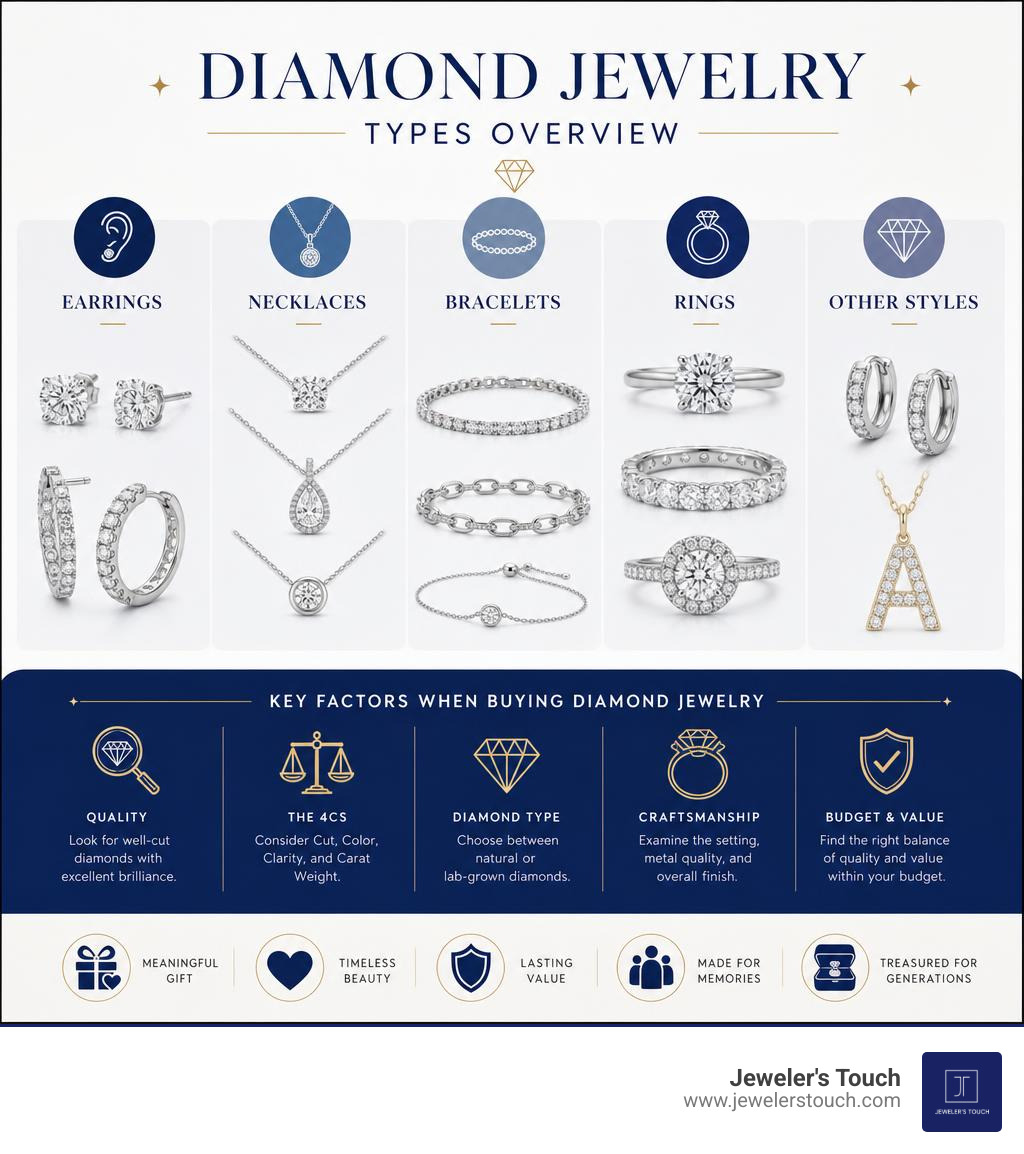
Diamond Jewelry Types: Earrings, Necklaces, Bracelets, and Rings
Every jewelry wardrobe has a few “foundation pieces.” These are the diamond designs you can wear for years without feeling like they belong to one season.
Essential diamond jewelry categories include:
- Diamond earrings: Studs, hoops, huggies, drops, and chandelier earrings.
- Diamond necklaces: Solitaire pendants, bezel necklaces, station necklaces, tennis necklaces, and personalized pendants.
- Diamond bracelets: Tennis bracelets, bangles, cuffs, station bracelets, and line bracelets.
- Diamond rings: Engagement rings, wedding bands, eternity bands, anniversary rings, and stackable bands.
- Custom diamond jewelry: Redesigned heirlooms, personalized pieces, and one-of-a-kind gifts.
Best Diamond Jewelry Earrings for Everyday Wear and Special Occasions
For everyday wear, comfort and security matter just as much as sparkle.
Best everyday diamond earrings:
- Stud earrings: Timeless, secure, and easy to style.
- Bezel studs: Smooth edges and excellent protection for active lifestyles.
- Huggie hoops: Small, comfortable, and modern.
- Small pavé hoops: Adds sparkle without feeling too dressy.
Best special occasion earrings:
- Diamond drop earrings
- Larger hoops
- Chandelier earrings
- Fancy-shape diamond earrings
- Multi-stone designs
For daily wear, look for secure backs such as screw backs or quality friction backs. Bezel settings are also excellent because they protect the diamond edge and sit smoothly against the ear. For a full breakdown, visit The Complete Guide to Buying Diamond Stud Earrings.
Best Diamond Necklaces for Everyday Wear and Formal Looks
Diamond necklaces range from subtle to show-stopping.
Best everyday choices:
- Solitaire pendant
- Bezel-set necklace
- Small diamond station necklace
- Diamond initial pendant
- Delicate diamond cross
- Diamond-by-the-yard style necklace
Best formal choices:
- Tennis necklace
- Larger solitaire pendant
- Multi-stone pendant
- Fancy-shape diamond necklace
- Layered diamond necklaces
Chain length matters. A 16-inch necklace usually sits higher near the collarbone, while an 18-inch chain is one of the most versatile lengths for daily wear. Tennis necklaces and larger pendants can look stunning for formal occasions, but they should sit comfortably and align well with the neckline.
For everyday styling tips, see Stylish Ways to Wear Your Natural Diamond Necklace Everyday.
Best Diamond Bracelets for Daily Style and Statement Moments
A diamond bracelet is one of the most versatile milestone gifts. It feels luxurious, but it can still be worn often if the design is practical.

Popular bracelet styles include:
- Tennis bracelets: A continuous line of diamonds, classic and elegant.
- Diamond bangles: Structured, stackable, and polished.
- Diamond cuffs: Bolder and more fashion-forward.
- Station bracelets: Diamonds spaced along a chain for a delicate look.
- Line bracelets: Similar to tennis bracelets, often with a sleek continuous design.
For daily wear, clasp quality is critical. Look for a secure clasp with a safety latch. Fit matters too: too tight is uncomfortable, too loose may catch on things. The bracelet should move slightly but not slide halfway down the hand.
For more detail, read Top 5 Considerations When Buying Diamond Bracelets for Women.
Everyday Diamond Jewelry vs. Special Occasion Pieces
| Feature | Everyday Diamond Jewelry | Special Occasion Diamond Jewelry |
|---|---|---|
| Best styles | Studs, huggies, bezel pendants, slim bracelets | Tennis necklaces, chandelier earrings, statement cuffs |
| Settings | Bezel, low-profile prongs, secure channels | Pavé, halos, larger prongs, dramatic designs |
| Carat weight | Smaller to moderate | Moderate to large |
| Comfort | Very important | Important, but style may lead |
| Maintenance | Should be durable and easy to clean | May need more careful handling |
| Wardrobe fit | Works with casual and professional outfits | Best for formalwear or events |
| Risk level | Lower profile, fewer snags | More delicate or higher profile |
A good rule: if you plan to wear it while typing, parenting, working, cooking, or running errands, choose low-profile and secure. If you plan to wear it while holding a champagne glass and accepting compliments, you can go bolder.
Diamond Quality, Certification, and Craftsmanship
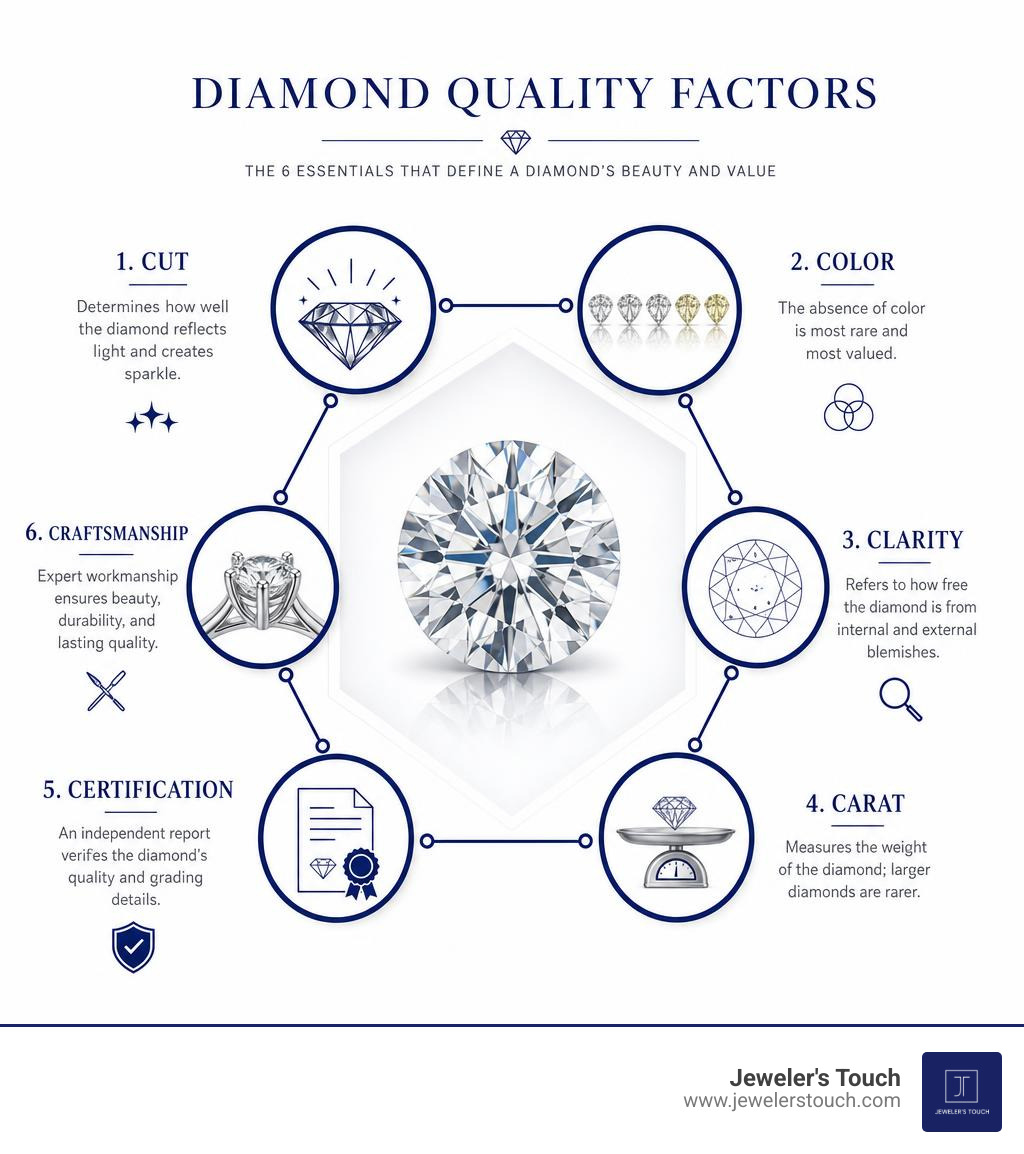
The beauty of diamond jewelry depends on more than the diamond itself. The grading, setting, metalwork, proportions, and finishing all affect how the piece looks, feels, and lasts.
Understanding the 4Cs and 5Cs Before You Buy
The 4Cs are:
- Cut: How well the diamond reflects light. This affects brilliance, fire, and sparkle.
- Color: How colorless the diamond appears, usually graded from D to Z.
- Clarity: The presence of internal or external characteristics.
- Carat: The diamond’s weight, not necessarily its visible size.
Cut is often the most important for sparkle. A well-cut smaller diamond can look more lively than a larger diamond with poor proportions.
The 5Cs add another factor: confidence. That means knowing the diamond is properly represented, fairly priced, and supported by documentation and expert guidance. Learn more in The Four Cs of Diamonds and What Are the 5 Cs of Diamonds.
Why Craftsmanship Impacts Long-Term Value
A diamond can be beautifully graded and still be poorly set. Craftsmanship is what protects the diamond and turns it into wearable art.
Quality craftsmanship includes:
- Secure prongs or bezels
- Smooth finishing
- Balanced symmetry
- Strong clasps
- Proper stone alignment
- Durable metalwork
- Comfortable edges
- Repairable construction
This matters for heirloom value. A well-made piece can be maintained, repaired, resized, and passed down. A poorly made piece may loosen, bend, snag, or lose stones. In other words, craftsmanship is not just about looking pretty under showroom lights. It is about surviving real life, including sweaters, seatbelts, toddlers, and the occasional enthusiastic hug.
At Jeweler’s Touch, our on-site GIA gemologist and expert goldsmiths help clients evaluate both the diamond and the construction of the jewelry.
Certifications, Warranties, and Authenticity Checks
Certification helps verify what you are buying. For diamond jewelry, you may see grading reports from respected labs such as GIA or IGI. IGI is especially common in lab-grown diamond jewelry, while GIA is widely respected for natural diamond grading.
Look for:
- A grading report when appropriate
- Laser inscription when available
- Clear documentation of carat weight and metal type
- Appraisal for insurance
- Warranty information
- Return or exchange details
- Maintenance recommendations
- Professional inspection schedule
For higher-value pieces, an appraisal is important for insurance. A warranty or service plan can also protect your purchase, but always read what is actually covered. Some warranties cover manufacturing defects, while routine wear, accidental damage, or loss may require separate insurance.
Carat Size, Wearability, and Real-World Value
Carat weight is only part of the story. Shape, cut, setting style, and proportions all influence how large a diamond looks.
For example:
- Oval, pear, and marquise diamonds often look larger for their carat weight.
- Round brilliant diamonds are prized for sparkle but may appear slightly smaller face-up than elongated shapes.
- Bezel settings can make a diamond look more substantial.
- Halo settings add visual spread with smaller accent diamonds.
- Total carat weight in earrings or bracelets refers to all diamonds combined, not one stone.
Balance size with beauty. A larger diamond with weak cut quality may not deliver the sparkle you expect. For more help, read our Diamond Carat Guide and Does Size Really Matter When Buying a Diamond?.
Natural vs. Lab-Grown Diamond Jewelry in 2026
Both natural and lab-grown diamonds are real diamonds. The difference is origin.
Natural diamonds formed deep within the earth over immense periods of time. Lab-grown diamonds are created using advanced technology that replicates the conditions needed for diamond growth. They have the same basic chemical composition and optical properties as natural diamonds, but they differ in rarity, pricing, and long-term market behavior.
Advantages of Lab-Grown Diamonds
Lab-grown diamonds have become extremely popular for 2025-2026 because they offer strong value and modern transparency.
Advantages include:
- Lower price compared with many natural diamonds of similar size and grade
- Ability to choose a larger carat weight within the same budget
- Same diamond chemistry and sparkle
- Often available in high color and clarity grades
- Commonly graded by labs such as IGI
- Excellent for earrings, pendants, tennis bracelets, and fashion-forward designs
Lab-grown diamonds are especially attractive for gifts where size and sparkle matter more than geological rarity. They can be a smart choice for diamond studs, tennis necklaces, and custom pieces. To compare the two options, read The Difference Between Lab Grown Diamonds and Earth Mined Diamonds.
When Natural Diamonds May Be the Better Choice
Natural diamonds may be the better choice when the story of rarity matters most.
Choose natural diamonds if you value:
- Geological origin
- Traditional symbolism
- Heirloom sentiment
- Long-term emotional value
- Natural rarity
- Resale value
- Classic engagement ring tradition
- Collector appeal in certain high-quality stones
Natural diamonds have a romance that comes from their age, origin, and uniqueness. Many clients still prefer them for engagement rings and heirloom pieces because they feel connected to history. For a deeper look at that tradition, visit The History of Diamonds & Diamond Engagement Rings.
Ethical Sourcing, Sustainability, and Responsible Buying
Ethical sourcing is now one of the biggest factors in diamond buying. Shoppers want beauty, but they also want confidence.
Responsible buying may include:
- Conflict-free diamond sourcing
- Lab-grown diamond options
- Recycled precious metals
- Transparent documentation
- Responsible mining practices
- Clear chain-of-custody information when available
- Durable craftsmanship that reduces waste over time
Sustainability is not only about the diamond. It includes the metal, the manufacturing process, the durability of the design, and whether the piece can be repaired instead of replaced.
Lab-grown diamonds often appeal to buyers who want lower environmental impact, though quality and production practices can vary. Learn more in Benefits of Lab Created Diamonds.
Luxury craftsmanship also extends beyond traditional jewelry. High-end objects sometimes use precious metals, sapphire crystal, ceramics, and diamond-related cutting processes, showing how valuable materials and precision work intersect in modern design. One example is this use of Elite Eternity Diamond luxury materials.
2025–2026 Diamond Jewelry Trends and Styling Ideas
Diamond jewelry trends for 2025-2026 are all about wearable luxury. People want pieces that feel special but not locked away for “someday.” Translation: the jewelry box is no longer a retirement home for sparkle.
Trending Diamond Jewelry Designs for 2025–2026
Current favorites include:
- Tennis necklaces: A major trend for formal and elevated everyday wear.
- Diamond huggies: Comfortable, stackable, and easy to wear.
- Bezel pendants: Modern, secure, and minimalist.
- East-west settings: Diamonds set horizontally for a fresh look.
- Fancy shapes: Pear, oval, emerald-cut, and marquise diamonds.
- Chunky gold with diamonds: Sculptural yellow gold is especially strong.
- Mixed metals: Yellow and white metals worn together intentionally.
- Stackable diamond bands: Great for anniversaries and personal milestones.
- Personalized diamond pieces: Initials, dates, symbols, and custom designs.
- Vintage-inspired details: Milgrain, halos, engraving, and old-world romance.
Yellow gold continues to be especially popular, while white gold and platinum remain classic choices for bridal and everyday diamond jewelry.
How Retail Collections Differ by Design, Quality, and Price
Diamond jewelry collections vary widely depending on the type of jeweler.
Here is how to compare them without getting overwhelmed:
| Retail Model | Common Strength | What to Watch |
|---|---|---|
| Heritage luxury collections | Recognizable designs and signature styling | Branding may increase price |
| Large catalog retailers | Broad selection and frequent promotions | Quality can vary by item |
| Online-first sellers | Convenience and customization tools | You may not see the piece in person first |
| Local family jewelers | Personal service, repairs, custom design, long-term care | Selection may be more curated |
| Direct sourcing models | Potential pricing advantages | Always verify grading and policies |
Some collections are highly curated, with only a few dozen classic designs. Others list thousands of diamond products across rings, earrings, bracelets, and necklaces. Some sellers emphasize discounts, while others focus on craftsmanship, service, or custom design.
The right choice depends on what you value most: brand recognition, price, customization, local service, or long-term maintenance. We believe diamond jewelry is best purchased with expert guidance, especially when the piece is intended to become an heirloom.
How to Style Diamond Jewelry Without Overdoing It
Diamonds are powerful. You do not need to wear every piece you own at once, unless your goal is to be visible from space.
Simple styling rules:
- Choose one statement piece at a time.
- Pair studs with a tennis bracelet for polished daily style.
- Layer delicate necklaces in different lengths.
- Mix metals intentionally, not accidentally.
- Wear huggies and studs together if you have multiple piercings.
- Let a tennis necklace shine by keeping earrings simple.
- Stack bracelets with one dominant diamond piece.
- Use diamond jewelry to elevate minimalist outfits.
For bracelet styling ideas, see Ways to Style Real Diamond Bracelet.
Caring for Diamond Jewelry So It Lasts
Diamonds are hard, but jewelry is not indestructible. Gold can bend. Prongs can wear down. Clasps can loosen. Lotions can dull sparkle.
Care basics:
- Clean regularly with warm water, mild soap, and a soft brush.
- Avoid harsh chemicals.
- Remove jewelry before swimming, heavy cleaning, or working out.
- Store pieces separately in soft pouches or lined compartments.
- Check prongs and clasps often.
- Schedule professional inspections.
- Be cautious with ultrasonic cleaners, especially for delicate settings or treated stones.
- Put jewelry on after lotion, perfume, and hairspray.
If your diamond looks dull, it may simply have soap, oil, or lotion buildup. For more care help, read Caring for Your Diamond Jewelry and How to Properly Clean a Diamond Engagement Ring.
Frequently Asked Questions About Diamond Jewelry
What diamond jewelry piece is the safest gift?
The safest diamond jewelry gift is usually a pair of classic diamond studs or a simple solitaire pendant. Both are timeless, easy to wear, and do not require knowing exact ring size. A tennis bracelet is also a beautiful safe choice for a milestone gift if you know the recipient likes bracelets.
Choose neutral styles, secure settings, and classic metals such as yellow gold, white gold, or platinum.
Is lab-grown diamond jewelry real diamond jewelry?
Yes. Lab-grown diamond jewelry is real diamond jewelry. Lab-grown diamonds have the same chemical composition and optical properties as mined diamonds. They are not cubic zirconia, glass, or imitation stones.
The main difference is origin. Lab-grown diamonds are created in a controlled environment, while natural diamonds form underground. Lab-grown options often cost less, allowing buyers to choose larger or higher-grade stones within the same budget. Learn more in Everything You Need to Know About Lab Grown Diamonds.
How do I know diamond jewelry is high quality?
Look at five things:
- Diamond quality: Review cut, color, clarity, and carat weight.
- Certification: Ask for a grading report when appropriate.
- Craftsmanship: Check prongs, clasps, polish, symmetry, and comfort.
- Metal quality: Confirm whether the piece is gold, platinum, or another material.
- Support: Choose a reputable jeweler who offers appraisals, repairs, inspections, and clear policies.
At Jeweler’s Touch, we have served Orange County since 1992, with on-site GIA gemologists and expert goldsmiths to help you evaluate diamonds, settings, repairs, appraisals, and custom designs.
Conclusion
Diamond jewelry is one of the few gifts that can mark a moment today and become part of a family story tomorrow. Whether you choose natural or lab-grown diamonds, a classic tennis bracelet, a custom engagement ring, or everyday diamond studs, the key is buying with confidence.
Focus on quality, craftsmanship, certification, and meaning. The right piece should fit the person, the occasion, and the life it will be worn in.
If you are shopping in Orange County or Brea, we would be honored to help you compare options, design something custom, inspect an heirloom, or choose a piece that feels just right.
Ready to keep learning? Explore more diamond education with our guide to What Are the 5 Cs of Diamonds.