

Why a Diamond Constellation Necklace Is One of the Most Personal Pieces You Can Wear
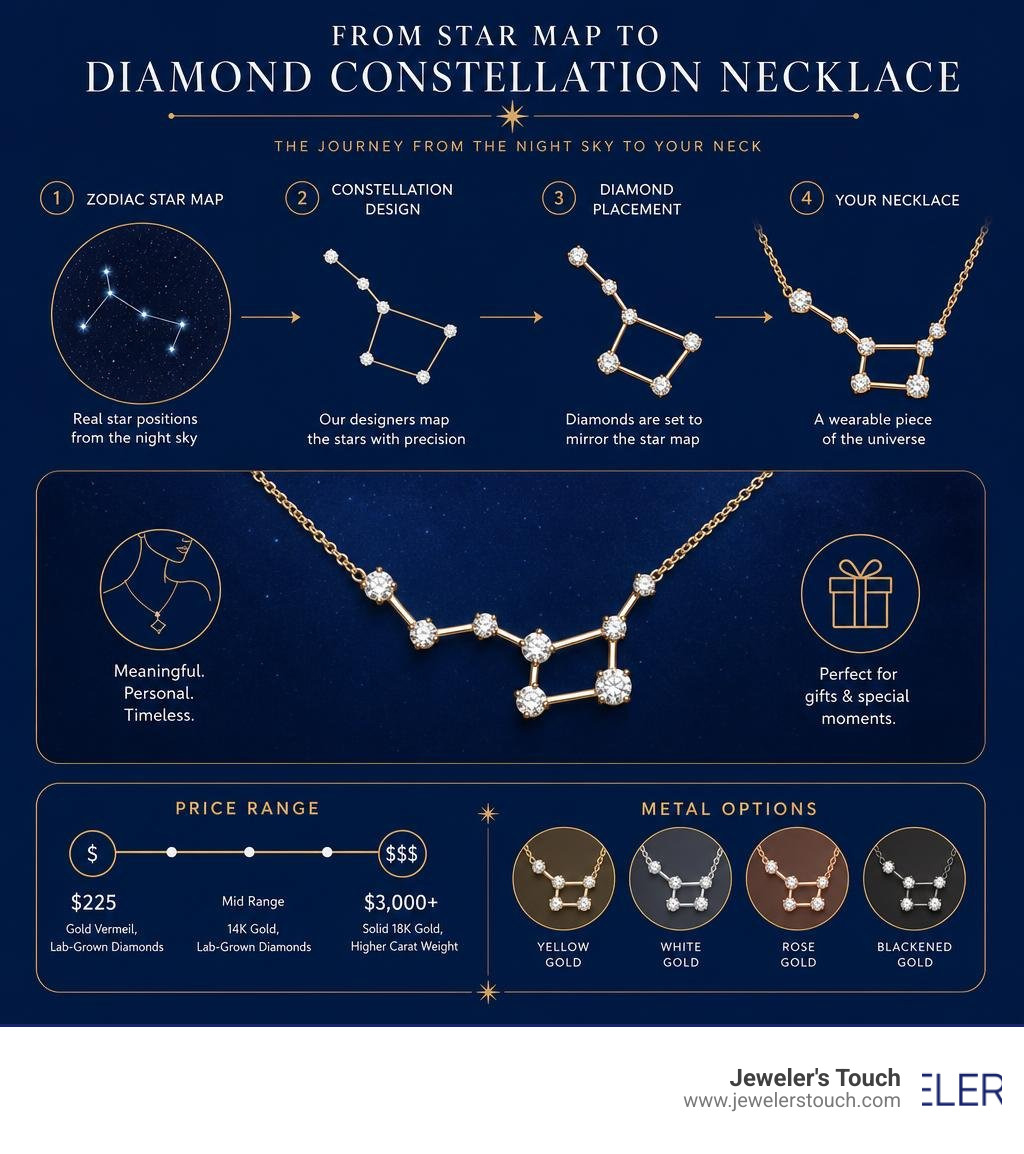
A diamond constellation necklace is one of the most meaningful ways to wear fine jewelry. It maps a real star pattern, usually your zodiac sign or a beloved celestial formation, using small diamonds set precisely to mirror the night sky.
Here is a quick overview of what you need to know:
- What it is: A pendant or necklace featuring diamonds placed to replicate an actual star constellation pattern
- Common designs: All 12 zodiac signs, plus the Big Dipper, Ursa Major, and the Summer Triangle
- Typical materials: 14K or 18K gold (yellow, white, rose, or blackened), with natural or lab-grown diamonds
- Price range: Roughly $225 (gold vermeil, lab-grown) up to $3,000+ (solid 18K gold, higher carat weight)
- Best for: Personalized gifts, everyday wear, milestone celebrations, or layering with other fine chains
- Customization: Many styles allow birthstone additions, engraving, and choice of metal color
These necklaces stand apart from standard zodiac pendants because they use actual star maps, not just symbols or glyphs. The result is something that feels personal rather than generic.
I'm Ken Rutz, and at Jeweler's Touch I've spent years helping customers find and create fine diamond jewelry, including personalized pieces like the diamond constellation necklace. Let me walk you through everything you need to know to choose the right one.
What is a Diamond Constellation Necklace?
At its heart, a diamond constellation necklace is a wearable piece of the night sky. Unlike traditional celestial jewelry that might feature a simple, generic crescent moon or a stylized five-point star, these necklaces are rooted in real astronomy. They use precise star patterns, zodiac alignments, and celestial mapping to recreate the exact layout of the stars as they appear in the night sky.
Each star in the constellation is represented by a sparkling diamond. The diamonds are connected by delicate metal lines, or they are flush-set onto a solid gold disc, creating a striking visual map. This style of jewelry turns your cosmic coordinates into something tactile, radiant, and deeply personal. It acts as a self-chosen talisman of identity and intuition, connecting the wearer to the infinite beauty of the universe. If you are interested in creating a piece that speaks to your unique story, you can explore A Guide To Creating Personalized Diamond Necklaces to see how custom design can bring your vision to life.
How Constellation Jewelry Differs from Standard Zodiac Pendants
When you think of zodiac jewelry, you probably picture the classic astrological symbols, such as the crab for Cancer, the scales for Libra, or the scorpion for Scorpio. While those traditional glyphs are wonderful, they can sometimes feel a bit literal or common.
Constellation jewelry takes a completely different approach. Instead of a bold, graphic symbol, it uses actual star maps to tell your story. This results in a highly minimalist design that feels subtle, elegant, and intriguing. To the casual observer, your necklace might simply look like an artistic, organic scatter of brilliant diamonds. But to you, and anyone you share the secret with, it is a personalized star sign style that represents the exact cosmic alignment of your birth.
These designs often feature low-profile flush settings, where the diamonds are nestled directly into the metal. This keeps the pendant smooth and comfortable against the skin, making it an ideal choice for custom celestial jewelry that you never have to take off.
Popular Zodiac Signs and Celestial Patterns
Whether you are looking to represent your own astrological sign or carry a symbol of guidance, there are several popular patterns commonly available:
- Zodiac Constellations: All twelve astrological signs are represented in these styles. For example, a Leo constellation necklace might feature a curved pattern of round diamonds representing the Nemean Lion, while a Virgo design captures the intricate, elegant alignment of the maiden. A Scorpio necklace maps out the dramatic, curving tail of the scorpion in brilliant diamonds, and a Libra piece balances the stars along a delicate golden arc.
- The Big Dipper and Ursa Major: The Big Dipper (which is technically an asterism) and its parent constellation, Ursa Major (the Great Bear), are incredibly popular. These shapes represent guidance, direction, and finding your way home.
- The Summer Triangle: This pattern features a high-contrast, geometric layout representing three bright stars (Vega, Deneb, and Altair) from three different constellations, making for a striking, modern look.
From Aries to Pisces, each astrological sign has its own unique star layout. Because some constellations require more stars (and therefore more diamonds) to map accurately, you will often find that the diamond carat weight and price vary slightly from sign to sign.
Key Factors to Consider When Choosing Your Necklace
Investing in a diamond constellation necklace is an exciting journey. To make sure you select a piece that you will cherish for decades, you need to weigh several key factors, including your metal choice, chain length, and diamond carat weight. Understanding these details will help you make a confident decision. For a deeper look into selecting the right foundation for your pendant, check out our guide on How To Choose The Right Necklace.
Selecting the Perfect Metal and Chain for Your Diamond Constellation Necklace
The metal you choose serves as the canvas for your celestial star map. Each option offers a distinct aesthetic and level of durability:
- 14K Gold (Yellow, White, or Rose): This is the industry standard for high-quality, everyday jewelry. Solid 14K gold offers an excellent balance of rich color and durability. It is strong enough to resist daily scratches while keeping your diamonds secure.
- 18K Gold: Featuring a higher gold content, 18K gold has a richer, warmer yellow tone. It is slightly softer than 14K gold, making it a luxurious option for heirloom pieces.
- Blackened Gold: This is a fantastic option for celestial jewelry. By treating the gold to give it a dark, oxidized finish, jewelers create a high-contrast background that mimics the actual night sky, making the white diamonds pop like real stars.
- Gold Vermeil: For an accessible price point, gold vermeil offers a thick layer of gold (up to five times thicker than standard plating) over a sterling silver base. While beautiful, it requires gentle care to prevent the gold layer from wearing down over time.
When it comes to the chain, you want something that matches the delicate nature of the pendant while offering everyday security. A fine cable or curb chain is often preferred. Many high-quality constellation necklaces come with adjustable chains (such as 16 to 18 inches), allowing you to customize where the pendant sits on your chest. To learn more about selecting the strongest and most stylish companion for your pendant, read about the Best Chain For Pendant and explore different styles of Gold Pendants Jewelry.
Understanding Diamond Quality and Carat Weight
Because constellation necklaces use several small diamonds to represent stars, the total carat weight (ctw) is typically distributed across multiple stones. For example, a necklace might have a total weight of 1/10 carat (0.10 ctw) or 1/6 carat (0.16 ctw) spread across six to ten tiny brilliant-cut diamonds.
When dealing with smaller accent diamonds, individual grading certificates are rare, but quality still matters. You want to look for stones with good clarity (such as VS or SI grades) and near-colorless grades (such as G or H) to ensure they sparkle brightly. To brush up on your diamond knowledge, take a look at The Four Cs Of Diamonds, review our Diamond Carat Guide, and get expert tips on Choosing Your Perfect Diamonds.
Natural vs. Lab-Grown Diamonds in Celestial Jewelry
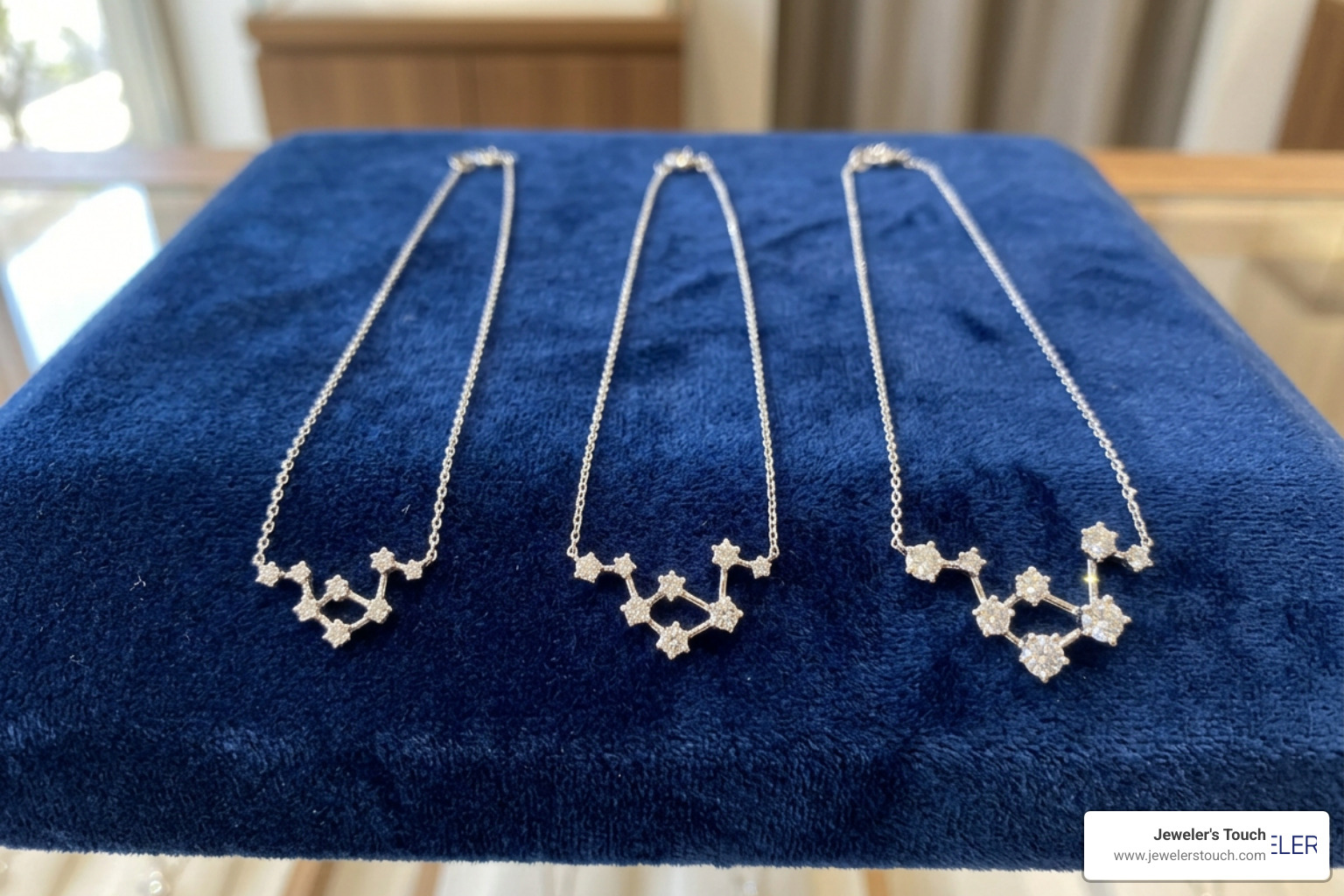
When choosing your diamond constellation necklace, you will likely encounter both natural and lab-grown diamond options. Both are real diamonds, but they have different origins and price points.
- Natural Diamonds: Created deep within the earth billions of years ago, natural diamonds carry an inherent sense of rarity and history. For many, wearing natural diamonds feels like carrying a piece of the earth's ancient history, aligning beautifully with the timeless nature of the stars.
- Lab-Grown Diamonds: Created in controlled laboratory environments, lab-grown diamonds have the exact same physical, chemical, and optical properties as mined diamonds. They offer a highly sustainable, conflict-free alternative, and they generally cost significantly less, allowing you to get a larger total carat weight for your budget.
To help you decide, we have broken down the key differences:
| Feature | Natural Diamonds | Lab-Grown Diamonds |
|---|---|---|
| Origin | Mined from the earth | Grown in a high-tech laboratory |
| Chemical Composition | Pure carbon crystal structure | Pure carbon crystal structure |
| Rarity & Value | High rarity; holds long-term value | Highly available; lower resale value |
| Price Point | Premium pricing | More budget-friendly |
| Best For | Heirloom pieces and traditional luxury | Sustainable, high-carat-weight designs |
For a deeper dive into this topic, you can read about The Difference Between Lab Grown Diamonds And Earth Mined Diamonds, explore Everything You Need To Know About Lab Grown Diamonds, or visit our dedicated pages on Lab Grown Diamonds.
Styling and Caring for Your Celestial Jewelry
One of the greatest things about a diamond constellation necklace is its incredible versatility. Its low-profile, minimalist design makes it perfect for daily wear, whether you are dressing up for a night out in Orange County or running errands in Brea.
For inspiration on how to make this piece a staple in your collection, read our tips on Stylish Ways To Wear Your Natural Diamond Necklace Everyday. If you love a layered look, you can master the art of stacking by checking out Ways To Layer Real Diamond Necklace or learn how to style a Double Pendant Necklace.
Daily Wear and Maintenance for a Diamond Constellation Necklace
While solid gold and diamonds are highly durable, delicate jewelry still requires proper care to keep its celestial sparkle bright. Because these necklaces feature multiple small, flush-set or bezel-set stones, dirt and oils can easily build up around the settings over time.
To maintain your necklace:
- Clean it gently: Mix a few drops of mild dish soap with warm water. Use a fresh, soft-bristled toothbrush to lightly scrub the pendant, paying close attention to the back where dirt accumulates.
- Rinse and dry: Rinse the necklace thoroughly under warm running water (make sure the drain is plugged!) and pat it dry with a soft, lint-free cloth.
- Use a polishing cloth: Gently buff the gold surfaces with a jewelry polishing cloth to restore its original shine. Never wash your polishing cloth, as doing so will remove the cleaning chemicals embedded in the fabric.
- Store it safely: When you are not wearing your necklace, store it flat in a lined jewelry box or hang it on a stand to prevent the delicate chain from tangling.
For comprehensive advice on keeping your entire collection in pristine condition, refer to our guide on Caring For Your Diamond Jewelry.
Frequently Asked Questions about Celestial Pendants
Can I customize a constellation necklace with birthstones?
Yes, absolutely. Customizing a diamond constellation necklace with birthstones is a beautiful way to add color and personal meaning to your piece. Many people choose to replace one or two of the diamonds in the constellation with their birthstone, or add a delicate gemstone dangle (sometimes called a bezel charm) to the chain. This allows you to combine your astrological star map with the vibrant hues of sapphires, emeralds, rubies, or alexandrite.
How are the diamonds set to represent actual star patterns?
To accurately replicate a star map, jewelers use precise setting techniques:
- Flush Setting (Gypsy Setting): The jeweler drills a small hole directly into the metal, places the diamond inside, and gently presses the surrounding metal around the stone's edges. This keeps the diamond flush with the surface, creating a smooth, low-profile look that mimics stars embedded in the night sky.
- Bezel Setting: A tiny collar of gold wraps completely around the edge of each diamond. This offers maximum protection for the stones and highlights their individual shapes.
- Brilliant Cut Diamonds: Jewelers almost always use round brilliant-cut diamonds for constellation jewelry because their 58 facets are designed to maximize light return, mimicking the natural twinkling of stars.
What is the typical price range for these necklaces?
The price of a diamond constellation necklace depends on several factors, including the purity of the metal (14K vs. 18K gold), the total diamond carat weight, and whether the diamonds are natural or lab-grown.
At the entry level, gold vermeil necklaces featuring small lab-grown diamonds can start around $225. For solid 14K gold necklaces with ethically sourced natural diamonds (typically around 1/10 ctw), prices generally range from $500 to $1,200. High-end luxury designs crafted in 18K gold with larger, certified diamonds can range from $1,900 to $3,000 or more. If you are shopping on a budget or looking for a special deal, you can learn How To Find Diamond Pendants For Sale.
Conclusion
A diamond constellation necklace is far more than a passing fashion trend. It is a timeless, elegant piece of wearable art that connects you to the stars, your personal history, and the people you love. Whether you choose a classic yellow gold zodiac sign or a custom-designed piece featuring your favorite celestial alignment, it is a talisman that will bring a touch of cosmic magic to your everyday style.
At Jeweler's Touch, we have been helping our neighbors in Orange County celebrate their most meaningful moments since 1992. Located in Brea, CA, our team includes on-site GIA gemologists and expert goldsmiths who are ready to help you find the perfect piece or design a completely custom celestial masterpiece.
If you are ready to find your perfect star map, visit our showroom today. Let us help you find a piece of jewelry that is truly written in the stars.