

Why Gold Pendants Jewelry Belongs in Every Collection
Gold pendants jewelry sits at the intersection of personal meaning and everyday style, and it's one of the most versatile pieces you can own. Whether you're shopping for yourself or looking for a gift, a gold pendant can mark a milestone, express a belief, or simply pull an outfit together.
Here's a quick overview of what you need to know before buying:
| What to Consider | Quick Answer |
|---|---|
| Best karat for daily wear | 14k gold - best balance of durability and purity |
| Gold colors available | Yellow, white, and rose gold |
| Solid gold vs. plated | Solid gold lasts a lifetime; plated fades over time |
| Common styles | Cross, coin, initial, heart, religious, diamond |
| Typical price range | ~$50 (simple 10k) to $2,600+ (18k with diamonds) |
| Chain compatibility | Match chain weight and style to pendant size |
| Care tip | Remove before swimming, showering, or applying perfume |
The global gold jewelry market was valued at around $265 billion in 2023, and pendants are one of its fastest-growing segments, which tells you something about how much people value them.
In this guide, we'll walk you through everything: styles, karat options, gold colors, chain matching, gemstone choices, and how to care for your piece so it lasts generations.
I'm Ken Rutz of Jeweler's Touch, a fine jewelry store specializing in custom designs, diamond jewelry, and expert repairs, including a wide range of gold pendants jewelry for every occasion. With years of experience helping customers find pieces they'll treasure for life, I'll make sure this guide gives you the clarity to choose with confidence.
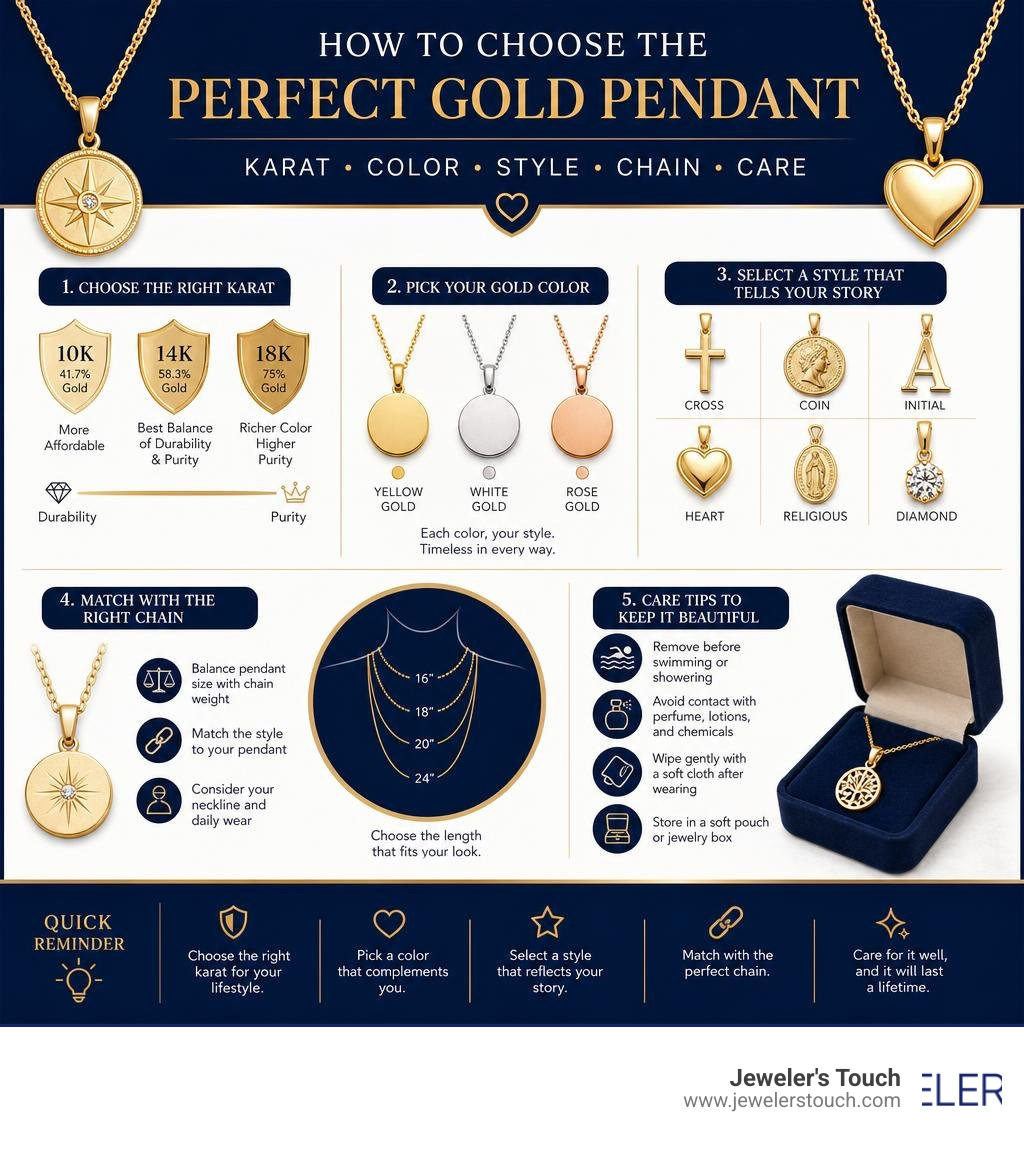
Understanding the Types and Styles of Gold Pendants Jewelry
Pendants have been worn for thousands of years, serving as protective amulets, symbols of status, and deeply personal keepsakes. Today, gold pendants jewelry continues to be the ultimate form of self-expression. Because a pendant rests close to your heart, the design you choose often tells a silent story about who you are, what you value, or where you have been.
When exploring the market, you will find hundreds of design directions. For instance, some specialized collections showcase over 400 unique designs ranging from spiritual icons to contemporary motifs, proving just how diverse this category is.

Classic Motifs and Spiritual Symbols
For those who appreciate timeless heritage designs, classic and spiritual motifs remain incredibly popular. These pieces carry deep symbolism and are often passed down through families as cherished heirlooms.
- Religious Medallions and Crucifix Crosses: From traditional crucifixes to beautifully detailed angel pendants, religious jewelry offers comfort and a daily connection to one's faith.
- Coin Pendants: Inspired by ancient currency, coin pendants evoke a sense of history, travel, and adventure. They add a rustic, textured element to any jewelry stack.
- Symbolic Elements: Many high-end designs use specialized artistic techniques to convey deeper meanings. For example, some designers utilize the intricate "guilloché" decorative engraving technique—a pattern of fine, repeating lines—to create pieces like the Birks Muse Guilloché Yellow Gold Pendant Necklace. In this design, the starburst pattern represents the shared energy and union between two people.
Whether you are looking for a simple protective medal or a beautifully engraved statement piece, exploring traditional motifs can show you how classic designs continue to inspire modern fashion.
Modern Minimalist and Custom Gold Pendants Jewelry
If your style leans more contemporary, the modern jewelry landscape offers endless opportunities for clean lines and personalization.
- Initial and Monogram Charms: A simple gold letter is one of the most popular ways to wear personalized jewelry. It can represent your own name, a partner's initial, or your child's name.
- Geometric and Minimalist Shapes: Sleek bars, circles, and abstract shapes offer a subtle sparkle that fits seamlessly into a professional wardrobe or a casual weekend look.
- Custom Designs: Sometimes, a mass-produced piece simply won't do. Creating custom jewelry allows you to design a one-of-a-kind heirloom. Whether you want to repurpose family gold, set a rare gemstone, or sketch a design from scratch, working with an expert jeweler ensures your vision is brought to life with expert craftsmanship.
Gold Purity and Color: Karats, Alloys, and Tones
When shopping for gold pendants jewelry, understanding gold purity is essential. Pure gold (24k) is incredibly soft and malleable, making it impractical for everyday wear. To make it durable enough for jewelry, goldsmiths alloy pure gold with other metals like copper, silver, zinc, and nickel.
The ratio of pure gold to these alloying metals determines the karat weight:
| Karat | Gold Purity (Percentage) | Durability | Color Warmth | Common Use |
|---|---|---|---|---|
| 10k Gold | 41.7% | Very High | Pale Yellow | Budget-friendly, highly durable daily wear |
| 14k Gold | 58.3% | High (Excellent balance) | Rich Warm Yellow | The industry standard for fine jewelry |
| 18k Gold | 75.0% | Moderate (Softer) | Deep, Vibrant Yellow | High-end luxury and fine gemstone settings |
While some brands offer a small selection of 10k or 18k options, 14k gold remains the most popular choice by far. For example, in collections featuring over 100 fine pendant necklaces, it is common to find that more than 95% of the pieces are crafted in 14k gold because of its perfect balance of beauty, durability, and value.
Choosing Between Yellow, White, and Rose Gold
The metals mixed with pure gold do more than add strength; they also dictate the final color of the jewelry.
- Yellow Gold: The classic, timeless choice. Yellow gold gets its warm hue from a balanced mix of copper and silver. It complements warm skin undertones beautifully.
- White Gold: Crafted by alloying gold with white metals like manganese, silver, or palladium, white gold is typically finished with a rhodium plating to give it a bright, reflective shine. It looks stunning on cool skin undertones. To understand how white gold compares to other premium metals, check out our guide on Platinum vs White Gold and learn why some prefer it, or ask Is Platinum Hypoallergenic if you have sensitive skin.
- Rose Gold: This romantic, pinkish metal gets its color from a higher concentration of copper. Rose gold is incredibly durable and complements almost every skin tone.
When building your collection, you don't have to stick to just one tone. Mixing metals is a fantastic way to add depth to your style. For insights on how these metals behave in other jewelry pieces, read about The Difference Between White and Yellow Gold Earrings or explore the Differences Between Yellow and White Gold Wedding Bands.
Solid Gold vs. Plated and Filled Alternatives
If you want your gold pendant to last a lifetime and retain its value, you must know the difference between solid gold and lower-quality alternatives:
- Solid Gold: The entire piece is made of a consistent gold alloy (such as 10k, 14k, or 18k). It will not tarnish, peel, or wear down to a base metal over time. It can be worn daily, exposed to water (with care), and easily repaired or polished by a jeweler.
- Gold Vermeil: A sterling silver base coated with a thick layer of gold (usually 2.5 microns or more). While higher quality than standard plating, the gold layer will eventually wear off with heavy use.
- Gold-Filled: A base metal (like brass) mechanically bonded with a thick layer of gold. It is more durable than gold-plated jewelry but cannot be easily resized or repaired without exposing the base metal.
- Gold-Plated: A very thin layer of gold electrically charged onto a base metal. This jewelry is prone to rapid tarnishing, can green your skin, and has virtually no resale or heirloom value.
For those looking to invest in pieces that can be passed down through generations, solid gold is always the gold standard. If you're shopping for yourself or a loved one, our Guide to Buying Womens Gold Earrings offers additional tips on identifying quality precious metals.
Key Factors When Selecting Your Pendant and Chain
Choosing a pendant is only half the journey; how you wear it matters just as much. Proportions, necklace lengths, and chain styles all play a role in how your pendant sits on your neckline and complements your wardrobe.

Matching the Pendant with the Perfect Chain
A beautiful pendant needs a supportive partner. When choosing a chain, you must consider both aesthetics and structural integrity. A heavy, solid gold pendant will snap a paper-thin chain, while a tiny, delicate charm will look lost on a thick, chunky link.
- Weight Compatibility: As a rule of thumb, the chain should weigh at least as much as the pendant it holds. This ensures the chain can handle the movement and weight of the piece.
- Popular Chain Styles: Sleek cable, curb, and wheat chains are classic choices that offer excellent strength. If you love a modern look, a trendy paperclip chain provides a bold, geometric look that is perfect for layering. Be cautious with delicate designs like herringbone chains; while gorgeous, they are prone to kinking if not stored flat.
- Length and Layering: A shorter chain (14 to 16 inches) sits close to the collarbone, making it ideal for small, everyday pendants. A standard length (18 inches) is the most versatile, while longer chains (20 to 24 inches) are perfect for larger statement pieces or medallions.
To find the absolute best match for your jewelry box, read our dedicated guide on the Best Chain for Pendant or learn How to Choose the Right Necklace for your body type and style.
Incorporating Gemstones and Diamonds into Gold Pendants Jewelry
Adding stones to a gold pendant elevates its brilliance and adds a splash of personal color.
- Diamonds: The ultimate symbol of strength and sparkle. You can choose between natural diamonds or lab-grown diamonds, which are chemically, physically, and optically identical to mined stones but come at a more accessible price point. To weigh your options, explore The Difference Between Lab Grown Diamonds and Earth Mined Diamonds.
- Pearls: Pearls bring an organic, soft luster to the warmth of gold. A 14k Gold Necklace with Pearl is a sophisticated choice for formal events or everyday elegance. For a bold, luxurious statement, consider a rare, dark pearl, such as The Aura | 18K Gold Tahitian Pearl Pendant Necklace, which showcases shifting peacock-green overtones.
- Local Style Inspiration: If you want to see how Southern California styles these gorgeous combinations, visiting a local jewelry showroom in Brea, CA, can provide endless inspiration for layering gold, diamonds, and gemstones.
Caring for Your Gold Pendants to Ensure Lifetime Wear
While solid gold does not tarnish or rust, it is a relatively soft precious metal that requires proper care to maintain its brilliant shine. Over time, everyday oils, skin products, and dust can accumulate behind gemstones and dull the metal's luster.
Daily Wear Best Practices and Chemical Avoidance
To keep your pendant looking like new, follow these simple daily habits:
- The "Last On, First Off" Rule: Always put your jewelry on after applying makeup, hairspray, lotions, and perfume. The chemicals in these products can coat your gold and damage organic gemstones like pearls.
- Avoid Swimming and Heavy Exercise: Never wear your gold jewelry in a swimming pool or hot tub; chlorine can attack the metal alloys in gold, structurally weakening the piece. Sweat and physical impact during workouts can also scratch the gold or loosen stone settings.
- Proper Storage: Store your gold pendants separately in soft fabric pouches or dedicated compartments in a jewelry box to prevent them from rubbing against harder gemstones (like diamonds) that can easily scratch the gold surface.
Professional Inspections and Prong Maintenance
Even the most carefully handled jewelry needs professional attention occasionally.
- Inspect Pavé Settings: If your pendant features tiny pavé-set diamonds, they rely on minuscule gold prongs to stay in place. We recommend inspecting pavé jewelry at least every six months, or immediately after any hard impact, to ensure no stones have come loose.
- Home Cleaning: For a quick refresh, gently clean your solid gold pendant with a soft-bristled toothbrush, warm water, and a few drops of mild, detergent-free dish soap. Rinse thoroughly and dry with a soft lint-free cloth.
- Professional Care: Bring your jewelry to a professional jeweler once a year. They can safely polish out surface scratches, check the security of all prongs, and use professional ultrasonic cleaners to restore that original showroom sparkle.
Frequently Asked Questions About Gold Pendants
How can I tell if my gold pendant is real solid gold?
The most reliable way to identify genuine gold is by looking for a tiny stamp called a hallmark (such as "10k", "14k", "585", or "18k") on the bail or the back of the pendant. You can also test it with a strong magnet; real gold is not magnetic. For absolute certainty, bring the piece to a reputable jeweler who can perform an acid test or use an electronic gold tester without damaging the metal.
Can I wear my 14k gold pendant in the shower?
While showering with a solid 14k gold pendant won't ruin the metal, we advise against making it a daily habit. Over time, soap scum, body washes, and shampoos can build up a dull film on the gold and behind any set gemstones, reducing their brilliance. Additionally, the risk of the chain snagging on a towel or slipping down the drain makes it safer to remove.
What is the most durable gold karat for everyday wear?
For everyday wear, 14k gold is widely considered the most durable and practical option. It contains 58.3% pure gold, leaving plenty of room for stronger alloying metals that resist scratches and dents. While 10k gold is technically harder, it has a paler color. Meanwhile, 18k gold is richer in color but significantly softer and more prone to scratching under daily wear.
Conclusion
Choosing the perfect gold pendant is a beautiful journey of matching your personal style with quality craftsmanship. By understanding gold purities, choosing the right color, pairing your pendant with a durable chain, and practicing proper jewelry care, you can ensure your piece remains a stunning focal point of your wardrobe for years to come.
At Jeweler's Touch, our family-owned jewelry store in Orange County has been helping clients celebrate life's most precious moments since 1992. With our on-site GIA gemologists and expert goldsmiths, we are ready to help you find, customize, or repair the gold pendant of your dreams.
Ready to add a brilliant new piece to your collection? Explore our guide on How to Find Diamond Pendants for Sale or stop by our showroom in Brea, CA, to experience our personalized service firsthand!