

Choose a 10 Karat Gold Tennis Bracelet for Strength and Value
A 10 karat gold tennis bracelet is a smart choice if you want real gold, everyday strength, and diamond sparkle without the cost of 14K or 18K gold. In the US, 10K gold is 41.7% pure gold, with stronger alloy metals making up the balance. Look for a secure clasp, a comfortable fit, and diamonds with a bright cut and evenly matched appearance.
Choose based on your priorities:
- For daily wear: 10K gold offers strong links and good resistance to dents and scratches.
- For classic style: Pick a flexible, four-prong diamond tennis design in yellow or white gold.
- For a larger look on a set budget: Consider lab-grown diamonds or a higher total diamond weight.
- For peace of mind: Choose a bracelet with a safety latch and have the setting checked regularly.
A tennis bracelet can range from a subtle 1 ct. t.w. design to a bold multi-carat piece. The total diamond weight affects both the visual impact and price, but diamond cut, setting quality, and clasp security matter just as much for long-term enjoyment.
I am Ken Rutz of Jeweler's Touch, where I work with fine jewelry, custom designs, and jewelry repair. My experience evaluating diamond jewelry and gold construction helps buyers choose a 10 karat gold tennis bracelet that fits their style, budget, and daily routine.

Why a 10 Karat Gold Tennis Bracelet Is Built for Daily Luxury
When shopping for everyday fine jewelry, finding the balance between visual elegance and structural resilience is key. A 10 karat gold tennis bracelet provides the ideal answer. While pure 24-karat gold is naturally soft and pliable, 10K gold consists of 41.7% pure gold combined with 58.3% durable alloy metals such as copper, zinc, silver, and nickel. This exact ratio gives the metal high structural rigidity, making it remarkably resistant to dents, bending, and deep scratches.
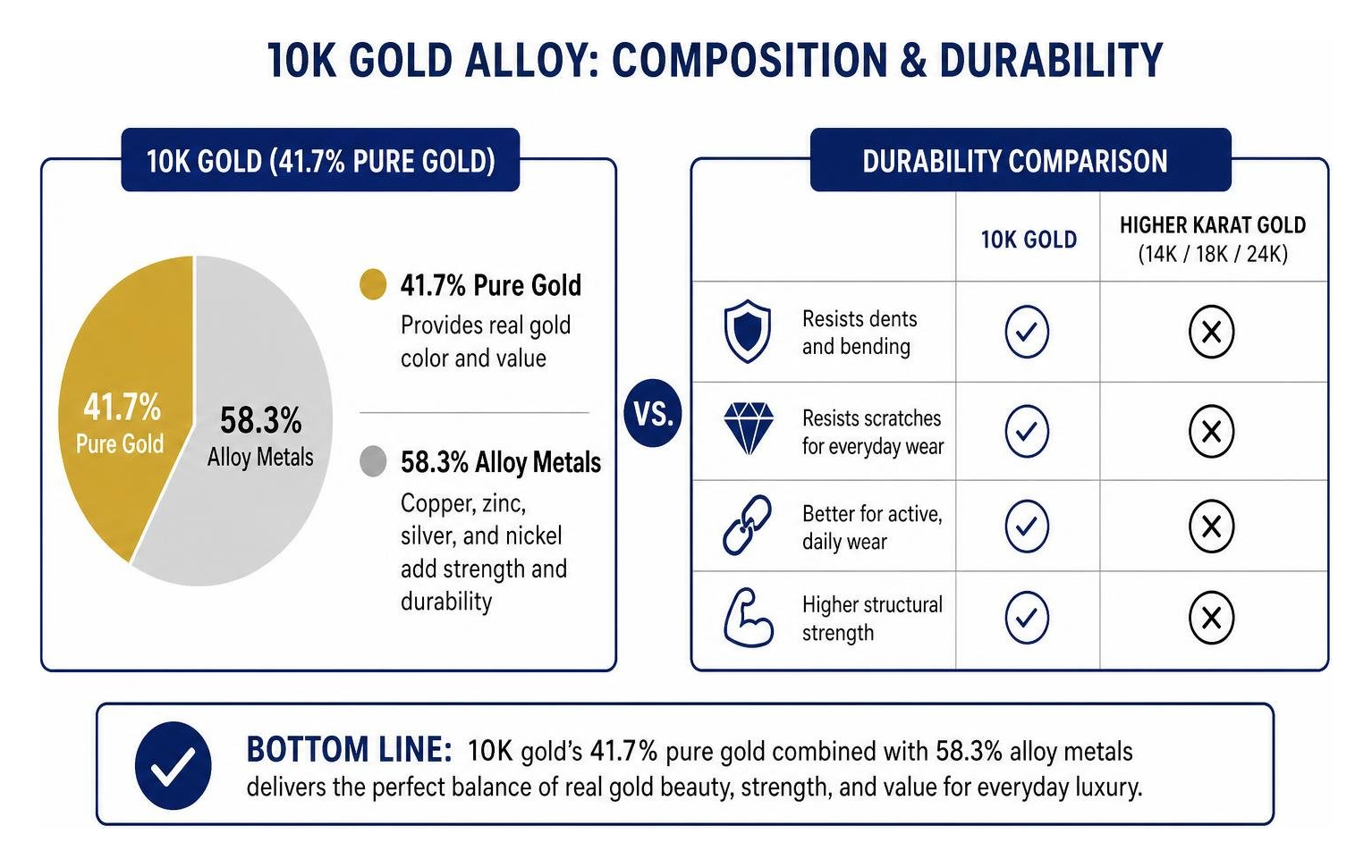
If you lead an active lifestyle, work at a computer, or simply want a piece of jewelry that you do not need to take off constantly, 10K gold delivers reliable performance. Modern jewelry trends favor pieces that transition seamlessly from casual morning wear to formal evening events.
Color choices allow for easy personalization:
- 10K Yellow Gold: Alloyed with warm copper and zinc, this metal delivers a subtle, champagne-like yellow gold tone that pairs beautifully with vintage or contemporary aesthetics.
- 10K White Gold: Alloyed with durable white metals and finished with a bright rhodium plating, it creates an icy mirror finish that enhances diamond brilliance and complements cool-toned wardrobes.
Popular Styles of the 10 Karat Gold Tennis Bracelet
Tennis bracelets have evolved far beyond the single row of shared-prong round diamonds. Today, a variety of architectural settings and mounting methods allow you to express your individual taste while ensuring the safety of your stones:
- Classic Four-Prong: The iconic tennis bracelet profile. Four delicate metal prongs secure each diamond individually, allowing maximum light to enter from all angles for exceptional sparkle.
- Miracle Plate Setting: A clever design choice where each diamond is surrounded by a faceted, mirror-finish metal plate. This technique makes a 1 ct. t.w. bracelet visually present like a 2 or 3 ct. t.w. piece at a fraction of the cost.
- Half-Bezel and Full Bezel Mountings: For an active, snag-free design, bezel settings wrap smooth gold borders around the perimeter of each stone. Review our comprehensive diamond bezel bracelet guide to see how protective frames create a sleek, modern silhouette.
- Twist and Wave Links: These styles introduce flowing S-curves or twisted gold ribbons between diamond clusters, adding playful movement across your wrist.
- Bar Link Designs: Utilizing straight, polished gold bars between individual gems, bar link bracelets offer clean geometric lines and increased metal visibility.
Men's vs. Women's 10 Karat Gold Tennis Bracelet Options
Modern jewelry design embraces unisex appeal, yet distinct structural differences exist between men's and women's tennis bracelet collections. Men's bracelets typically feature wider link profiles, heavier gold gram weights, and larger total carat weights ranging from 3 ct. t.w. up to 6 ct. t.w. or higher.
- Square Link and Cluster Styles: Men's designs frequently feature square frame links or diamond clusters that sit flat against broader wrists, delivering bold presence.
- Chevron and Bezel Links: Intricate geometric arrangements, such as two-tone chevron patterns or black and white diamond combinations, add rich contrast.
- Two-Tone Gold: Combining 10K yellow and white gold in alternating links allows effortless pairing with luxury timepieces and rings. Explore our men's jewelry guide for styling advice on pairing mixed-metal bracelets with everyday attire.
Women's designs, by comparison, often emphasize refined prong work, fluid flexibility, and lower profile links that stack comfortably alongside charm bracelets, cuffs, and delicate watches.
10K vs. 14K, 18K, and Sterling Silver
Selecting the right metal requires balancing budget, lifestyle demands, and aesthetic preferences. While 14K and 18K gold remain prestigious industry standards, 10K gold holds distinct advantages in hardness and affordability.
| Metal Type | Gold Purity | Hardness & Scratch Resistance | Color Warmth | Ideal Wearer Profile |
|---|---|---|---|---|
| 10K Gold | 41.7% Pure Gold | Very High (hardest standard gold alloy) | Soft yellow or bright rhodium white | Daily wear, active lifestyles, best value |
| 14K Gold | 58.5% Pure Gold | High (balanced strength and purity) | Classic warm gold tone | Traditional luxury, balanced price and purity |
| 18K Gold | 75.0% Pure Gold | Moderate (softer, prone to micro-scratches) | Rich, deep buttery yellow | Fine occasion wear, high-end collector pieces |
| Sterling Silver | 0.0% Gold (92.5% Ag) | Moderate-Low (requires frequent polishing) | Cool silver (naturally oxidizes over time) | Budget-friendly starter pieces, casual wear |
While sterling silver is accessible, it requires constant upkeep to prevent oxidation and lacks the substantial weight of gold. You can read our sterling silver chain guide to understand silver's alloy composition. Conversely, high-karat options like an 18k gold chain showcase rich gold saturation, but their softer composition requires gentler handling. 10K gold occupies the sweet spot for durable everyday strength without luxury markups.
Carat Weights, Diamond Quality, and Pricing Breakdown
The overall price of a diamond tennis bracelet is determined by the total diamond weight (ct. t.w.), diamond type (natural vs. lab-grown), cut quality, color, clarity, and total gold weight. Selecting a well-proportioned diamond tennis bracelet in 10K yellow gold ensures you receive uniform stone quality from one end of the mounting to the other.
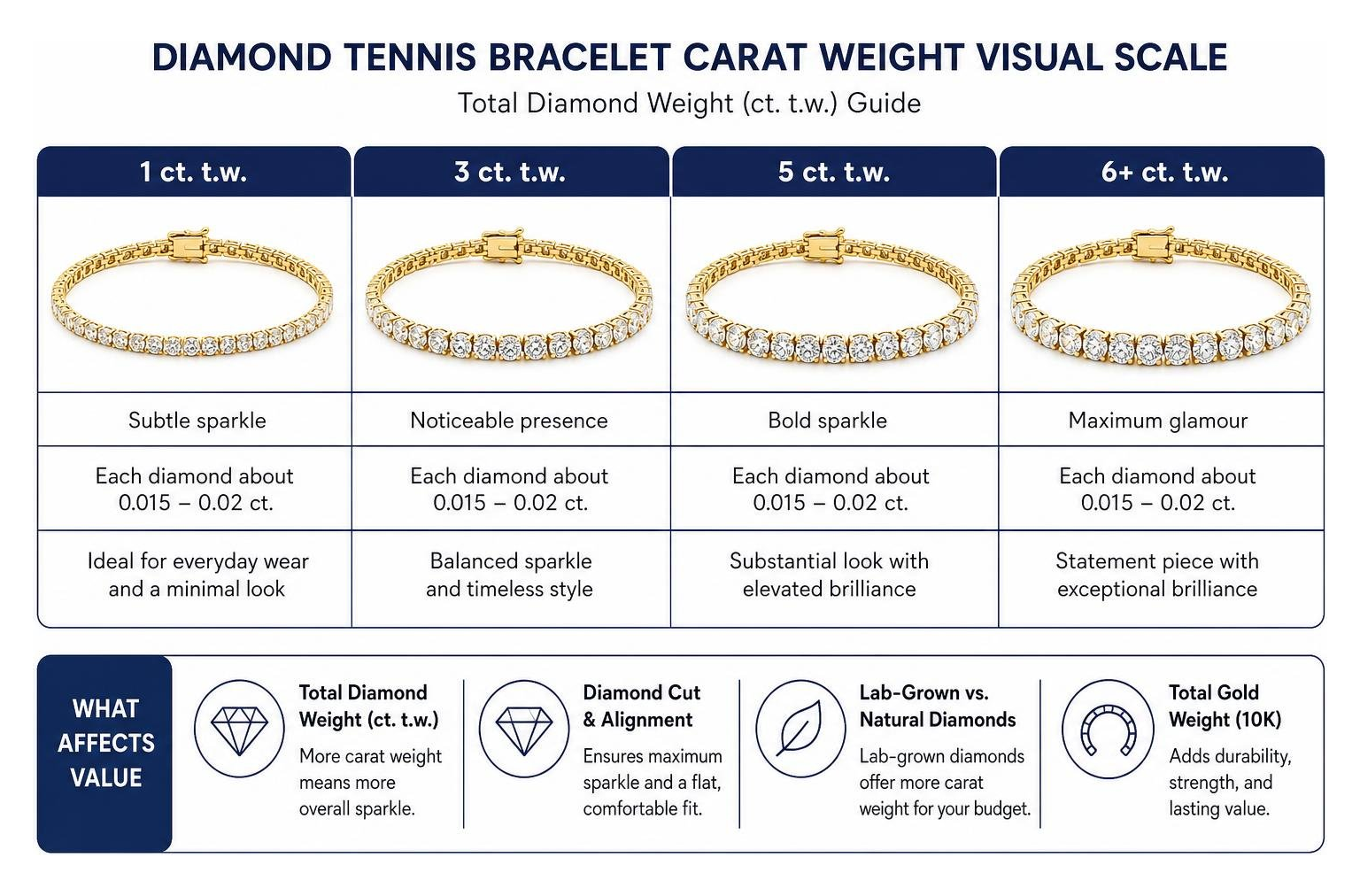
Key factors to evaluate include:
- Total Diamond Weight (ct. t.w.): A 1 ct. t.w. bracelet delivers subtle sparkle, with each individual diamond weighing around 0.015 to 0.02 carats. A 3 ct. t.w. piece provides noticeable wrist presence, while 5 ct. t.w. and 6 ct. t.w. bracelets offer substantial glamour.
- Diamond Cut and Alignment: Cut quality determines sparkle. Ensure diamonds are uniform in diameter, depth, and girdle thickness so the bracelet lies flat against your skin without rolling.
- Lab-Grown vs. Natural Diamonds: Lab-grown diamonds share identical physical, chemical, and optical properties with natural mined stones, as recognized by the Gemological Institute of America. Opting for lab-grown diamonds in a 10K gold setting allows you to double your carat weight while staying within your target budget. Learn more about evaluating diamonds in our guide to diamond jewelry.
Pricing Tiers and Gift Budgets
Whether you are searching for a milestone anniversary surprise, a Valentine's Day present, or a self-purchase, understanding standard market price points ensures you find maximum value:
- Under $500 (Accessible Gifts): Bracelets in this category often feature 10K gold accents, bar link elements, or silver-gold hybrid mountings with 0.25 to 0.50 ct. t.w. diamonds.
- $1,000 to $2,500 (Classic Everyday Range): This tier includes 1 ct. t.w. to 3 ct. t.w. natural or lab-grown diamond bracelets. For example, a 1 ct. t.w. miracle plate bracelet typically retails around $1,399, while standard 1 ct. t.w. designs often settle around $1,050 during major seasonal promotional events.
- $2,500 to $5,500 (Bold Statement Pieces): This level features substantial 3 ct. t.w. to 5 ct. t.w. bracelets. A 3 ct. t.w. white gold piece generally sits near $2,370, whereas a 5 ct. t.w. natural diamond bracelet in 10K yellow or white gold ranges between $3,870 and $5,200. Lab-grown 5 ct. t.w. variations are often priced around $2,970.
- $6,000 to $9,500+ (Luxury Men's and Heavy Multi-Carat): Substantial 5 ct. t.w. square link bracelets ($6,825) and heavy 6 ct. t.w. two-tone bezel link bracelets ($9,100) feature thick gold mountings and exceptional total stone volume.
For additional gifting tips, explore our complete diamond jewelry buying guide.
Essential Buying Guide: Settings, Security, and Long-Term Care
A tennis bracelet is only as dependable as its weakest link. Because wrists move constantly throughout the day, paying close attention to construction details protects your investment for decades.
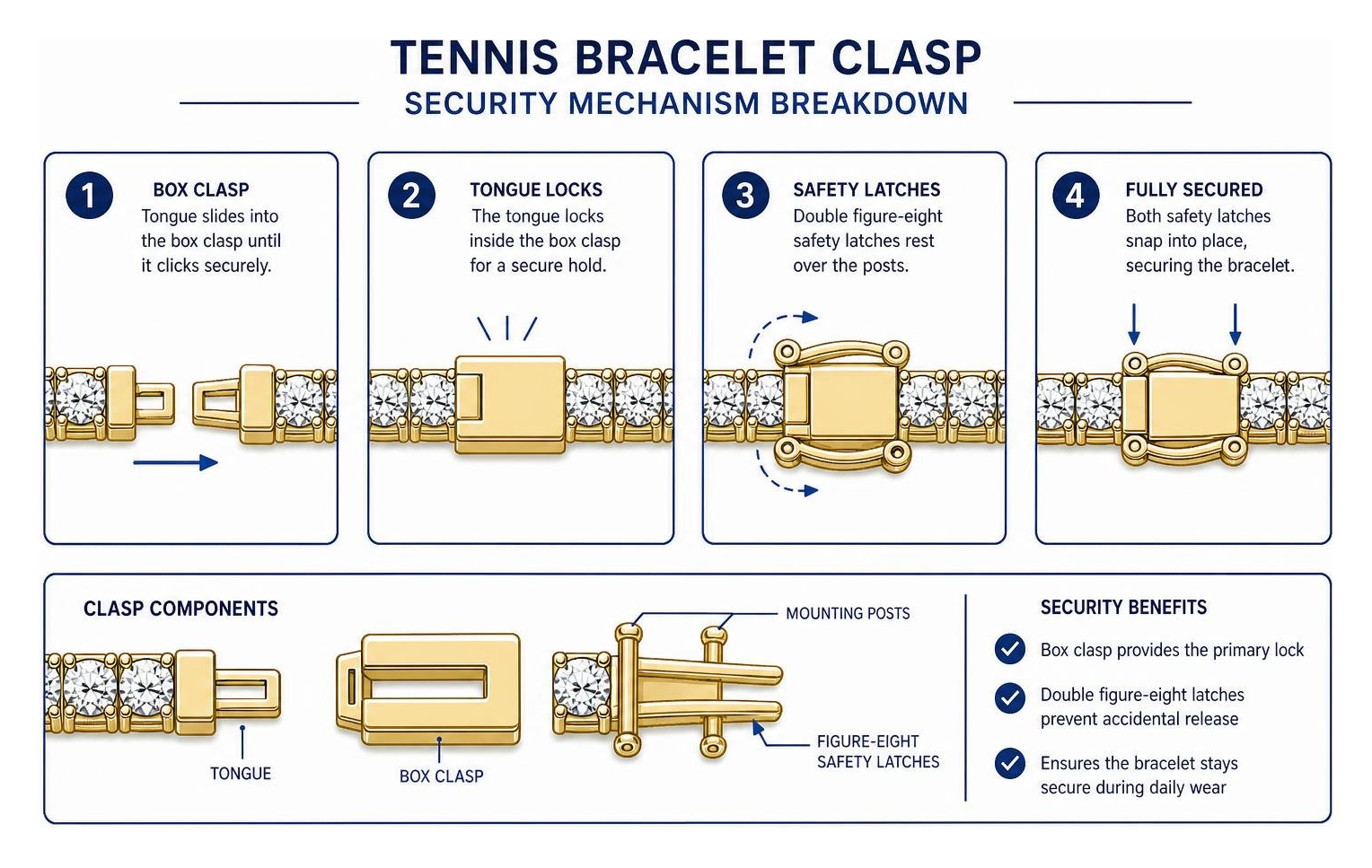
- Clasp Security: The box clasp with double figure-eight safety latches is the gold standard in bracelet security. Ensure both side safety clips snap securely into place over the mounting posts.
- Hinge Flexibility: Gently drape the bracelet across your fingers. It should move fluidly like silk without kinking, twisting, or catching. Stiff joints indicate poor casting or irregular assembly.
- Mounting and Prong Integrity: Rub the bracelet gently against a micro-knit fabric. If prongs snag threads, the metal tips require expert smoothing and tightening by a bench jeweler.
- Professional Maintenance: Visit your local jeweler at least once a year for an ultrasound and steam cleaning, prong tightening, and updated jewelry appraisals for your insurance policies.
Frequently Asked Questions About 10K Tennis Bracelets
Is 10K gold durable enough for daily tennis bracelet wear?
Yes. 10K gold is actually the most durable gold alloy standard commonly sold in the United States. Its high proportion of base metals (58.3%) gives it exceptional hardness and tensile strength, making the prongs and link pins highly resistant to thinning, bending, or snapping during regular daily activities.
Will a 10K gold tennis bracelet tarnish or irritate sensitive skin?
10K yellow and white gold resist tarnishing under normal conditions. However, because 10K gold contains higher amounts of alloy metals like nickel, copper, and zinc, individuals with severe metal allergies may occasionally experience minor skin reactions to unplated yellow gold. 10K white gold is typically plated in pure rhodium, which provides a hypoallergenic barrier between your skin and the base alloy.
How does 10K gold affect diamond brilliance and sparkle?
10K gold has no negative impact on diamond brilliance. In 10K white gold, the rhodium finish reflects light straight into the diamonds, enhancing optical brightness. In 10K yellow gold, the subtle golden hue creates a warm, vintage backdrop that makes bright white stones stand out with striking contrast.
Conclusion
A 10 karat gold tennis bracelet delivers the ideal synthesis of timeless beauty, long-lasting resilience, and attainable luxury. Whether you choose a classic 1 ct. t.w. everyday staple, a protective bezel link, or a dramatic 5 ct. t.w. evening statement, 10K gold guarantees your piece can handle daily life without compromising on style.
At Jeweler's Touch, we have served fine jewelry clients across Orange County since 1992. Our team includes expert goldsmiths and three GIA Graduate Gemologists who carefully inspect the diamond cut, symmetry, and mounting security of every piece in our showroom. Ready to find your perfect wrist accent? Explore our collection of diamond bracelets or visit us in Brea to try on your favorite designs in person.