

Why Getting Your Ring Size Right Matters More Than You Think
A ring sizing chart for men is the fastest way to find an accurate fit before you buy. Here's a quick reference for the most common men's ring sizes across major sizing systems:
| US Size | UK Size | EU Size | Diameter (mm) | Circumference (mm) |
|---|---|---|---|---|
| 8 | P | 57 | 18.1 | 56.9 |
| 9 | R | 59 | 18.9 | 59.3 |
| 10 | T | 62 | 19.8 | 62.1 |
| 11 | V | 65 | 20.6 | 64.7 |
| 12 | X | 68 | 21.4 | 67.3 |
| 13 | Z | 70 | 22.3 | 70.2 |
The average US men's ring size is 9 to 10. In the UK, it's size T. If you're between sizes, always go up — not down.
A ring that fits well slides on smoothly, clears the knuckle with light resistance, and doesn't spin freely or feel tight. Get it wrong and you're looking at resizing costs — or, with metals like tungsten or titanium, a full replacement.
This guide walks you through everything: how to read a men's ring size chart, how to measure at home, what affects fit, and when to see a professional.
I'm Ken Rutz from Jeweler's Touch, a fine jewelry store where our expert goldsmiths and GIA-trained staff help customers navigate everything from custom engagement rings to finding the right ring sizing chart for men. With years of hands-on experience fitting rings for all styles and finger shapes, I'll make sure you have everything you need to get this right.
Understanding the Ring Sizing Chart for Men
Navigating a ring sizing chart for men can feel like deciphering a secret code if you aren't familiar with how different countries measure fingers. In May 2026, the global jewelry market is more connected than ever, meaning you might find the perfect band from a designer in London or a craftsman in Tokyo. Understanding how these systems compare is the first step toward a comfortable fit.
In the United States and Canada, we use a numerical scale. These numbers typically range from size 3 to 15 for adults, with most men falling between 8 and 14. Each half-size adds about 0.4mm to the diameter. Across the pond, the UK, Ireland, and Australia use an alphabetical system. For example, a US size 9 is roughly equivalent to a UK size R.
The European system (EU) is arguably the most logical, as the size number often corresponds directly to the internal circumference of the ring in millimeters. If your finger's circumference is 62mm, you’re likely a size 62. Asian sizes (Japan, China, India) also use a numerical scale, but the increments differ from the US system. To get the most accurate fit, it is vital to consult a Men's Ring Size Chart: US, UK, EU & International Standards before making a purchase.
When you look at a Men’s Ring Size Conversion tool, you will see two primary measurements:
- Internal Diameter: The distance across the inside of the ring at its widest point.
- Circumference: The total distance around the inside of the ring (or around your finger).
Average Ring Sizes by Region
While every hand is unique, data from 2026 shows clear trends in "average" sizes. In the United States, the Average Mens Ring Size is widely considered to be a size 10. In the UK, the single most common size sold at retail is a size T, which has a diameter of approximately 19.8 mm.
Interestingly, regional variations often correlate with build and climate. Men in warmer regions may find their "average" size is slightly larger due to natural heat-induced swelling. Most manufacturers stock a standard range of 8 to 12, but at Jeweler's Touch, we frequently work with sizes outside this range to ensure every client gets a perfect fit.
How to Measure Your Ring Size at Home
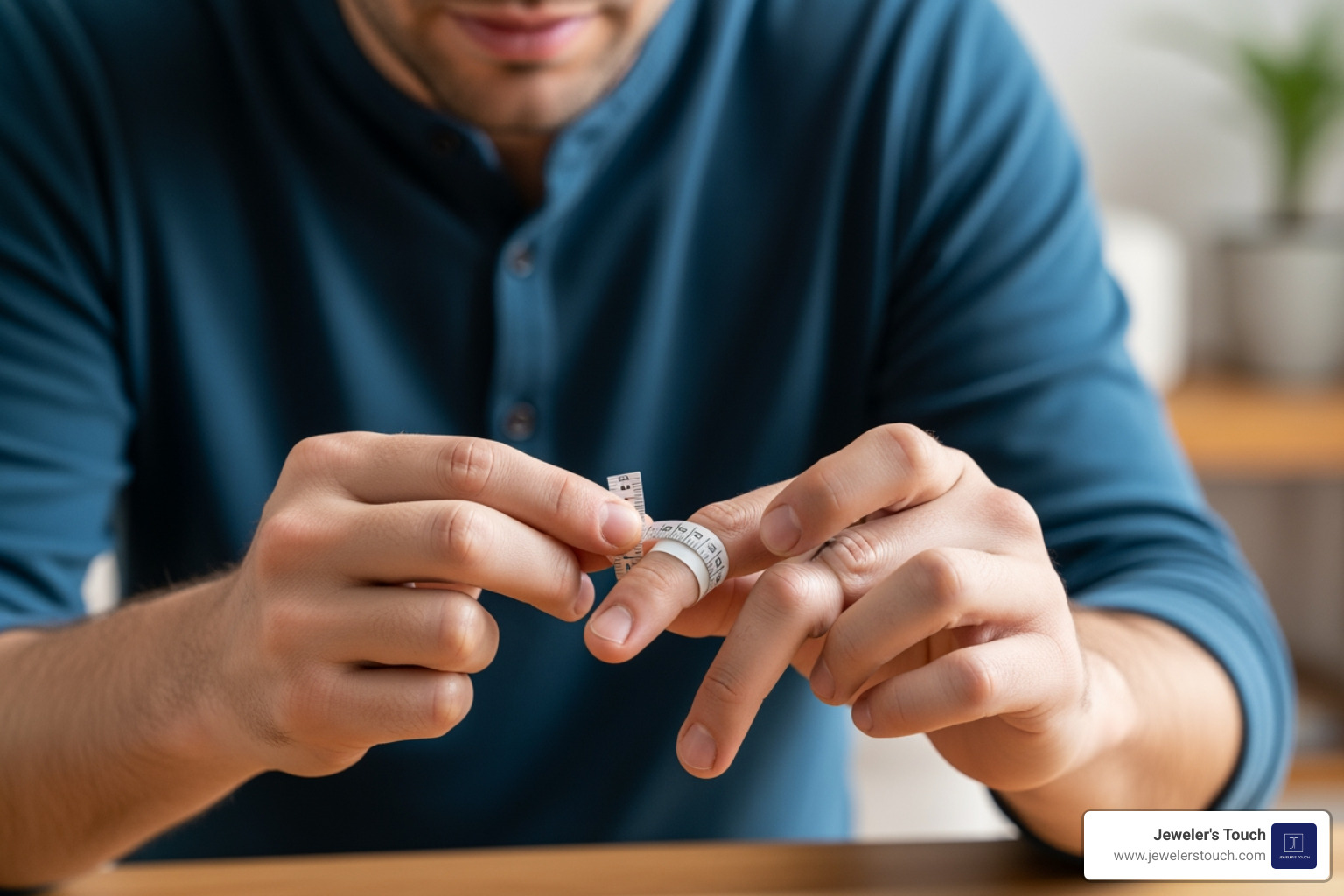
If you can't make it into our Orange County showroom right away, you can get a very close estimate using common household items. The most reliable DIY method is the paper strip technique.
- Cut a strip of paper: It should be about 1/2 inch wide and 4 inches long.
- Wrap it around: Place the paper around the base of the finger you intend to wear the ring on.
- Mark the overlap: Use a pen to mark exactly where the paper overlaps.
- Measure the length: Use a millimeter ruler to measure the distance from the end of the paper to your mark. This is your circumference.
You can also use the "string method," but be careful—string is often stretchy, which can lead to an inaccurate (too small) reading. For more guidance on specific finger anatomy, check out our guide on Average Mens Ring Finger Size.
If you already have a ring that fits perfectly, you can use a Ring Size Chart | Find Your Size Online or Print at Home to match the inner diameter against physical circles on a screen or paper. Just ensure your screen zoom is set to 100%.
Using a Printable Ring Sizing Chart for Men
Printable tools are fantastic, provided they are used correctly. The biggest pitfall is "scaling." If your printer settings are set to "Fit to Page," the circles will be the wrong size. Always ensure your settings are at 100% scale.
Most printable guides include a "Credit Card Test." You place a standard credit card over a designated line on the printout; if they match exactly, your scale is correct. From there, you can use the "circle matching" method, placing your existing ring over the circles until the inside of the band aligns perfectly with the outer edge of the printed circle. For a deep dive into what these measurements look like in the real world, read The Perfect Fit: Everything You Need to Know About a Size 10 Ring in Inches.
Key Factors That Affect Your Ring Fit
Finding your number on a ring sizing chart for men is only half the battle. Your finger isn't a static cylinder; it's a living part of your body that changes throughout the day.
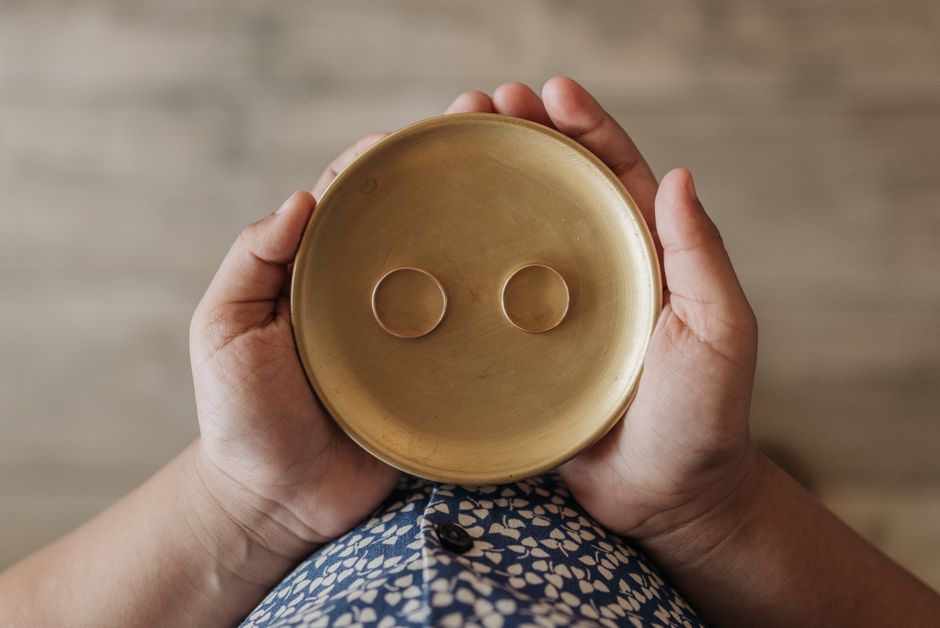
- The Knuckle Factor: Some men have prominent knuckles. If your knuckle is significantly wider than the base of your finger, you must choose a size that can slide over the knuckle with some resistance but won't fall off once it's seated at the base.
- Temperature and Time: Fingers are generally smaller in the morning and in cold weather. They swell in the heat, after a workout, or in the evening. We recommend measuring your finger at the end of the day when it's at its largest.
- Hand Dominance: Your dominant hand (the one you write with) is usually about a half-size larger than your non-dominant hand. Always measure the specific finger on the specific hand where you plan to wear the ring.
- Band Width: This is the most common mistake we see. A narrow 4mm band has less surface area contact with your skin and slides on easily. An 8mm or 10mm wide band creates more friction and "hugs" the finger more tightly.
To understand these nuances better, you can explore the Ring Size Chart: Difference Between Men's and Women's Sizes, which highlights how men's larger frames and wider band preferences change the sizing game.
Sizing for Wide Bands and Non-Resizable Metals
The "Wide Band Rule" is simple: if the ring is 6mm or wider, you should generally go up a half-size from your measured size. This ensures the ring doesn't pinch the skin or become uncomfortable when you clench your fist.
This is especially critical when dealing with "alternative" metals. When you look at Titanium vs Tungsten for Men’s Rings, you'll learn that these metals are incredibly durable—so durable, in fact, that they cannot be resized. Unlike gold or silver, which our goldsmiths can cut and solder, tungsten and titanium will shatter if we try to stretch them.
When choosing between these, or even cobalt and ceramic, accuracy is paramount. Check out our advice on How to Choose the Best Metal for a Mens Wedding Band to see which fits your lifestyle and how that impact's your sizing choice.
Expert Tips for a Perfect Fit Year-Round
A ring should feel like a part of you, not an annoyance. To ensure it stays comfortable from the humid California summers to the cooler winter months in Brea, follow these expert tips:
- The "Three-Time" Rule: Measure your finger three different times on different days. If the results are consistent, you've found your size.
- Aim for the Middle: If your measurements vary wildly, choose a size that feels slightly snug in the heat and slightly loose in the cold.
- The Secret Proposal: If you're buying a surprise gift, don't guess. Borrow a ring he currently wears (on the correct finger!) and bring it to us, or use the "soap impression" method—press his ring into a bar of soap to create a physical template of the diameter.
For those planning a surprise, the Men’s Engagement Ring Size Guide offers excellent strategies for covert measuring. You can also browse Popular Men’s Wedding Rings to see which styles are currently trending in Orange County.
When to Use a Professional Ring Sizing Chart for Men
While DIY methods are great for a ballpark figure, nothing beats a professional fitting at Jeweler's Touch. We use calibrated metal ring gauges that come in both "Standard" and "Comfort-Fit" profiles.
- Standard Fit: Flat on the inside.
- Comfort-Fit: Domed on the inside, which allows the ring to slide over the knuckle more easily. These often feel about a half-size larger than standard rings.
If you find yourself needing a size that isn't typically found in a "big box" store, we specialize in Plus Sized Wedding Bands. Furthermore, if you’re curious about the technical side of adjustments, our guide on How Does Ring Resizing Work? Your Complete Guide explains the process our on-site goldsmiths use. We apply the same level of precision to jewelry as we do to DIY vs Professional Watch Resizing for the Perfect Fit.
Frequently Asked Questions about Men's Ring Sizing
What is the average ring size for a man?
In the US, the average is size 9 to 10. For men with a slimmer build or smaller hands, size 7 to 8.5 is common. Men with larger frames or who do manual labor (which can thicken the hands) often wear sizes 11 to 13.
Should I size up if I am between sizes?
Yes. It is almost always better for a ring to be a hair too loose than too tight. A tight ring can restrict blood flow or become stuck during a hot day. However, if you are buying a very thin band, you might stay with the smaller size.
Can tungsten or titanium rings be resized?
No. Due to their extreme hardness, these metals cannot be resized using traditional jewelry methods. If you purchase a tungsten or titanium ring and the fit is wrong, it usually requires a full replacement of the band. This is why getting a professional measurement at Jeweler's Touch is so important for these specific materials.
Conclusion
Finding the right fit doesn't have to be a guessing game. By using a ring sizing chart for men, accounting for band width, and measuring at the right time of day, you can shop with confidence. Whether you’re looking for a classic gold band, a rugged tungsten ring, or a completely custom creation, we are here to help.
At Jeweler's Touch, we’ve been a family-owned staple in Orange County since 1992. Our on-site GIA gemologists and expert goldsmiths are dedicated to providing the precision and care your jewelry deserves. If you're in Brea or the surrounding area, stop by for a professional sizing—we'd love to help you find a ring that fits your hand and your life perfectly.
Find your perfect fit with our expert engagement ring services