

Why Ring Size Inner Diameter Is the Key to a Perfect Fit
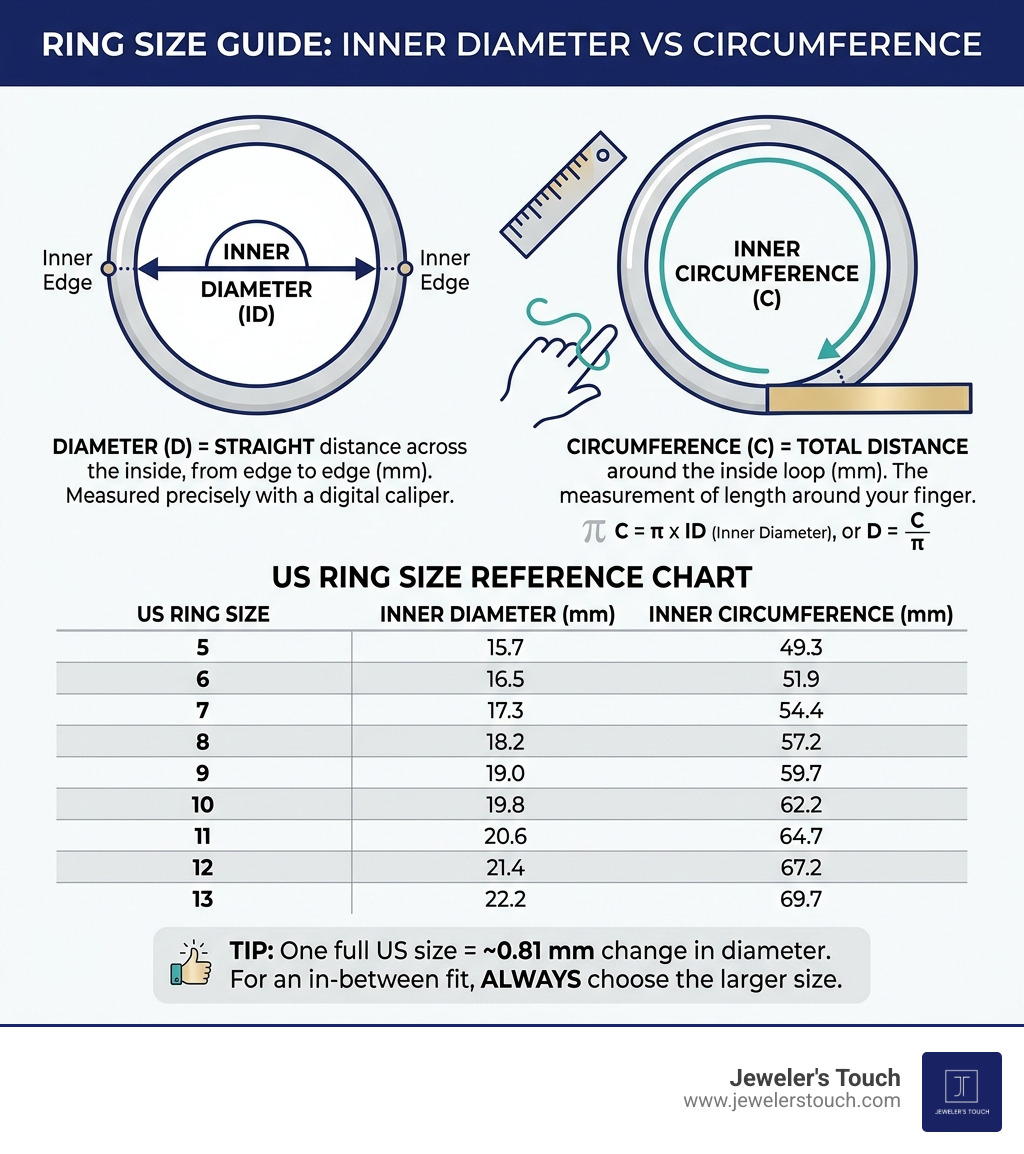
Ring size inner diameter is the straight-line measurement across the inside of a ring, from one inner edge to the other, measured in millimeters. It is the single most reliable number for finding your correct ring size — no matter which country made the ring.
Here is a quick reference for the most common US sizes:
| US Ring Size | Inner Diameter (mm) | Inner Circumference (mm) |
|---|---|---|
| 5 | 15.7 | 49.3 |
| 6 | 16.5 | 51.9 |
| 7 | 17.3 | 54.4 |
| 8 | 18.2 | 57.2 |
| 9 | 19.0 | 59.7 |
| 10 | 19.8 | 62.2 |
| 11 | 20.6 | 64.7 |
| 12 | 21.4 | 67.2 |
| 13 | 22.2 | 69.7 |
One full US ring size = 0.81 mm difference in inner diameter. If your measurement falls between two sizes, always choose the larger one.
Getting this number right matters more than most people realize. A ring that is even half a size off can feel uncomfortably tight after a long day — or loose enough to slip off. And when you are shopping internationally or ordering online, size labels alone (US numbers, UK letters, EU codes) can create real confusion. The inner diameter cuts through all of that. It is the one measurement every sizing system in the world is built on.
I'm Ken Rutz, and at Jeweler's Touch I have spent years helping customers in fine jewelry and custom engagement ring design — including guiding them through the exact process of finding their correct ring size inner diameter before committing to a piece. That hands-on experience is what shapes everything in this guide.
Understanding Ring Size Inner Diameter vs. Circumference
When we talk about ring measurements, we are usually looking at three distinct dimensions: the inner diameter, the outer diameter, and the circumference. While they are all related, only two of them actually matter for your comfort.
- Inner Diameter: This is the distance across the empty space inside the ring. As we explain in our glossary of ring measurements, this is the most critical measurement because it represents the actual space your finger occupies.
- Circumference: This is the total distance around the inside of the band. If you were to cut a ring and lay it flat, the length of that metal would be the circumference.
- Outer Diameter: This includes the thickness of the metal. While it might matter for the ring's aesthetic "heaviness," it has zero impact on how the ring fits your finger.
The relationship between these measurements is governed by the mathematical constant Pi (approximately 3.14159). To find the circumference, you simply multiply the ring size inner diameter by Pi. This isn't just a math class exercise; it is the foundation of the ISO 8653:2016 standard, which jewelers worldwide use to ensure consistency. Whether you are in Brea or Berlin, the math remains the same.
Why Inner Diameter is the Universal Standard
In May 2026, international shopping is easier than ever, but sizing remains a patchwork of different systems. The US and Canada use a numerical scale (like 7 or 10.5). The UK, Ireland, and Australia use an alphabetical scale (like O or T). Many European countries use the inner circumference in millimeters.
This is where the ring size inner diameter becomes your "universal translator." While size labels are arbitrary, millimeters are objective. If you know your ring has an inner diameter of 17.3 mm, you can use a ring size converter to confidently buy a US size 7, a UK size O, or a Japanese size 14.
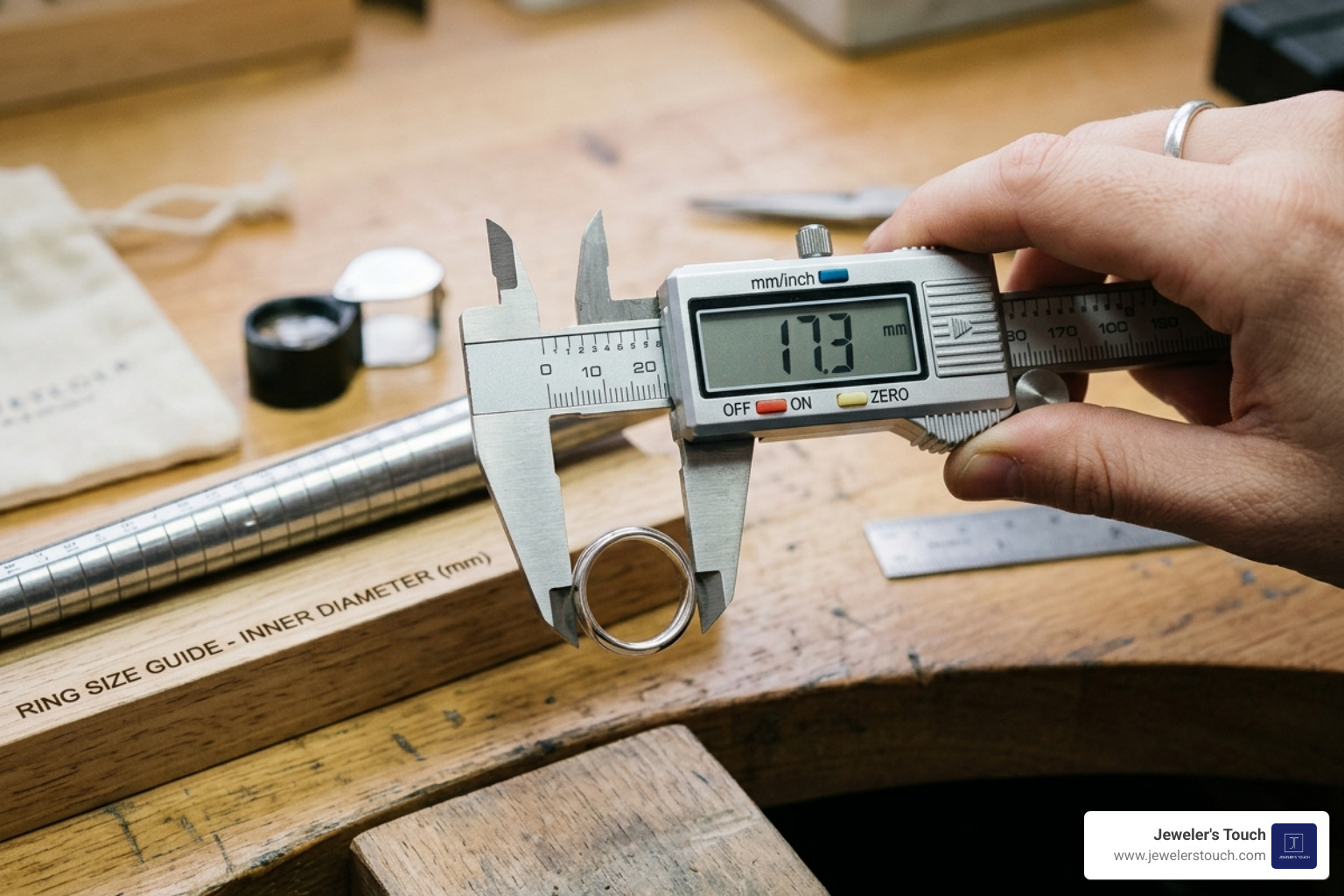
Precision engineering in modern jewelry means that even a fraction of a millimeter matters. Professional tools like digital calipers allow us to measure with a precision of 0.01 mm, ensuring that the ring you inherit from a relative or buy from an overseas boutique fits exactly like the ones in your jewelry box at home.
How to Measure Ring Size Inner Diameter at Home
You don't need a degree in gemology to get a solid measurement at home. The most accurate tool you can use is a digital caliper. If you have one in your garage or craft room, simply place the "inside" jaws of the caliper into the ring and expand them until they touch the inner edges at the widest point.
If you don't have calipers, a metric ruler will work, but you must be incredibly precise.
- Place your ring on a flat surface.
- Align the "0" mark of the ruler with the inside edge of the band.
- Measure straight across to the opposite inside edge.
- Ensure you are measuring the widest part of the circle (the center).
- Read the measurement in millimeters.
For those trying to keep a secret, we have gathered some clever tips on how to get your partner's ring size without ruining the surprise. One of the most effective ways is to "borrow" a ring they already wear on the correct finger and use the diameter measurement tool to find the exact millimeter count.
Converting Circumference to Ring Size Inner Diameter
If you don't have a ring to measure, you'll need to measure your finger's circumference instead. This is often called the "string method."
- Wrap a piece of non-stretchy string or a thin strip of paper around the base of your finger.
- Mark the point where the ends meet with a fine-tip pen.
- Lay the string flat against a ruler and measure the distance in millimeters.
- Divide that number by 3.14159 to find your ring size inner diameter.
A word of caution: string can stretch, and paper can fold. Even a 2 mm error in circumference measurement can result in a full size difference. We always recommend using a dedicated ring size finder or visiting us in Orange County for a professional sizing to avoid these common DIY pitfalls.
Standard US Ring Size Inner Diameter Measurements
In the United States, ring sizes are standardized so that each whole size represents an increase of approximately 0.81 mm in diameter. This equates to roughly 2.55 mm in circumference.
| US Size | Inner Diameter (mm) | Inner Diameter (inches) |
|---|---|---|
| 5 | 15.7 mm | 0.618" |
| 5.5 | 16.1 mm | 0.634" |
| 6 | 16.5 mm | 0.650" |
| 6.5 | 16.9 mm | 0.665" |
| 7 | 17.3 mm | 0.681" |
| 7.5 | 17.7 mm | 0.697" |
| 8 | 18.2 mm | 0.717" |
| 8.5 | 18.6 mm | 0.732" |
| 9 | 19.0 mm | 0.748" |
| 9.5 | 19.4 mm | 0.764" |
| 10 | 19.8 mm | 0.780" |
Most adult rings fall within a range of 15.5 mm to 19 mm. On average, women’s sizes range from 6 to 7 (16.5–17.3 mm), while men’s sizes typically fall between 9 and 10 (19.0–19.8 mm).
Factors That Influence Your Ring Size Inner Diameter Fit
The number on the ruler is just the beginning. How that ring size inner diameter actually feels on your hand depends heavily on the design of the ring.
Band Width and "The Wide Band Rule"
The wider the ring, the tighter it will feel. A thin 2 mm engagement ring slides over the knuckle easily because it covers very little surface area. However, a 6 mm or 8 mm wide wedding band creates more friction against the skin.
- Pro Tip: If you are buying a band wider than 6 mm, we usually recommend sizing up by a quarter or half size. You can see how these measurements shift in this comfort fit ring size chart.
Comfort Fit vs. Standard Fit
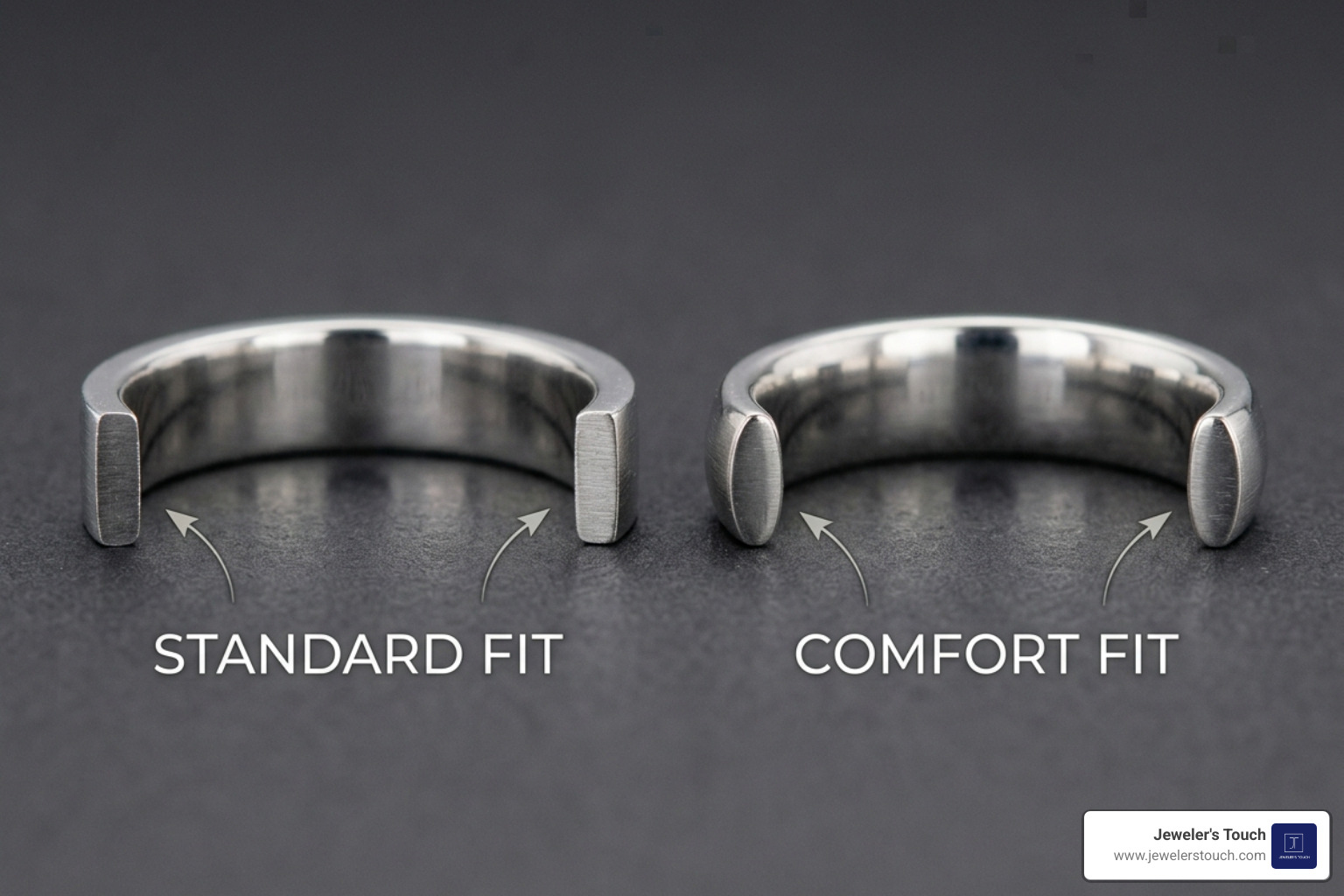
Standard fit rings are flat on the inside. "Comfort fit" rings are slightly domed or rounded on the interior. Because of that curve, comfort fit rings often feel a bit larger. Many people find they need a slightly smaller ring size inner diameter (about a half size down) when choosing a comfort fit style. Understanding these wedding ring styles is essential before you finalize your measurement.
Environmental Impacts on Finger Diameter
Your fingers are not a static size; they are living tissue that reacts to your environment.
- Temperature: Cold weather causes blood vessels to constrict, making your fingers "shrink." Heat causes them to swell.
- Time of Day: Most people find their fingers are at their largest in the evening.
- Hand Dominance: Your dominant hand is often slightly larger than your non-dominant hand. If you are designing your own engagement ring, always measure the specific finger on the specific hand where the ring will live.
- Knuckles: If you have large knuckles, you must size the ring to fit over the joint, even if it feels a little loose at the base of the finger.
Resizing and Professional Adjustments
What happens if the ring size inner diameter you measured ends up being slightly off? Most rings made of gold, silver, or platinum can be resized. Our expert goldsmiths at Jeweler's Touch perform these adjustments on-site, ensuring the structural integrity of your piece is maintained.
However, there are limitations.
- Eternity Bands: Because the diamonds go all the way around, these usually cannot be resized without completely rebuilding the ring.
- Alternative Metals: Metals like tungsten, titanium, and cobalt cannot be resized because they are too hard to be cut and soldered.
- Sizing Beads: If your ring spins because your knuckle is much larger than your finger base, we can add small "sizing beads" to the interior. These effectively reduce the inner diameter without requiring a full cut of the band.
For a deeper look at the mechanics of this process, check out our complete guide on how ring resizing works. You can also refer to this PDF guide on determining ring size for additional measurement visuals.
Frequently Asked Questions about Ring Sizing
What is the most accurate tool for measuring inner diameter?
The gold standard is a set of metal ring sizers used by a professional jeweler. For home use, a digital caliper is the most precise tool, as it removes the "human error" of trying to eye-ball a ruler.
Should I size up or down if I am between two diameters?
Generally, we recommend sizing up. It is much easier (and often safer for the stones) for a jeweler to make a ring slightly smaller than it is to stretch it larger. A ring that is slightly loose is also more comfortable during summer months when fingers naturally swell.
How does a wide band affect the inner diameter I need?
A wide band (6mm+) covers more of your finger's surface area, trapping more skin and creating more friction. To maintain the same level of comfort as a thin band, you will almost always need a larger ring size inner diameter.
Conclusion
Mastering the ring size inner diameter is the best way to ensure your jewelry is a joy to wear rather than a source of frustration. While DIY methods like string and rulers are great starting points, nothing replaces the accuracy of a professional fitting.
At Jeweler's Touch, we have been serving the Orange County community since 1992. Whether you are in Brea or the surrounding areas, our GIA gemologists and expert goldsmiths are here to help you find that perfect, "just right" fit. We pride ourselves on custom craftsmanship and a warm, family-owned atmosphere where your comfort is our top priority.
Ready to find a piece that fits perfectly? Find your perfect fit with our engagement ring experts today or visit us in-store for a professional sizing.
Jeweler's Touch Serving Orange County & Brea, CA