

January Birthstone: What to Know About Garnet
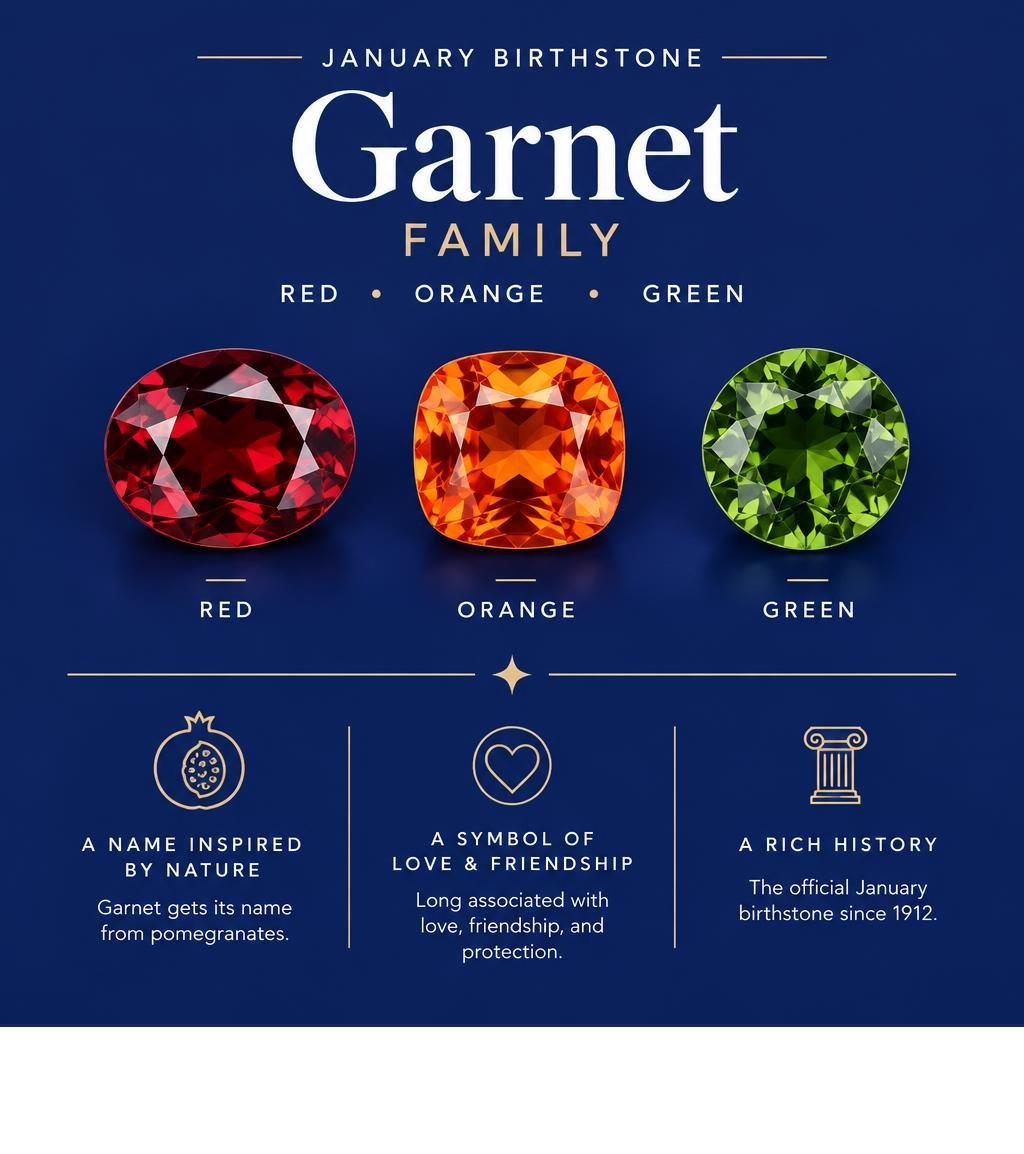
Garnet is the official January birthstone. It has held that place on the U.S. birthstone list since 1912. While deep red is its best-known color, garnet is a family of gems that also includes orange and green stones. That gives January birthday shoppers more choice than they might expect.
The name garnet comes from a Latin word linked to pomegranates, whose red seeds resemble the gem. Garnet has long been associated with love, friendship, and protection. Those meanings make it a thoughtful choice for a birthday gift or a personal piece of jewelry.
I'm Ken Rutz of Jeweler's Touch, a family-owned Orange County jeweler specializing in fine jewelry and custom designs. I'll walk you through the January birthstone's history, colors, care, and gift options so you can choose with confidence.
Understanding the January Birthstone: History and Meaning
Ancient Origins and History of the January Birthstone
Garnet boasts an exceptional lineage that stretches back over 5,000 years. Archaeological findings reveal that garnet was utilized as far back as the Bronze Age, serving as decorative beads, protective amulets, and even natural abrasives due to its inherent mineral strength.
In ancient Egypt, pharaohs wore elaborate necklaces strung with deep red garnet beads, and artisans placed carved garnets inside burial tombs to accompany the deceased into the afterlife as guiding lights. The ancient Romans took this affection even further. Roman officials, traders, and soldiers prized garnet as their favorite gemstone. They carved intricate designs into red garnets to create signet rings, using them to stamp wax seals on legal documents and personal correspondence.
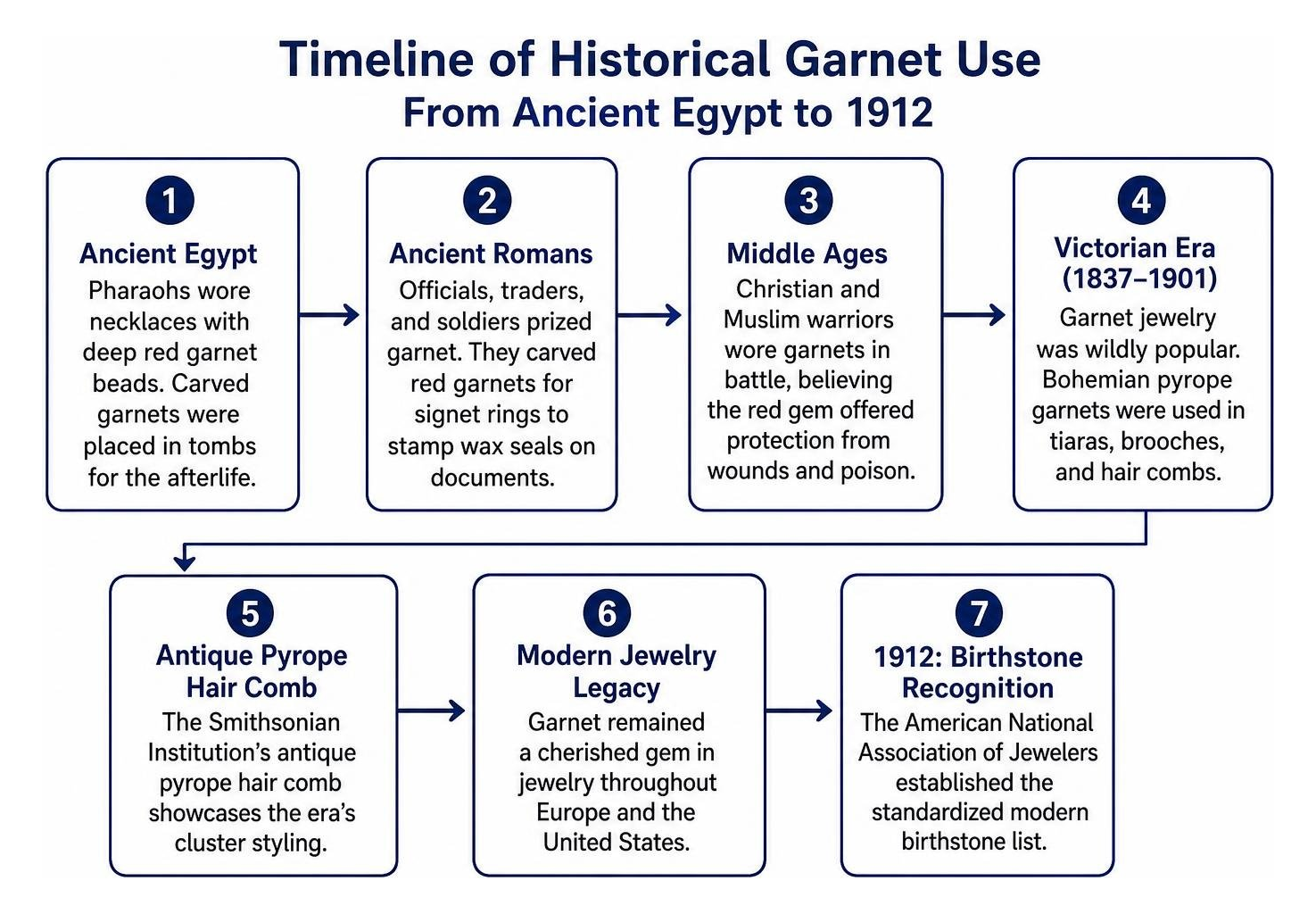
During the Middle Ages, both Christian and Muslim warriors wore garnets into battle during the Crusades, believing the glowing red gem offered physical protection against wounds and poison. By the Victorian era (1837 to 1901), garnet jewelry reached new heights of popularity throughout Europe and the United States. Bohemian pyrope garnets, famous for their rich crimson fire, were clustered into tiaras, brooches, and hair combs. One of the world's most famous surviving pieces is the Smithsonian Institution's antique pyrope hair comb, showcasing the cluster styling of that period.
The gemstone's place in modern jewelry was cemented in 1912, when the American National Association of Jewelers established the standardized modern birthstone list. You can read more about this rich heritage directly from the GIA garnet birthstone history archives.
Symbolic Meaning and Lore of the January Birthstone
The lore surrounding garnet has always been tied to vital energy, emotional warmth, and resilience. Because of its deep crimson color, ancient cultures naturally linked garnet to the heart and blood, viewing it as a stone of vitality, life force, and enduring passion.
Throughout folklore, garnet has symbolized:
- Steadfast Friendship and Love: Exchanging garnets historically signified lasting affection, loyalty, and the promise of a safe return when travelers parted ways.
- Emotional Balance and Serenity: Metaphysical traditions link garnet to grounding energy, believed to calm an anxious mind, clear away self-doubt, and restore confidence.
- New Year Renewal: As January welcomes the start of a brand new calendar year, garnet represents personal transformation, courage, and perseverance in pursuing fresh goals.
- Energy and Vitality: Traditional wellness lore associates red garnet with the root and heart chakras, believed to inspire creativity, motivation, and physical stamina.
The Diverse Family of Garnet Varieties and Colors
Major Garnet Mineral Species and Hue Variations
While most people envision a deep wine-red stone when thinking of the January birthstone, garnet is not a single mineral. It is a diverse mineral group composed of distinct species sharing similar crystal structures. In gemology, five primary species dominate fine jewelry: pyrope, almandine, spessartine, grossular, and andradite. A sixth rare species, uvarovite, is prized primarily by collectors.
- Almandine: The most common garnet species, exhibiting classic deep red, brownish-red, and violet-red hues.
- Pyrope: Famous for its fiery, ruby-like red tones. The name derives from the Greek word pyrōpos, meaning "fiery-eyed."
- Spessartine: Prized for its warm colors ranging from golden yellow to bright orange. Vibrant neon-orange gems from this species are celebrated in the trade as Mandarin garnets.
- Grossular: One of the most versatile species, spanning colorless gems, yellow, pink, and rich green. The two most famous varieties are Tsavorite, a vivid emerald-green gem colored by trace amounts of chromium and vanadium, and Hessonite, known for its warm cinnamon-orange shade.
- Andradite: Known for high optical dispersion (fire). Its most famous variety is Demantoid, a rare green gemstone with higher dispersion than diamonds.
- Color-Change Garnets: Rare hybrid garnets that shift from greenish-blue in daylight to purple or red under warm incandescent light.
| Garnet Species | Notable Gem Varieties | Color Range | Key Optical / Physical Traits |
|---|---|---|---|
| Pyrope | Bohemian Garnet, Rhodolite (Pyrope-Almandine mix) | Fiery red, purplish-red, rose | High clarity, transparent, ruby-like saturation |
| Almandine | Classic Red Garnet | Deep red, brownish-red, burgundy | Highly durable, widespread availability |
| Spessartine | Mandarin Garnet | Bright orange, reddish-orange, golden yellow | High refractive index, exceptional brilliance |
| Grossular | Tsavorite, Hessonite | Emerald green, cinnamon-brown, yellow, mint | Intense saturation, trace chromium/vanadium |
| Andradite | Demantoid | Grass green, olive, yellow-green | Exceptional dispersion (rainbow fire), rare "horsetail" inclusions |
| Uvarovite | Drusy Uvarovite | Deep emerald green | Forms small crystal crusts, rarely faceted |
To see how garnet fits into the full spectrum of gemstones across the calendar year, explore our detailed guide to gemstone colors by month.
Geographic Mining Sources and Artisanal Gem Extraction
Garnet is sourced from mineral deposits across the globe. Today, East Africa is one of the leading regions for rare and colorful garnets. Kenya and Tanzania are the primary sources of brilliant green tsavorite, discovered in the late 1960s near Tsavo National Park. Madagascar and Namibia produce vivid spessartines and demantoids, while Sri Lanka, Brazil, and India remain major producers of fine red almandine and pyrope stones.
In the United States, Southern California holds a unique place in garnet history. The historic Little Three mine in San Diego County produced some of the world's finest gem-quality orange spessartine garnets during the 20th century. Globally, an estimated 80% of all colored gemstones, including garnets, are recovered by small-scale artisanal miners, supporting local mining communities worldwide.
How to Care for and Clean Garnet Jewelry
Mohs Hardness and Safe Daily Wear Guidelines
Garnet ranks between 6.5 and 7.5 on the Mohs scale of mineral hardness. This makes garnet a moderately durable gemstone suitable for everyday jewelry such as earrings, pendants, and brooches, as well as rings with sensible protective settings.
Because harder gems like diamonds, sapphires, and rubies (ranking 9 to 10 on the Mohs scale) can scratch a garnet, store your garnet pieces in individual soft fabric pouches or separate compartments in your jewelry box. Similarly, keep garnets away from softer organic gems like pearls and opals so the garnet does not abrade them.
When choosing a garnet ring for daily wear, consider a protective setting such as a bezel, semi-bezel, or low-profile halo. These designs frame the gem in metal, shielding its facets from accidental bumps against hard surfaces.
Step-by-Step Cleaning and Maintenance Tips
Maintaining the brilliance of your garnet jewelry is straightforward and safe to do at home. Follow these best practices:
- Use Warm Soapy Water: Mix lukewarm water with a few drops of mild, fragrance-free dish soap in a small bowl.
- Gently Brush the Setting: Soak the jewelry for 5 to 10 minutes. Use a baby toothbrush with soft bristles to gently sweep behind the stone and around the prongs to remove lotions, oils, and dust.
- Rinse Thoroughly: Rinse the piece in clean warm water. Keep a drain plug or strainer in place to prevent accidents.
- Dry with a Lint-Free Cloth: Pat the piece dry using a microfiber or soft cotton towel.
- Avoid Steam Cleaning: Never subject garnet jewelry to high-temperature commercial steam cleaners. Sudden temperature changes (thermal shock) can cause internal fractures in natural garnets.
- Check Before Ultrasonic Cleaning: Ultrasonic cleaners are generally safe for untreated garnets, but should never be used if a gemstone has surface-reaching fractures. When in doubt, stick to warm soapy water or have it professionally evaluated.
- Schedule Annual Inspections: Bring your fine jewelry to a trusted bench jeweler annually to inspect prong tension, check for loose stones, and receive professional polishings.
Popular Jewelry Styles and January Birthday Gift Ideas
Timeless Garnet Rings, Pendants, and Bracelets
Garnet's rich red warmth pairs beautifully with all fine metals, including cool sterling silver, luminous white gold, and warm yellow gold vermeil. Whether you are shopping for a January birthday, celebrating a second wedding anniversary (the traditional garnet milestone), or curating your personal collection, several classic designs stand out:
- Halo Pendant Necklaces: A center garnet surrounded by a sparkling halo of accent stones creates a balanced, light-catching focal point. A piece like our January birthstone pendant sterling silver garnet halo pendant necklace offers everyday elegance that transitions effortlessly from day to night.
- Statement and Halo Rings: For a touch of color on the hand, a well-crafted ring such as the January birthstone ring sterling silver garnet halo ring frames the crimson center stone in bright sterling silver.
- Layering Bracelets: Flexible bracelets add a pop of color to modern wrist stacks. Consider a piece like the gold vermeil January birthstone flex bracelet for a warm, contemporary accent.
- Vintage Filigree and Solitaires: Garnet's historical connection to the Victorian era makes it an ideal center gem for intricate vintage-inspired settings featuring milgrain details and scrollwork.
For an in-depth look at picking stones across the entire calendar, read through our birthstone selection complete guide 2026.
Celebrating January: Zodiac Signs, Birth Flowers, and Milestones
January is a month of fresh beginnings, marked by unique astrological and botanical symbols that complement garnet:
- Zodiac Signs: January birthdays fall under either Capricorn (December 22 to January 19), known for ambition, discipline, and loyalty, or Aquarius (January 20 to February 18), known for innovation, independence, and creativity.
- Birth Flowers: January's official birth flowers are the Carnation, symbolizing fascination, love, and distinction, and the Snowdrop, representing hope, purity, and rebirth as one of the first flowers to bloom through winter snow.
- Notable January Birthdays: Famous figures born in January include civil rights leader Martin Luther King Jr. (Jan 15), founding father Benjamin Franklin (Jan 17), Joan of Arc (Jan 6), rock legend Elvis Presley (Jan 8), and actress Betty White (Jan 17).
- Historical Milestones: Landmark historical moments in January include the signing of the Emancipation Proclamation (Jan 1, 1863), the launch of the first Apple iPhone (Jan 9, 2007), and New Year's Day celebrations across the globe.
- National Observances: January features fun observances like National Popcorn Day (Jan 19) and National Hugging Day (Jan 21). You can review a complete monthly schedule on the national days of January list.
Frequently Asked Questions About Garnet Jewelry
Can garnet be worn safely in an everyday ring?
Yes, garnet can be worn safely in daily rings, provided the setting offers adequate protection. With a Mohs hardness rating of 6.5 to 7.5, garnet is durable enough for regular wear. Choosing a bezel, semi-bezel, or a halo setting helps shield the outer edges of the gemstone from impact. It is also good practice to remove garnet rings before heavy manual work, gardening, or weightlifting.
Is garnet always red in color?
No. While dark red is the most common and recognizable shade, garnet is a complex mineral family that naturally occurs in almost every color of the rainbow. Grossular garnets produce vibrant green tsavorites and golden hessonites; spessartine garnets offer fiery mandarin oranges; and andradite yields rare, brilliant demantoid greens. Only true blue is exceptionally rare, found only in unique color-change garnets.
What is the rarest and most valuable variety of garnet?
The rarest and most valuable gem garnets are Russian demantoid (a brilliant green variety of andradite prized for its intense diamond-like fire) and fine tsavorite (a saturated, vivid green grossular garnet). High-clarity color-change garnets and pure, vivid orange mandarin spessartines also command high valuations among collectors.
Conclusion
The January birthstone is a remarkable gem that combines ancient history, diverse colors, and rich symbolic meaning. Whether you are drawn to the fiery crimson of classic pyrope, the vivid green of tsavorite, or the warm brilliance of mandarin spessartine, garnet offers something special for every personal style and milestone gift.
At Jeweler's Touch, we have served fine jewelry clients across Southern California and the United States since 1992. As a family-owned jeweler based in Brea, California, our on-site team features expert bench goldsmiths and three GIA Graduate Gemologists on staff. Whether you are selecting a ready-to-wear birthday pendant, restoring a vintage heirloom, or crafting a custom design, we are here to provide quality guidance and jewelry craftsmanship.
To explore more styling inspiration and birthstone lore, check out our January birthstone guide or visit our showroom to see the warmth and fire of garnet in person.