

Why a Black Jade Pendant Deserves a Closer Look
Quick Answer: What to Know About Black Jade Pendants
| Question | Short Answer |
|---|---|
| What is it? | A pendant made from black jade, either nephrite or jadeite, prized for its deep color and durability |
| Is black jade real jade? | Yes, both nephrite and jadeite can be naturally black |
| What does it symbolize? | Protection, wisdom, and inner strength, especially in Asian and Maya cultures |
| How much does it cost? | Roughly $139 for sterling silver styles up to $17,000+ for 18K gold jadeite pieces |
| What should I watch for? | Treated (Type B or C) jade, dyed simulants, and sellers without authenticity guarantees |
A black jade pendant is one of the most misunderstood, and underappreciated, pieces of fine jewelry you can own. It looks bold and minimal at the same time. It carries thousands of years of cultural meaning. And yet, most buyers have no idea what they're actually buying when they pick one up online.
Once considered the most sacred gem of the ancient Maya, jade was so valued that those who wore the most of it were seen as the most important people in their communities. That same sense of meaning still runs through black jade jewelry today.
But here's the problem: the market is full of confusion. Nephrite and jadeite are both called "jade." Treated stones are sold as natural ones. And pricing can range from $139 to well over $17,000, with no obvious reason why, unless you know what to look for.
This guide cuts through all of that.
I'm Ken Rutz, and as the owner of Jeweler's Touch, a fine jewelry store with deep expertise in custom and gemstone jewelry, I've helped many clients evaluate and select a black jade pendant that truly fits their style, budget, and intentions. In the sections below, I'll walk you through everything you need to make a confident, informed choice.
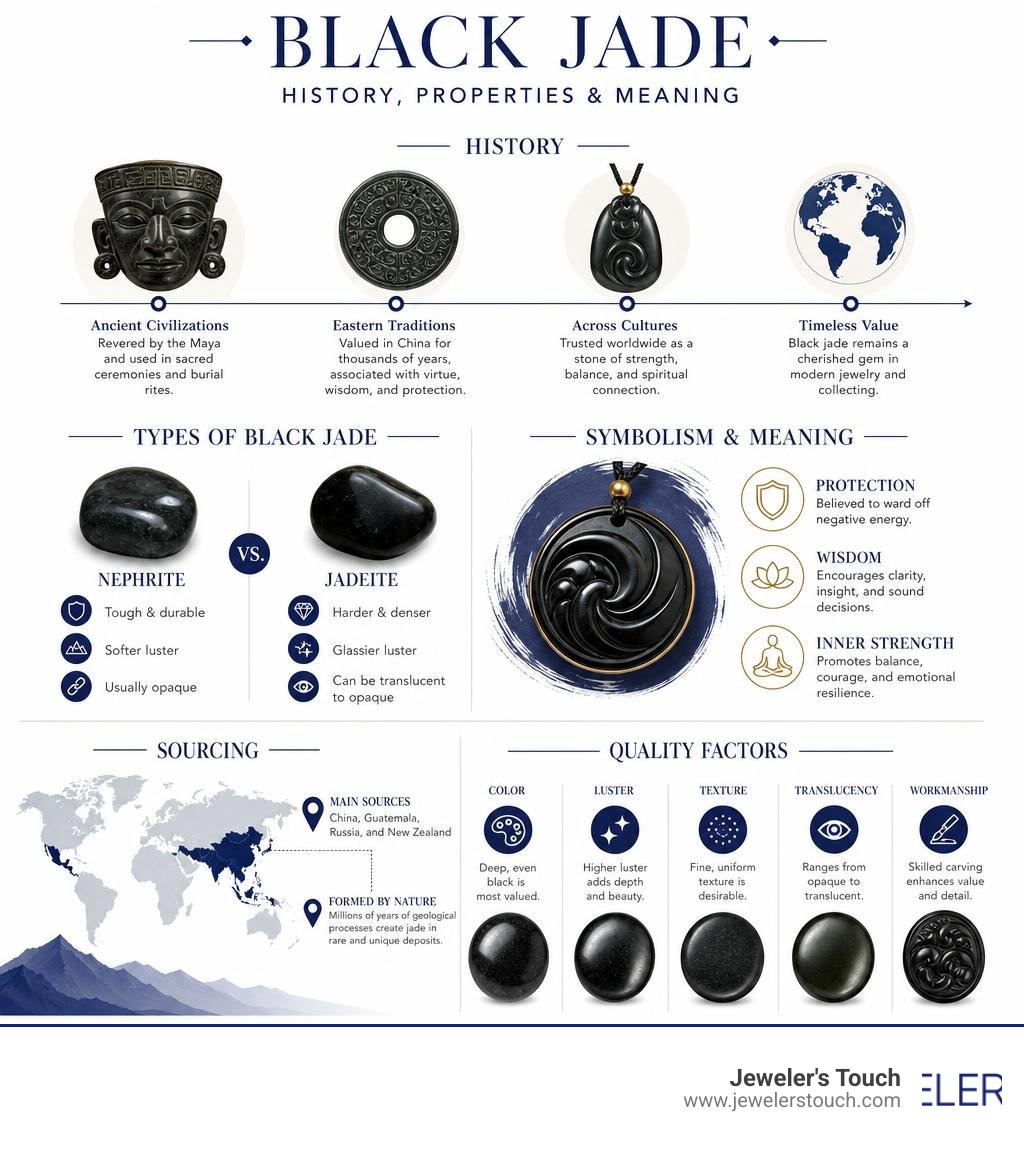
What is Black Jade and How Does It Differ From Other Varieties?
When most people think of jade, they picture the classic imperial green stones favored by Chinese emperors. However, jade naturally occurs in a spectacular spectrum of colors, including lavender, red, yellow, and a deep, enigmatic black.
To understand what makes a black jade pendant so special, we first have to look at its chemical composition. Black jade is not a single mineral. Instead, it is an umbrella term for two entirely distinct silicate minerals: nephrite and jadeite.
Most black jade jewelry on the market is actually made of nephrite, which is a calcium magnesium iron silicate. Jadeite, on the other hand, is a rarer sodium aluminum silicate. What makes both varieties appear black is the high concentration of iron and other trace minerals, such as graphite or magnetite, embedded within their crystalline structures. In many cases, what looks like solid black jade is actually an incredibly dense, dark green jade that only reveals its true color when you shine a bright light directly through it.
To help you understand how these two true jade minerals compare, we have put together a quick breakdown:
| Feature | Black Nephrite Jade | Black Jadeite Jade |
|---|---|---|
| Mineral Group | Amphibole | Pyroxene |
| Chemical Formula | Calcium magnesium iron silicate | Sodium aluminum silicate |
| Hardness (Mohs) | 6.0 to 6.5 | 6.5 to 7.0 |
| Density (Toughness) | Extremely high (felted fibers) | High (interlocking crystals) |
| Rarity | Relatively abundant | Rare (highly prized) |
| Visual Texture | Oily, smooth, waxy luster | Glassy, vitreous, icy luster |
| Light Reaction | Typically opaque | Can be highly translucent (glows green) |
Understanding these classifications is critical because it directly impacts the price and authenticity of the jewelry you buy. For instance, natural, untreated jade is classified as Type A or Grade A. Type B jade has been acid-bleached and polymer-impregnated, while Type C jade has been dyed to alter its color. When shopping for a high-quality pendant, you should always aim for certified Type A natural jade. For additional background on jade quality factors, independent education from the Gemological Institute of America can be a helpful resource.
Nephrite vs. Jadeite: The Two True Jade Minerals
The differences between nephrite and jadeite go beyond simple chemistry; they affect how the stone behaves under a carver's tools and how it looks on your neckline.
Nephrite belongs to the amphibole mineral supergroup. Its structure is made of tightly interwoven, felt-like microscopic fibers. This unique physical makeup makes nephrite the toughest natural stone in existence, even tougher than diamond. While a diamond is harder and more scratch-resistant, nephrite is far less likely to fracture or chip if dropped. This incredible durability is why ancient civilizations used nephrite to carve weapons, tools, and intricate, lasting amulets.
Jadeite belongs to the pyroxene mineral group and features a granular, interlocking crystalline structure. While slightly less tough than nephrite, it is harder, at 6.5 to 7.0 on the Mohs scale, and can be polished to a brilliant, glass-like shine. Because jadeite is rarer and can achieve stunning levels of translucency, it is generally considered the more luxurious and valuable of the two.
Identifying a Genuine Black Jade Pendant
Because black gemstones like onyx, obsidian, melanite garnet, and even dyed chalcedony can easily be mistaken for black jade, knowing how to verify a genuine piece is essential.
When evaluating a potential purchase, look for these key characteristics of genuine, untreated Type A jade:
- The Luster: Genuine black nephrite has a smooth, greasy, or oily luster. Black jadeite, by contrast, has a vitreous, glass-like shine. If a stone looks completely dull or plasticky, it may be a synthetic simulant.
- Color Distribution: Natural black jade is rarely perfectly uniform. Under close inspection, you will often see tiny flecks of green, grey, or white, and uneven color distribution.
- The Light Test: This is especially useful for thin, higher-quality black jadeite pieces. When you shine a high-powered flashlight through premium black jadeite, it may glow with a rich green hue rather than remaining completely opaque.
- Water Absorption: Genuine jade has a high surface tension. If you place a tiny drop of water on a polished jade surface, the water droplet will bead up and remain intact longer than it would on glass or plastic.
Cultural Significance and Symbolic Meanings of Black Jade
For thousands of years, jade has been revered as a living stone that absorbs the energy of its wearer. While green jade is traditionally associated with wealth, luck, and good health, black jade carries its own distinct spiritual and cultural associations. It is widely regarded as a stone of ultimate protection, grounding, and inner wisdom.
Protection and Wisdom in Asian Traditions
In Chinese culture and Feng Shui practices, black jade is viewed as a powerful energetic shield. It is believed to ward off negative energy, protect the wearer from physical harm, and calm emotional trauma. Because of its deep, dark color, it is associated with the water element in Feng Shui, which represents flow, quiet strength, and deep wisdom.
Many traditional black jade carvings feature powerful guardian symbols. Dragons, bats, and deities like Guanyin, the goddess of mercy, are frequently carved into black jade to serve as protective talismans. A classic Yin Yang design can also be a meaningful choice, as the symbol of balance and duality pairs beautifully with the visual depth of black jade.
These spiritual connections continue to influence both traditional and contemporary black jade jewelry. Today, a black jade pendant may be carved as a guardian motif, shaped into a simple medallion, or set in a refined metal frame for a more modern interpretation of the stone's protective symbolism.
Sacred Amulets in Mesoamerican and Maya Culture
Across the globe, the ancient Maya and Olmec civilizations of Mesoamerica held jade in the highest esteem, often valuing it far more than gold. In these cultures, jade was a sacred stone linked to life, fertility, and the cosmos.
Guatemala was the primary source of jade in Mesoamerica, with rich deposits located in the Motagua Valley. Maya kings and nobles wore heavy jade amulets to signify their elite status and to connect with the spiritual realm. Black jade, in particular, was prized for its dramatic, night-like appearance and was carved into sacred geometric shapes, animal spirits, and celestial symbols.
Today, Central American artisans continue to honor this ancient heritage by hand-carving local Guatemalan jade into modern designs. For buyers who appreciate jewelry with a deep sense of history, Guatemalan black jade offers a meaningful connection to ancient craftsmanship while still feeling wearable and contemporary.
Sourcing and Evaluating the Quality of a Black Jade Pendant

When you are ready to invest in a black jade pendant, understanding where the stone was mined and how it was carved will help you determine its true value. Like diamonds, jade is evaluated on its origin, color, clarity, and craftsmanship.
Burmese vs. Guatemalan Black Jade
The two most famous geological sources for high-quality black jadeite are Myanmar, formerly Burma, and Guatemala.
- Myanmar (Burmese Jade): Myanmar is the undisputed capital of fine jadeite. Burmese black jadeite is highly sought after by collectors because of its potential for extreme translucency. Often referred to as icy black jade, the finest Burmese specimens appear completely black in normal lighting but glow with an intense, vibrant green when backlit. Because of its rarity and high demand in Asian markets, Burmese black jadeite commands premium prices.
- Guatemala (Guatemalan Jade): The Motagua Valley of Guatemala produces an incredibly rich, dense black jadeite. Guatemalan black jade is famous for its deep, uniform color and excellent structural integrity. It tends to be slightly more opaque than Burmese jadeite, but it takes an incredible, glass-like polish. Because it is sourced directly from historic Mesoamerican deposits, it carries a unique connection to ancient Maya culture.
Note: You may occasionally hear of Arizona black jade. While beautiful, gemological testing has shown that much of the material sold under this name is actually iron-rich hornblende rather than true jadeite or nephrite, though it remains a popular and durable carving material.
Translucency, Color, and Carving Quality
To evaluate the quality of a black jade piece, we use three main criteria:
- Translucency: For jadeite, translucency is the ultimate value driver. The more light that can pass through the stone, the more valuable it is. For nephrite, which is naturally more opaque, a uniform, solid black color with a rich, oily luster is preferred.
- Color Purity: Look for a deep, ink-black hue. While minor inclusions of other minerals can add character, large patches of dull grey or brown will lower the stone's value.
- Carving Precision: Because jade is so tough, carving it requires immense skill and specialized diamond-tipped tools. High-quality carvings should have clean, crisp lines, smooth polished recesses, and no visible tool marks or flat spots. Whether the design is traditional, geometric, or fully custom, the quality of the carving should feel intentional from every angle.
Popular Styles, Metals, and Craftsmanship

Because of its neutral color, black jade is incredibly versatile. It can be carved into complex, symbolic shapes or cut into sleek, minimalist cabochons that fit perfectly into modern jewelry wardrobes.
Classic and Modern Designs for a Black Jade Pendant
When browsing for a pendant, you will generally find three style categories:
- Traditional Carvings: These include symbolic motifs like dragons, phoenixes, lock charms, and bi discs (flat circular discs with a hole in the center representing heaven). These designs celebrate the heritage of the stone and are often worn as protective amulets.
- Geometric Minimalist: For a contemporary look, many designers cut black jade into clean rectangles, cylinders, or teardrops. These sleek shapes highlight the stone's rich, dark surface and look beautiful paired with casual or formal wear.
- Heritage & Coin Styles: Some designers set black jade alongside historic elements. If you love jewelry that tells a story, you might pair a simple black jade cabochon with a historic-style chain, similar to the classic look of an ancient coin necklace.
Pairing Black Jade with Gold, Silver, and Gemstones
The metal setting you choose can completely change the personality of your black jade pendant:
- Yellow Gold: The contrast between deep black jade and warm yellow gold is incredibly luxurious. Yellow gold brings out the subtle green undertones of the stone. To explore how different gold alloys complement fine jewelry, take a look at our guide on gold pendants jewelry.
- White Gold and Platinum: For a sleek, ultra-modern look, setting black jade in white gold or platinum creates a striking, high-contrast aesthetic. Adding a few brilliant-cut white diamonds around the border can make the dark jade pop beautifully.
- Sterling Silver: Sterling silver offers a cool, classic contrast that is perfect for everyday wear. It is also a highly affordable option that pairs wonderfully with Guatemalan black jade.
- Gemstone Accents: Black jade pairs beautifully with other organic gems. For instance, combining the dark, earthy texture of black jade with the soft, iridescent glow of a pearl creates an elegant study in contrasts, reminiscent of a classic 14k gold necklace with pearl.
Because jade carvings can be relatively dense and heavy, choosing the right support is essential. To ensure your pendant hangs securely and comfortably, be sure to select the best chain for pendant styles, focusing on sturdy options like wheat or cable chains.
How to Care for and Maintain Your Black Jade Jewelry
While jade is incredibly tough and resistant to breaking, it still requires proper care to preserve its beautiful polish and luster over the years.
To keep your black jade pendant looking its best, follow these simple maintenance tips:
- Clean Gently: Wash your pendant with lukewarm water, a few drops of mild, chemical-free dish soap, and a soft-bristled toothbrush. Gently scrub away any dirt or skin oils that may have gathered around the setting.
- Avoid Harsh Chemicals: Never expose your jade to harsh household cleaners, bleach, perfumes, or hairsprays. These chemicals can dull the polished surface of the stone and damage the metal setting.
- Keep Away from Heat: Do not wear your jade pendant in hot tubs, saunas, or steam rooms, and avoid leaving it in direct sunlight for extended periods. Extreme heat can dry out the natural moisture within the stone, leading to microscopic fractures.
- Store Separately: Because jade is softer than gemstones like diamonds, sapphires, and rubies, it can be scratched by harder stones. Store your jade pendant in a soft fabric pouch or a separate compartment in your jewelry box.
- Rehydrate When Needed: If you store your jade for a long time without wearing it, it can begin to look dry. Simply soak it in cool, clean water for a few hours to restore its natural moisture and shine.
Frequently Asked Questions about Black Jade Pendants
Is black jade rare and valuable?
Yes, though the value depends heavily on whether it is nephrite or jadeite. Black nephrite is relatively abundant and highly affordable, with beautiful sterling silver pendants starting around $139.
In contrast, natural, untreated black jadeite (especially highly translucent "icy" black jadeite from Myanmar) is very rare and highly prized by collectors. Pendants crafted from premium black jadeite set in 14K or 18K gold can easily range from $500 to over $17,000, depending on the size, translucency, and the complexity of the carving.
How can I tell if my black jade is real or treated?
The most reliable way to verify your jade is to purchase from a reputable jeweler who provides a laboratory certificate from an independent gemological institution (such as the GIA).
Be cautious of "Type C" dyed jade or polymer-impregnated "Type B" pieces, which are often sold online without disclosure. If a seller is offering a highly translucent, flawless "black jade" pendant at an unbelievably low price, it is highly likely to be a synthetic simulant, dyed chalcedony, or treated glass.
Can I wear my black jade pendant every day?
Absolutely! Thanks to its interlocking crystalline structure (especially in nephrite), jade is incredibly tough and resistant to chipping. It is highly suited for daily wear.
However, if you plan to wear your pendant every day, we recommend choosing a protective bezel setting rather than a delicate prong setting. A bezel setting wraps a protective metal border completely around the edge of the stone, shielding it from accidental bumps and knocks.
Finding the Perfect Black Jade Pendant in Orange County
Investing in a black jade pendant is an exciting journey. Whether you are drawn to the deep protective symbolism of traditional Asian carvings, the rich history of Guatemalan Maya amulets, or the sleek appeal of a modern custom design, this unique gemstone makes a powerful personal statement.
At Jeweler's Touch, we have been helping our clients in Orange County, Brea, CA, and the surrounding areas select and design exquisite custom jewelry since 1992. With our on-site GIA gemologists and expert goldsmiths, we can help you source the highest quality, authentic Type A black jade and craft a custom setting that perfectly reflects your style.
If you are ready to find your next heirloom piece or want to explore our beautiful selection of fine jewelry, we invite you to browse our resources on how to find diamond pendants for sale or visit us in our Brea showroom.
Have questions or want to start a custom design? Contact us today or visit our showroom. We look forward to welcoming you!