

The Classic Appeal of 14kt White Gold Hoop Earrings, And How to Choose the Right Pair
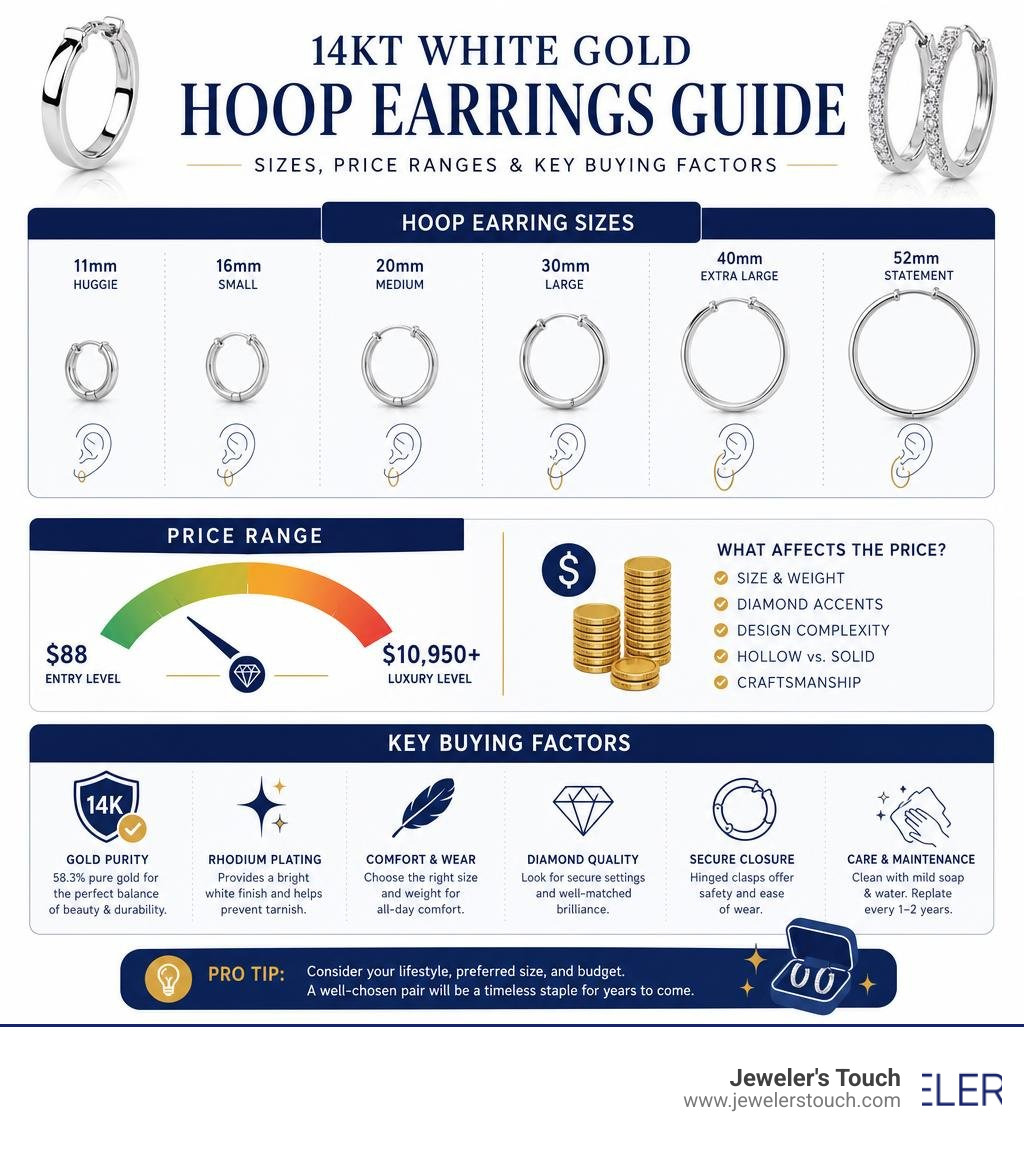
14kt white gold hoop earrings sit at a sweet spot most jewelry buyers eventually discover: durable enough for daily wear, beautiful enough for special occasions, and priced within reach for most budgets. But with hundreds of options available, from simple $88 everyday hoops to $10,000+ diamond-studded designs, knowing what to actually look for can feel overwhelming.
Here's a quick snapshot to help you decide fast:
| Factor | What to Know |
|---|---|
| Gold purity | 14kt = 58.3% pure gold, more durable than 18kt, richer than 10kt |
| Price range | Roughly $88 to $10,950 depending on size, diamonds, and brand |
| Best for | Daily wear, sensitive skin (with rhodium plating), versatile styling |
| Common sizes | 11mm (huggie) to 52mm (statement hoop) |
| Key styles | Plain polished, diamond-accented, faceted, hollow vs. solid |
| Maintenance | Rhodium replating every 1–2 years; clean with mild soap |
Whether you're buying your first pair of real gold hoops or upgrading from sterling silver, this guide breaks down everything, karat differences, sizing, pricing, care, and where to buy, so you can shop with confidence.
I'm Ken Rutz from Jeweler's Touch, a fine jewelry store with deep expertise in custom design, gold craftsmanship, and helping customers find pieces, including 14kt white gold hoop earrings, that they'll love for years. With our team of expert goldsmiths and a GIA-trained eye for quality, I'll walk you through exactly what matters when choosing the right pair.
Understanding Karat Options: Why Choose 14kt White Gold Hoop Earrings?
When shopping for white gold hoops, one of the first decisions you will face is choosing the karat weight. "Karat" (not to be confused with "carat," which measures diamond and gemstone weight) refers to the purity of the gold. Because 24-karat gold is 100% pure, it is incredibly soft, so soft, in fact, that you could easily bend or scratch it with your fingernails. To make gold durable enough for jewelry, master craftsmen alloy it with stronger metals.
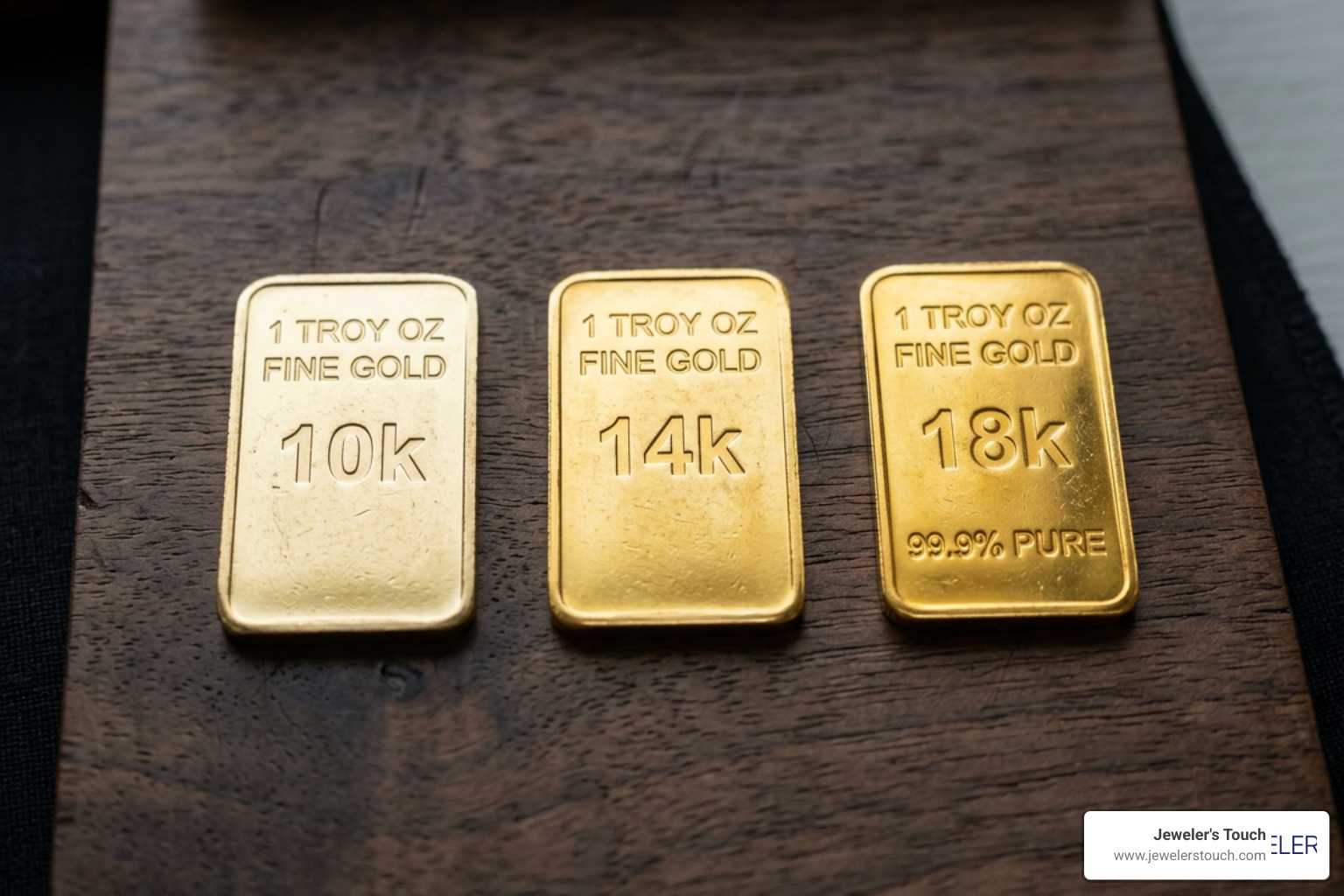
To help you understand how 14kt white gold hoop earrings compare to other popular jewelry metals, we have broken down the primary differences in purity, durability, color, and price below:
| Metal Type | Gold Purity | Key Alloy Metals | Durability Level | Relative Price | Ideal Use Case |
|---|---|---|---|---|---|
| Sterling Silver | 0% (92.5% Silver) | Copper | Low (tarnishes and bends easily) | Ultra-budget ($20 - $80) | Occasional wear, highly budget-conscious buyers |
| 10kt White Gold | 41.7% Gold | Copper, Nickel, Zinc | Very High (highly scratch-resistant) | Budget-friendly ($80 - $200) | Maximum durability on a tight budget; higher risk of metal allergies |
| 14kt White Gold | 58.3% Gold | Nickel, Zinc, Palladium | High (excellent for daily wear) | Moderate ($100 - $1,500+) | The "Goldilocks" option: perfect balance of purity, strength, and value |
| 18kt White Gold | 75.0% Gold | Palladium, Silver | Medium-High (softer, prone to scuffs) | High Premium ($500 - $5,000+) | Luxury collections, highly sensitive skin, prestige buyers |
As you can see, 14kt white gold is the industry standard for a reason. It offers a beautiful, bright finish that looks identical to 18kt white gold once polished and rhodium-plated, but it possesses significantly greater structural integrity. For hoop earrings, which frequently get caught on sweaters, bumped by phone screens, or tugged by children, this added durability is essential to prevent warping or snapping.
White Gold vs. Yellow and Rose Gold
The choice between white, yellow, and rose gold is primarily aesthetic, but the metals behave differently over time.
- Yellow Gold: Created by mixing pure gold with copper and silver, preserving gold's natural warm hue. It requires minimal surface maintenance.
- Rose Gold: Created by mixing pure gold with a higher percentage of copper, giving it a romantic pinkish-red glow. Like yellow gold, its color is inherent to the alloy and will not fade.
- White Gold: Created by mixing pure gold with white metals like nickel, zinc, or palladium. However, raw white gold actually has a very faint, warm champagne-yellow undertone. To achieve that iconic, ultra-bright, mirror-like chrome finish, jewelry makers electroplate the piece with a rare, highly reflective metal called rhodium.
When deciding which color fits you best, consider your skin's natural undertones. Cool undertones (often characterized by blue veins and skin that burns easily in the sun) pair beautifully with the crisp, icy look of 14kt white gold hoop earrings. Warm undertones (characterized by greenish veins and skin that tans easily) are naturally complemented by yellow gold. If you have neutral undertones, you are in luck, every gold color will look spectacular on you!
The Durability and Value of 14kt White Gold Hoop Earrings
If you are looking for an investment in your daily wardrobe, durability is paramount. While sterling silver is highly affordable, it tarnishes rapidly when exposed to air, humidity, and skin oils, requiring constant polishing. It is also highly prone to bending out of shape.
On the other end of the spectrum, 18kt gold is prized for its high gold content, but its softness makes it easy to scratch, and the heavy weight can pull uncomfortably on your earlobes if the hoops are large.
14kt white gold hoop earrings offer the perfect compromise. The 41.7% alloy mixture provides excellent scratch resistance and structural rigidity, ensuring that your hoop's hinge, post, and clasp remain secure over years of wear. It is a metal built to survive the hustle and bustle of daily life without losing its shape or its shine.
Sizing, Thickness, and Style Variations
One of the greatest things about hoop earrings is their sheer variety. Whether you want something subtle that whispers elegance or a bold pair that screams confidence, there is a perfect silhouette for you.

Finding Your Perfect Hoop Earring Size
When selecting your hoop size, it is helpful to think in millimeters. Here is a breakdown of the most common size categories and how they look on the ear:
- Huggies (11mm to 14mm): These tiny hoops literally "hug" the earlobe. They are incredibly comfortable, sleep-safe, and perfect for active lifestyles. Many modern wearers stack them in secondary or tertiary lobe piercings. If you want a minimal, set-it-and-forget-it option, look for classic everyday hoops in white gold which offer a lightweight, comfortable feel for daily wear.
- Medium Hoops (15mm to 30mm): This is the classic "sweet spot" range. A 20mm to 25mm hoop is visible, frames the face beautifully, and transitions effortlessly from a morning business meeting to a dinner date. They are professional yet stylish.
- Statement Hoops (31mm to 52mm+): If you want to turn heads, large hoops are the way to go. These dramatic sizes draw attention to your jawline and cheekbones.
To choose the best size for your face shape, keep these general rules of thumb in mind:
- Round Faces: Opt for elongated, angular, or very thin hoops to help lengthen your facial profile.
- Square/Angular Faces: Classic round, thick hoops work wonders to soften sharp jawlines and angular features.
- Oval Faces: You can confidently wear almost any size or shape of hoop!
Popular Styles of 14kt White Gold Hoop Earrings
Beyond size, the texture and embellishments of your hoops completely change their personality:
- Classic Polished Hoops: These feature a smooth, high-shine surface that catches the light cleanly. They are the ultimate wardrobe staple, offering a sleek, modern design to elevate your everyday look.
- Diamond-Accented Hoops: For a touch of luxury, diamond-cut patterns or actual bead-set natural diamonds add incredible sparkle. "Inside-out" diamond hoops—where diamonds are set on the front exterior and the back interior of the hoop—ensure that onlookers see glittering diamonds from every angle.
- Faceted and Textured Hoops: If you want the sparkle of diamonds without the diamond price tag, diamond-cut or hammered finishes are an exceptional choice. These hand-crafted facets reflect light in multiple directions, giving the earrings a unique, artisan feel.
Practical Considerations: Everyday Wear, Sensitive Skin, and Cost Factors
Buying fine jewelry is an investment, so it is important to understand how your earrings will interact with your body, your lifestyle, and your wallet.
Are White Gold Hoops Safe for Sensitive Ears and Water?
If you have sensitive skin, you are likely all too familiar with the itchy, red, irritated earlobes caused by cheap jewelry. This reaction is almost always caused by nickel, a common and inexpensive metal used to strengthen alloys.
Because white gold requires white metals to bleach the yellow gold, nickel is frequently used in 14kt white gold alloys. However, high-quality white gold jewelry is finished with a layer of rhodium plating. Rhodium is a hypoallergenic platinum-group metal that acts as a protective barrier between your skin and the nickel alloy underneath. As long as the rhodium plating remains intact, your ears should remain comfortable and irritation-free. If you have severe nickel allergies, you can also talk to a custom jeweler about alloy alternatives, such as palladium-based white gold, which is entirely nickel-free.
When it comes to water exposure, 14kt white gold is highly resilient. You can wear it in the shower or during a workout without worrying about immediate rust or discoloration. However, we strongly advise removing your jewelry before entering a swimming pool or hot tub. Chlorine is a harsh chemical that can chemically react with the alloy metals in gold, causing stress-corrosion cracking that can permanently damage your earrings over time.
If you love the bright look of white gold but are shopping for a ring rather than earrings, you might also want to explore options like a 14k Moissanite Ring for a brilliant, durable alternative. For layered styling, pairing your hoops with a classic 14k Gold Necklace with Pearl adds a touch of timeless sophistication to any outfit.
What Determines the Price of White Gold Hoops?
When comparing two pairs of hoops that look relatively similar, you might wonder why one costs $150 and the other costs $1,500. Several major factors drive the cost of fine jewelry:
- Gram Weight (Solid vs. Hollow): The actual amount of gold used is the primary cost driver. Solid hoops are heavy and use significantly more gold, making them more expensive. Hollow hoops use a clever manufacturing technique to create a thick, chunky look with a hollow interior, reducing the gold weight and keeping the price accessible.
- Diamond Quality and Carat Weight: If the hoops feature diamonds, the cut, color, clarity, and total carat weight will dramatically impact the price. Natural, near-colorless diamonds with high clarity (such as SI or VS grades) command a premium.
- Craftsmanship and Sourcing: Hand-polished, artisan-crafted pieces from reputable, ethically sourced suppliers cost more than mass-produced, machine-stamped earrings. Investing in quality craftsmanship ensures your hinges and clasps won't fail, saving you from losing an earring down the road. If you are looking to pair your hoops with other gold accessories, exploring curated collections of Gold Pendants Jewelry is a great way to build a cohesive wardrobe.
Care, Maintenance, and Retailer Choices
To keep your 14kt white gold hoop earrings looking as bright and reflective as the day you first put them on, a little routine maintenance goes a long way.
How to Clean and Maintain White Gold Jewelry
You do not need expensive commercial cleaners to keep your gold sparkling. In fact, some harsh chemical cleaners can actually damage your jewelry. Instead, follow this simple, safe cleaning routine at home:
- Soak: Mix a few drops of mild dish soap (like Dawn) in a bowl of warm water. Let your earrings soak for 10 to 15 minutes to loosen oils, makeup, and dirt.
- Gently Brush: Use a clean, extra-soft baby toothbrush to gently scrub around the posts, hinges, and any diamond settings.
- Rinse: Rinse the earrings thoroughly under warm running water (make sure the sink drain is plugged!).
- Dry and Polish: Dry them with a soft, lint-free microfiber cloth. Avoid using paper towels or tissues, which can leave tiny scratches on the polished gold surface.
If your hoops ever get stepped on, bent, or if the latch becomes loose, do not try to bend them back yourself with pliers! Take them to a professional for a quick Gold Ring Repair or earring adjustment to ensure the metal isn't structurally compromised.
Buying from Independent Jewelers vs. Mass Retailers
When you are ready to purchase, you have two main paths: mass-market mall retailers or independent, family-owned jewelers.
While mass retailers often run frequent "40% off" sales, their retail prices are often heavily marked up to begin with, and their pieces are typically mass-produced in factory assembly lines. This can lead to thinner metal, weaker hinges, and lower-quality gemstone settings.
Independent jewelers, on the other hand, focus on curated quality, structural integrity, and personalized service. When you buy from a local expert, you gain access to on-site goldsmiths who can adjust clasps, polish out scratches, and eventually replate your white gold with fresh rhodium. Furthermore, if you have a specific vision in mind, an independent jeweler can bring it to life through custom design. You can learn more about this exciting, collaborative process in our Ultimate Custom Jewelry Guide 2026.
Frequently Asked Questions about White Gold Hoops
Do 14kt white gold hoop earrings hold their resale value?
Like all fine jewelry, the resale value of gold hoops is primarily tied to the "melt value" of the gold alloy and the wholesale value of any precious gemstones. While designer brands charge a premium for their name, standard gold jewelry will generally resell for a percentage of the current market price of gold. Fine gold jewelry holds its value far better than fashion jewelry or sterling silver, but it should be purchased primarily for its beauty, durability, and personal enjoyment rather than as a short-term financial investment.
How often do white gold hoop earrings need to be replated?
Because earrings do not experience the constant friction, bumps, and hand-washing that rings do, the rhodium plating on white gold earrings lasts significantly longer. On average, you will only need to replate your white gold hoops every 2 to 5 years, depending on how often you wear them and your personal body chemistry. You will know it is time for a fresh rhodium dip when you notice a very faint, warm yellow undertone beginning to peek through the bright white finish.
What is the difference between hollow and solid white gold hoops?
The main differences are weight, price, and durability:
- Hollow Hoops: Made using hollow gold tubes. They are incredibly lightweight, making them comfortable to wear all day (even in very large sizes), and they are highly budget-friendly. However, they can dent if stepped on or crushed, and severe dents cannot easily be popped out.
- Solid Hoops: Made of solid gold wire or casting. They are incredibly strong, highly resistant to denting, and have a luxurious, substantial weight. However, they are significantly more expensive and can pull on the earlobes if you opt for a large diameter.
Conclusion
A beautiful pair of 14kt white gold hoop earrings is an absolute must-have for any jewelry collection. They bridge the gap between casual and formal, cool and classic, offering a lifetime of brilliant wear when chosen with care.
At Jeweler's Touch, we have been helping our community celebrate life's most beautiful moments since 1992. Located in the heart of Orange County, our Brea, CA showroom is home to on-site GIA gemologists and expert goldsmiths who are passionate about quality, transparency, and exceptional service. Whether you are searching for the perfect everyday huggies, sparkling diamond hoops, or custom-designed wedding rings, we are here to help you find a piece you will cherish forever.
Ready to find your perfect pair? Come visit us in Brea, CA, to explore our collection in person. We look forward to welcoming you!