

Your Gold Ring Is Broken — Here's What to Do
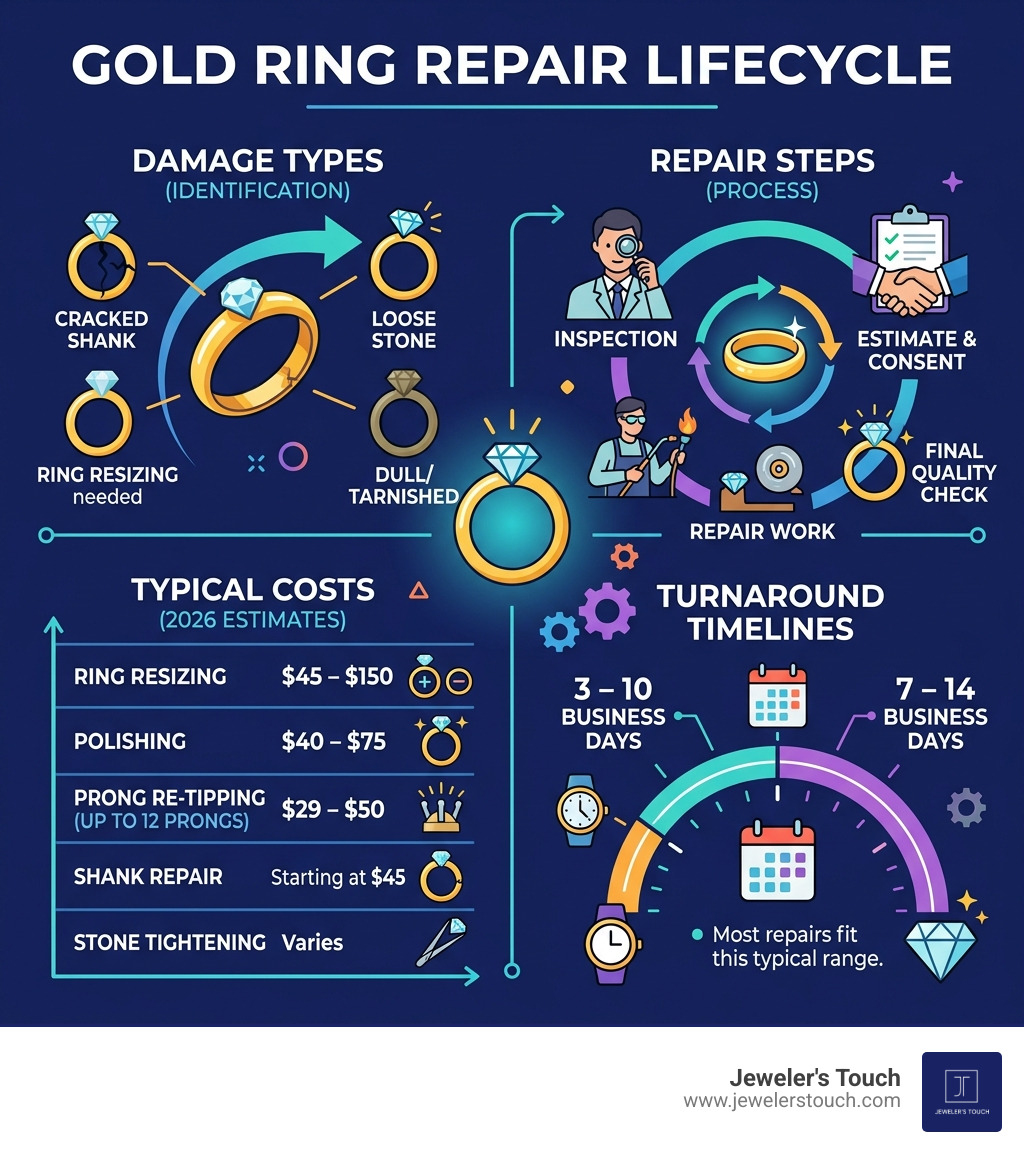
Gold ring repair is something most jewelry owners will need at some point — whether it's a cracked shank, a loose stone, or a band that no longer fits right. Here's a quick overview of the most common repairs and what they typically cost in 2026:
| Repair Type | Typical Cost | Turnaround Time |
|---|---|---|
| Ring resizing (up or down) | $45 – $150 | 7 – 14 business days |
| Polishing / shine restoration | $40 – $75 | 3 – 10 business days |
| Prong re-tipping (up to 12 prongs) | $29 – $50 | 3 – 14 business days |
| Shank repair (half or full) | Starting at $45 | 7 – 14 business days |
| Stone tightening | Varies | 3 – 14 business days |
Most repairs do not require replacing the ring — a skilled jeweler can restore both the look and the strength of your piece.
Have you ever glanced down at your ring and noticed a thin crack along the bottom of the band — or realized the fit just isn't right anymore? It's a stressful moment, especially when the ring carries real sentimental weight. The good news is that the vast majority of gold ring damage is completely repairable.
In this guide, we'll walk you through every major type of damage, what the repair process actually looks like, and how to choose the right option for your ring and your budget.
I'm Ken Rutz from Jeweler's Touch, and with years of hands-on experience in gold ring repair and fine jewelry craftsmanship, I'll help you understand exactly what your ring needs — and what to expect every step of the way. Let's take a closer look at what might be going on with your ring and how to fix it.
Common Types of Damage and When to Seek gold ring repair
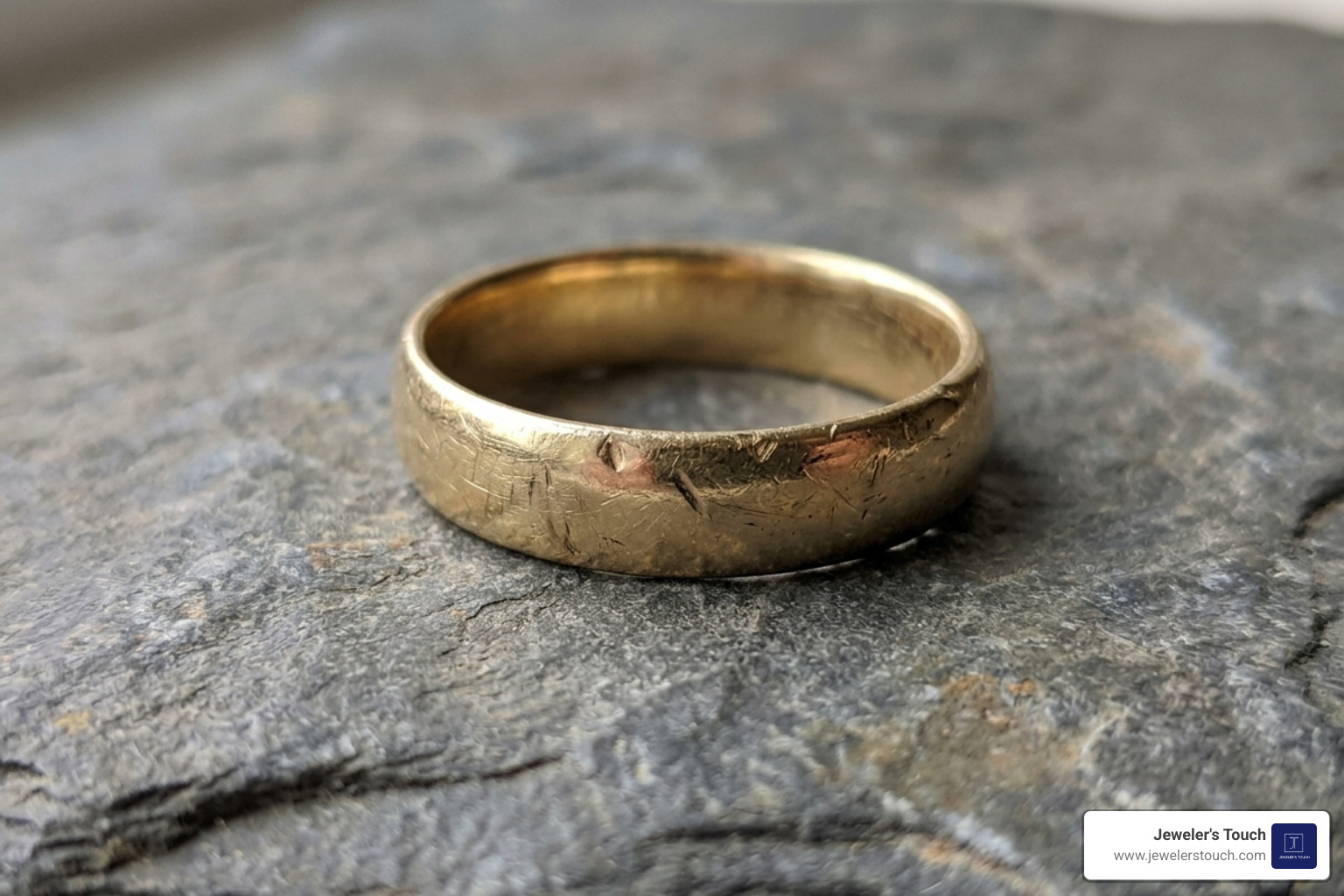
Gold is a relatively soft metal, which makes it beautiful and easy to work with but also susceptible to the rigors of daily life. Even if you are careful, your favorite pieces can suffer from "metal fatigue" over years of wear.
Common issues we see in our Orange County workshop include:
- Scratches and Dents: These are inevitable. Whether you’re lifting weights at the gym or accidentally knocking your hand against a granite countertop, the surface of your gold ring will eventually show signs of impact.
- Thinning Bands (Shanks): Over decades, the gold on the bottom of your ring actually wears away against everything you touch. Eventually, the band becomes paper-thin and prone to snapping.
- Bent or Misshapen Bands: Gold rings often lose their circular shape and become oval. This happens from pressure—carrying heavy grocery bags or gripping steering wheels—and can make the ring uncomfortable or even dangerous if it pinches the finger.
- Worn Prongs: The tiny metal "claws" that hold your diamonds in place are the most delicate part of the ring. If they snag on your sweaters or look flat, your stone is at risk of falling out.
- Tarnish and Dullness: While pure gold doesn't tarnish, the alloys mixed into 14k or 18k gold (like copper or silver) can react with chemicals, lotions, or sweat, causing the ring to lose its "spa-day" glow.
If you notice a "clicking" sound when you touch your stone, or if the bottom of your ring feels sharp or rough, it’s time for a professional check-up. You can learn more about our specific Jewelry Repair Services – Jeweler's Touch to see how we handle these delicate issues.
Professional Methods for Fixing a Cracked or Bent Shank
The "shank" is the technical term for the part of the ring that wraps around your finger. Because it sits on the palm side of your hand, it takes the most abuse. When a shank cracks, it’s usually due to metal fatigue or a previous poor resizing job that left the metal brittle.
Restoring a shank isn't just about "patching" a hole; it’s about structural engineering. We don't just "glue" metal back together. We use two primary professional methods:
- Traditional Soldering: Using a high-heat torch and gold solder (a metal with a slightly lower melting point) to fuse the crack.
- Laser Welding: This is the gold standard for modern gold ring repair. A laser allows us to weld the metal at a molecular level without heating the entire ring. This is crucial if your ring has heat-sensitive stones like emeralds or opals.
Step-by-Step Professional gold ring repair for Cracked Shanks
When you bring a cracked ring to a master goldsmith, the process looks much like a specialized surgery:
- Assessment: We use a jeweler’s loupe or a high-powered microscope to see if the crack is a surface scratch or a deep structural fracture.
- Cleaning: We must remove all oils, dirt, and "gunk" from the crack. If we try to solder a dirty ring, the bond won't hold.
- Cutting out the Damage: If the metal is too thin or brittle, we actually cut out the damaged section. It’s like trimming a frayed rope to make sure the new knot is strong.
- Adding New Metal: We insert a "half-shank" or "full-shank" replacement—a fresh piece of gold that matches your ring’s alloy and thickness perfectly.
- Soldering and Smoothing: The new metal is fused to the old. We then use specialized files and emery paper to smooth the joint until it’s completely invisible to the naked eye.
- Polishing: The final step is a multi-stage polishing process to restore the factory-fresh shine.

Resizing and Stone Setting: Restoring Fit and Security
As we move through different stages of life, our ring sizes change. Whether you need to size up because of a knuckle that’s grown or size down after weight loss, resizing is a precision task.
Sizing Down: We cut out a small piece of the band and fuse the ends back together. This is generally straightforward but requires the jeweler to ensure the ring remains perfectly round. Sizing Up: We cut the band and add a bridge of matching gold. We never "stretch" a fine gold ring, as this thins the metal and weakens the entire structure.
The Risk to Your Stones
A major part of gold ring repair during resizing is checking the stones. When you change the "arc" of a ring, the prongs can pull apart slightly. This is why we always perform stone tightening after any resizing. If your prongs are worn down, we recommend prong re-tipping, where we add a small "bead" of gold to the top of the prong to secure the diamond.
For white gold rings, resizing or heavy polishing will remove the rhodium finish. We always include rhodium plating as a final step to bring back that brilliant, mirror-like white chrome finish. Explore our Expert Ring Resizing and Restoration page for more details on how we protect your gemstones during this process.
Understanding the Costs of gold ring repair in 2026
Repair costs are influenced by the current market price of gold and the complexity of the labor. In May 2026, here is what you can expect for standard professional services:
| Service | Estimated Cost (2026) | Notes |
|---|---|---|
| Simple Resizing Down | $45 - $80 | Depends on band width |
| Simple Resizing Up | $60 - $150 | Includes the cost of added gold |
| Prong Re-tipping | $25 - $50 per prong | Bulk discounts often apply |
| Full Shank Replacement | $150 - $400 | Restores the entire bottom half |
| Professional Polishing | $40 - $75 | Removes scratches and restores luster |
| Rhodium Plating | $60 - $90 | Essential for white gold |
Frequently Asked Questions about Gold Ring Maintenance
How do gold alloys like 14k or white gold affect the repair process?
The "k" (karat) of your gold tells us how much pure gold is in the mix. 14k gold is harder and more durable than 18k because it contains more base metals like copper and silver.
- Rose Gold: Contains high copper content, which makes it brittle if overheated. It requires very specific solder to match the pink hue.
- White Gold: Is actually yellowish-gray in its natural state and is plated with rhodium. Repairs almost always require a fresh "dip" in rhodium to look right.
When is it better to replace a gold ring rather than repair it?
If the cost of the repair exceeds the retail value of the ring, or if the metal has become so brittle from years of poor repairs that it "crumbles" under a torch, it may be time to consider a "remount." This involves taking your original stones and setting them into a brand-new gold mounting. This preserves the sentimental value of the diamonds while giving you a safe, sturdy ring.
How can I prevent future damage to my gold ring?
- The Gym Rule: Never wear gold rings while lifting weights. The pressure of the steel bar against the gold band is the #1 cause of bent shanks.
- The Chemical Rule: Remove rings when using bleach or harsh cleaning chemicals. These can actually eat away at the alloys in your gold, making it brittle.
- Annual Check-ups: Visit us once a year. We can catch a "wobbly" stone or a thinning prong before the diamond falls out and disappears.
Conclusion
A broken gold ring can feel like a disaster, but in the hands of the right experts, it's merely a temporary setback. At Jeweler's Touch, our family-owned business has been serving the Orange County and Brea areas since 1992. With our on-site GIA gemologist and expert goldsmiths, we don't just "fix" jewelry; we restore the memories attached to it.
Whether you need a simple polish or a complex shank reconstruction, we treat every piece with the same precision we would give our own family heirlooms. If you're in the Brea or greater Orange County area, stop by and let us give your ring a "spa day."
For more tips on keeping your jewelry in top shape between visits, check out our More info about jewelry care and cleaning blog posts. We're here to make sure your gold rings stay as beautiful as the day you first put them on!