

Compare Diamond Bracelets by Style, Quality, and Price
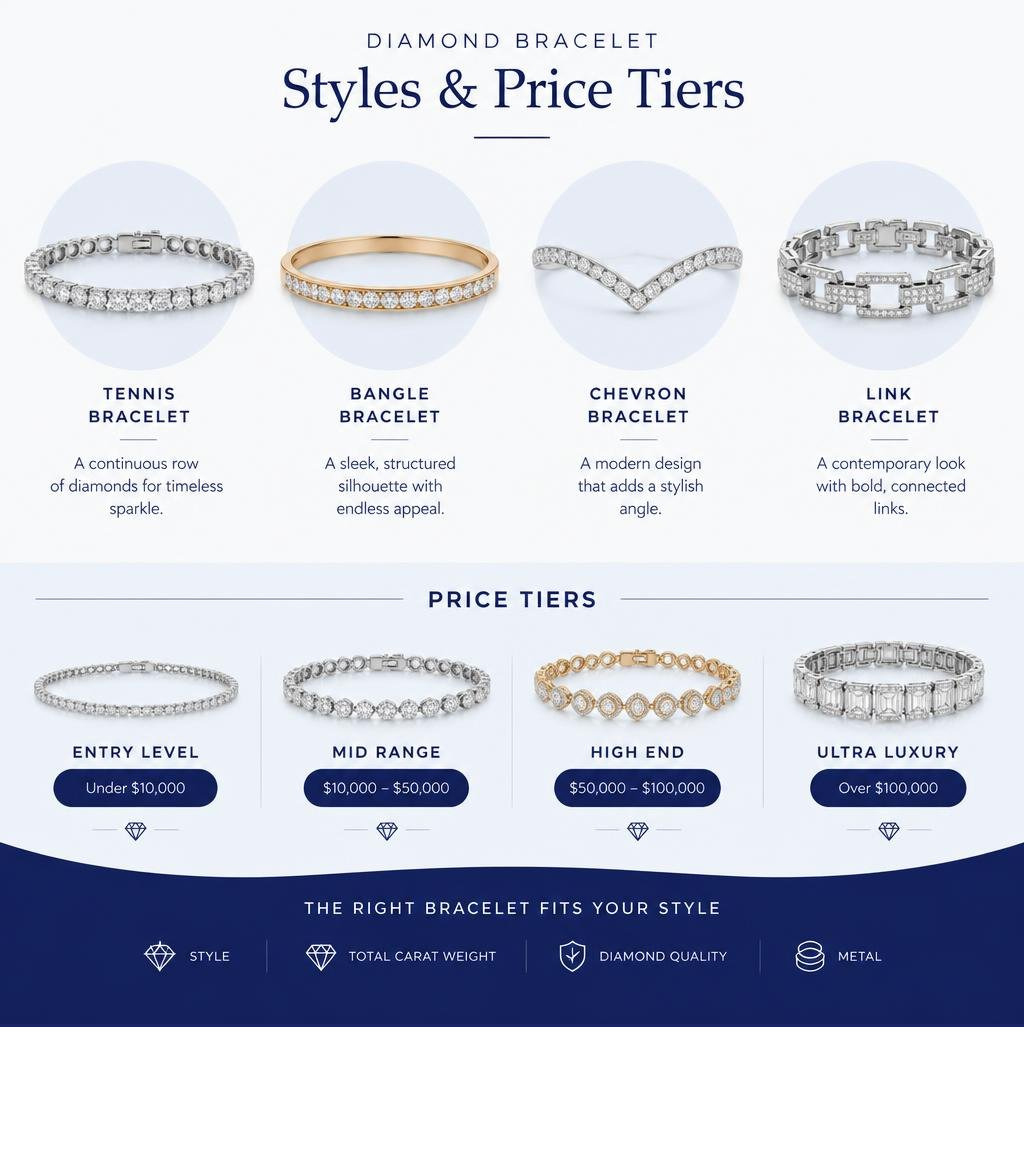
Diamond bracelets range from delicate, lower-carat designs to platinum high-jewelry pieces worth well over $100,000. To compare them well, start with four details: style, total carat weight, diamond quality, and metal. A classic tennis bracelet offers a continuous row of diamonds, while bangles, chevron designs, and modern link bracelets create a more distinct silhouette.
For most buyers, solid 14K or 18K gold, a secure clasp, and well-cut diamonds offer a smart balance of beauty, durability, and budget. Price rises quickly with larger total carat weight, platinum settings, higher clarity grades, and rare diamond shapes or colored gemstone accents.
At the top end of the market, examples can range from roughly $57,500 to more than $228,000. More accessible fine jewelry options can cost far less, especially with smaller diamonds or lab-grown stones. The right choice is the one that fits your wrist, your lifestyle, and how you plan to wear it.
I am Ken Rutz of Jeweler's Touch, where I work with fine jewelry, custom designs, and jewelry repair. In this guide, I will help you compare diamond bracelets with confidence before choosing a piece for an engagement, milestone, or everyday collection.
Popular Styles and Designs of Diamond Bracelets

When exploring fine jewelry options, the silhouette of a bracelet sets the tone for its overall aesthetic and durability. Whether you prefer an unbroken strand of sparkle or a structured architectural cuff, understanding how each style is engineered helps you pick the right design for your lifestyle. Reviewing key considerations when buying fine bracelets provides a solid foundation before diving into the specific structural differences.
Classic Tennis and Line Bracelets
The classic tennis bracelet remains one of the most beloved pieces of fine jewelry in the world. Engineered with flexible, linked mountings that wrap completely around the wrist, it delivers continuous symmetry and light performance.
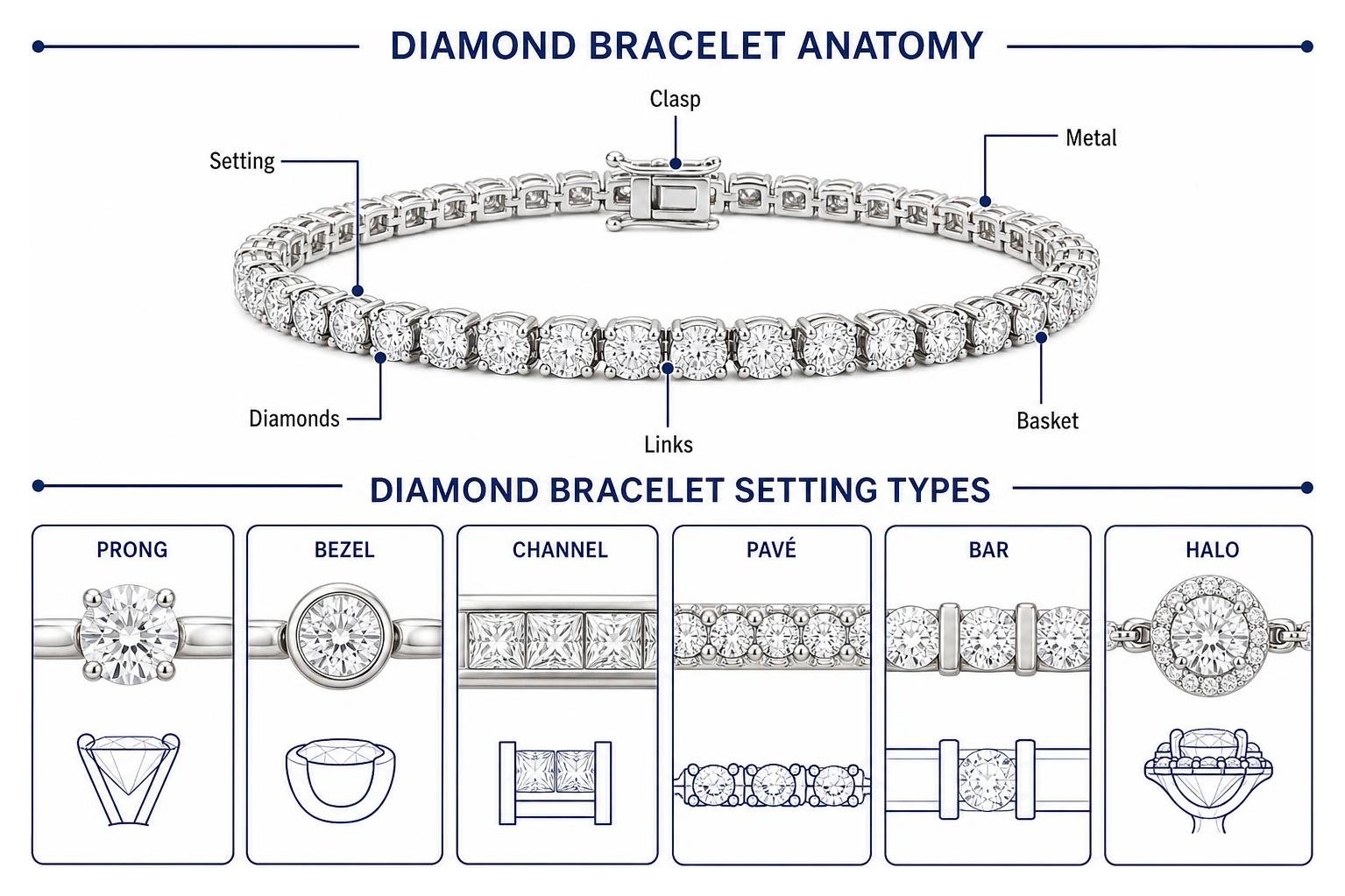
Most traditional designs feature classic four-prong baskets holding round brilliant diamonds, though sleek bezel settings have gained immense popularity for active wearers. Straight-line geometry keeps the focus entirely on the gems. A timeless 14K yellow gold natural diamond tennis bracelet offers an effortless drape that moves naturally with your arm, making it suitable for both casual luncheons and formal black-tie galas.
Bangles, Cuffs, and Flexible Wire Designs
For those who enjoy bold structure, rigid bangles and bypass cuffs present a sophisticated alternative. Unlike articulated links, a solid 14K yellow gold diamond bangle holds its circular or oval shape permanently, allowing diamonds to sit prominently across the top of the wrist.
Modern goldsmithing has also introduced innovative memory-metal cores. A flexible diamond titanium wire bracelet pairs the rich beauty of gold with the spring-like flexibility of titanium, making it simple to slip on and off without complicated clasp mechanisms while retaining structural integrity over years of wear.
Modern Link, Paperclip, and Halo Styles
If your taste leans toward contemporary trends, modern link bracelets combine geometric metalwork with diamond accents. Popular paperclip motifs bring an airy, fashion-forward appeal, while adjustable bolo cords allow a custom fit for any wrist size.
Halo solitaire bracelet architecture places a central stone within a circle of micropavé diamonds. For instance, high-end houses craft halo designs featuring a 0.20-carat solitaire surrounded by micropavé accents for a total of 0.35 carats set in 18K white gold.
Key Factors Determining Fine Jewelry Value
Evaluating fine jewelry requires looking closely at total carat weight, diamond grading standards, metal purity, and artisan craftsmanship. Small differences in diamond cut precision or alloy composition can create significant variations in overall market pricing.
Diamond Quality and Carat Weight in Diamond Bracelets
Unlike a solitaire engagement ring where one large stone commands the price, a bracelet incorporates dozens of matching stones. Diamond cutters must carefully match color, clarity, and dimensions across every link.
Round brilliant cuts provide maximum brilliance and sparkle, while emerald cuts and baguette accents deliver clean, mirror-like reflections. Fancy shapes like pear cuts add dramatic romance. In elite collections, master jewelers combine various cuts into complex compositions. One high jewelry example sets 9 pear-shaped diamonds (1.12 carats), 9 baguette-cut diamonds (0.59 carats), and 108 brilliant-cut diamonds (6.30 carats) into 18K white gold for a combined total of 7.99 carats.
Clarity grades such as VS (Very Slightly Included) and SI (Slightly Included) ensure the gems are clean to the naked eye, while color grades in the Near-Colorless (G to J) range keep the continuous strand sparkling white against precious metals.
Precious Metals: Platinum vs. 14K and 18K Gold
The choice of mounting metal impacts both the weight and longevity of the bracelet:
- Platinum: The most durable and dense precious metal used in fine jewelry. A platinum diamond tennis bracelet does not wear away over time and naturally holds its cool white sheen without yellowing.
- 18K Gold: Containing 75% pure gold, 18K yellow or white gold offers rich color saturation and luxury appeal. White gold pieces typically receive a protective rhodium plating to enhance brightness.
- 14K Gold: Consisting of 58.3% pure gold alloyed with stronger metals, 14K gold offers exceptional scratch resistance and tensile strength, making it ideal for everyday wear at a practical price point.
Natural vs. Lab-Grown Stones in Diamond Bracelets
Modern buyers have the option to choose between earth-mined and lab-created stones. Both varieties are optically, physically, and chemically identical pure carbon crystals.
Natural diamonds carry inherent value derived from their geological rarity, making them timeless heirloom treasures. Conversely, a 14K white gold lab-grown diamond tennis bracelet provides significant budget efficiency, allowing you to maximize carat weight and visual size while enjoying identical brilliance.
Comparing Price Tiers: From Everyday Luxury to High Jewelry
Diamond bracelet pricing is determined by metal weight, total diamond carat weight, gemstone rarity, and artisan complexity.
| Price Tier | Typical Total Carat Weight | Common Metals | Key Features & Examples |
|---|---|---|---|
| Accessible Entry ($500 – $3,000) | 0.25 – 2.00 TCW | Sterling Silver, 14K Gold | Lab-grown options, bolo pull-chains, delicate single-row motifs |
| Mid-Range Fine ($3,000 – $15,000) | 2.00 – 7.00 TCW | Solid 14K & 18K Gold | Classic natural diamond tennis bracelets, VS/SI clarity, solid clasps |
| Ultra-Luxury ($15,000 – $200,000+) | 7.00 – 20.00+ TCW | 18K Gold, Solid Platinum | High-carat continuous strands, rare colored gemstones, custom mountings |
Accessible Entry Tier ($500 – $3,000)
The entry tier is perfect for building a jewelry wardrobe, celebrating early career milestones, or gifting birthdays. Pieces in this category often feature sterling silver mountings, delicate 14K gold links, or lab-grown diamonds. Bolo-style pull cords are common here, offering easy adjustability for any wrist size without custom sizing.
Mid-Range Fine Jewelry ($3,000 – $15,000)
This tier represents the quintessential fine jewelry investment. Here, bracelets feature solid 14K or 18K yellow, white, or rose gold mountings set with natural diamonds ranging from 2.00 to 7.00 total carats. These pieces boast hand-assembled basket links, secure box clasps, and excellent diamond color matching, making them lifelong staples for daily wear.
Ultra-Luxury and High Jewelry ($15,000 – $200,000+)
At the high end of the market, diamond bracelets transform into works of wearable art. Exceptional pieces in this category include:
- Solid platinum diamond bracelets commanding upwards of $90,000 to $228,775
- Platinum and 18K yellow gold mixed-metal designs valued at $155,915
- High-carat sapphire, ruby, or emerald and diamond chevron statements ranging from $57,500 to $148,500
- Heavy 18K white gold and yellow gold multi-carat straight line bracelets between $51,600 and $84,150
- Sculptural designer bangles priced between $55,910 and $101,260
These magnificent creations incorporate substantial diamond carats, flawless stone matching, and intricate hand-finished prong work.
Sizing, Clasp Security, and Everyday Styling
A diamond bracelet should feel comfortable, secure, and natural on your arm. Learning how to style diamond bracelets ensures you get maximum wear out of your investment across every social setting.
Measuring Wrist Size for the Perfect Fit
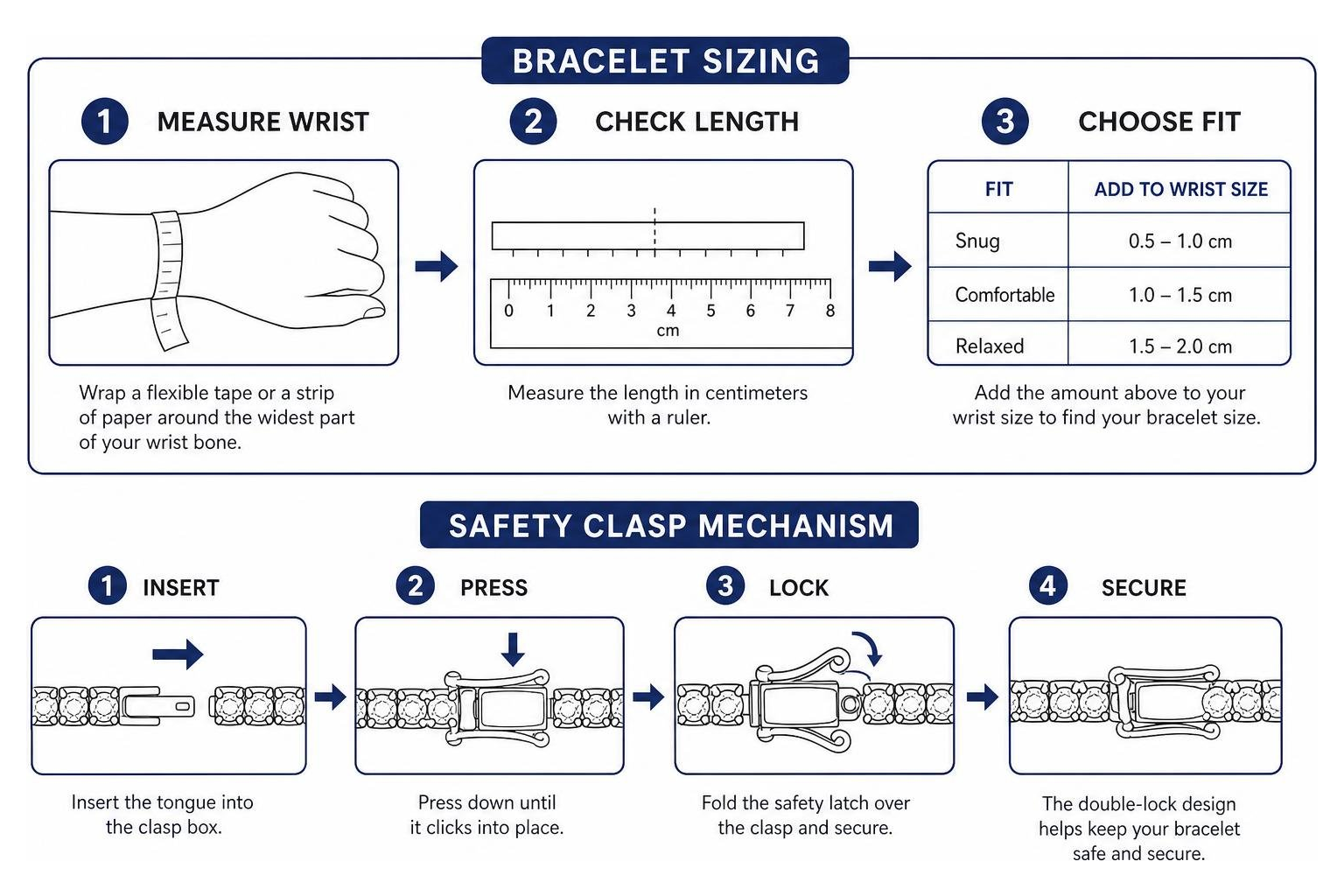
Finding your exact bracelet size is straightforward:
- Wrap a flexible tailor's tape or a strip of paper around the widest part of your wrist bone.
- Mark the point where the ends meet and measure the length in inches or millimeters.
- For tennis and flexible line bracelets, add 0.5 to 0.75 inches to your wrist measurement. This provides the ideal one-finger spacing so the bracelet drapes elegantly without pulling tight or sliding down your hand.
- For rigid bangles, add 0.25 to 0.5 inches for an oval hinged fit, or measure across your knuckles with your hand tucked tightly to clear slip-on styles.
Clasp Mechanisms and Daily Safety
Because fine bracelets experience constant motion on your wrist, clasp integrity is vital:
- Integrated Box Clasp: A tongue-and-groove mechanism that clicks securely inside the terminal diamond link.
- Double Figure-Eight Safety Latches: Hinged wire catches on one or both sides of the box clasp that fold over small posts, preventing accidental opening.
- Hidden Foldover Closures: Low-profile latches designed to blend seamlessly into continuous line patterns.
We always recommend having your jeweler perform an annual inspection of prongs and clasp tension to prevent stone loss.
Layering and Stacking Combinations
Modern fine jewelry encourages personal expression. Try mixing a classic yellow gold diamond tennis bracelet with a structured white gold bangle to create balanced contrast. Pairing a slim diamond line bracelet alongside a luxury steel timepiece adds instant refinement to business attire, while stacking multiple gemstone cuffs transitions easily into evening glamour.
Frequently Asked Questions
How much should you spend on a quality diamond bracelet?
Your budget should reflect your personal financial comfort and how often you plan to wear the piece. For a timeless, daily natural diamond tennis bracelet in solid 14K gold, most shoppers find the sweet spot between $3,500 and $8,000. Choosing lab-grown stones or lighter carat weights can lower the initial cost without sacrificing brilliance.
Can you wear a diamond bracelet every day?
Yes, provided the bracelet is crafted with sturdy prongs and a reliable safety clasp. Diamonds score a 10 on the Mohs hardness scale, making them resistant to everyday surface scratches. However, we recommend removing fine bracelets before heavy gym workouts, swimming in chlorinated pools, or performing vigorous household chores.
What is the difference between a tennis bracelet and a line bracelet?
The terms are often used interchangeably today. Historically, the style was known simply as an "eternity bracelet" or "straight line bracelet." It earned the iconic moniker "tennis bracelet" during the 1987 U.S. Open when tennis star Chris Evert paused a match to retrieve her diamond line bracelet after the clasp broke on court. Today, a line bracelet refers to any linear diamond setting, while tennis bracelets specifically emphasize flexible, continuous articulation.
Conclusion
Choosing the perfect diamond bracelet comes down to balancing setting style, metal durability, diamond quality, and your personal budget. Whether you prefer an entry-level bolo bracelet, an everyday gold staple, or a breathtaking platinum masterpiece, quality craftsmanship ensures your piece shines for generations.
At Jeweler's Touch, we have proudly served our Southern California community as a family-owned jeweler since 1992. Our team includes 3 GIA Graduate Gemologists (GGs) on staff along with expert on-site goldsmiths dedicated to quality repairs, custom designs, and appraisals. Visit our showroom in Brea, California, or explore our curated diamond bracelet collection to find the perfect piece for your wrist.