

A Broken Chain Doesn't Have to Be the End of Your Favorite Piece
Chain soldering near me is one of the most common jewelry repair searches — and for good reason. A snapped necklace or broken bracelet link can sideline a piece you wear every day, or worse, a sentimental heirloom you can't replace.
Here's a quick answer if that's all you need:
Where to find chain soldering near you:
| Option | Best For | Typical Cost | Turnaround |
|---|---|---|---|
| Local jewelry store (on-site) | Fast repairs, complex chains | $25–$225 | Same day to 7–10 days |
| Mall jewelry kiosk | Simple breaks, convenience | $25–$75 | Same day |
| Mail-in repair service | No local options nearby | $25–$100+ | 7–10 business days |
The good news? Most broken chains can be repaired — often so cleanly that the break is completely invisible afterward. Whether it's a delicate gold necklace or a chunky sterling silver bracelet, a skilled jeweler can restore it to full strength and original appearance.
Chains take a lot of stress. They snag on sweaters, get tugged by curious hands, and weaken from daily exposure to soap and sweat. A break doesn't mean the piece is gone — it just means it needs a little expert attention.
I'm Ken Rutz of Jeweler's Touch, and with years of hands-on experience in fine jewelry repair and custom design, I've helped countless customers restore broken chains and find chain soldering near me solutions that hold up for years to come. Let me walk you through everything you need to know to get your chain fixed right.
Understanding Chain Soldering Near Me: Techniques and Metals
When your favorite necklace snaps, your first instinct might be to look for chain soldering near me to get it back around your neck as quickly as possible. But not all soldering is created equal. Understanding how a jeweler approaches your repair can help you ensure the final result is both strong and beautiful.
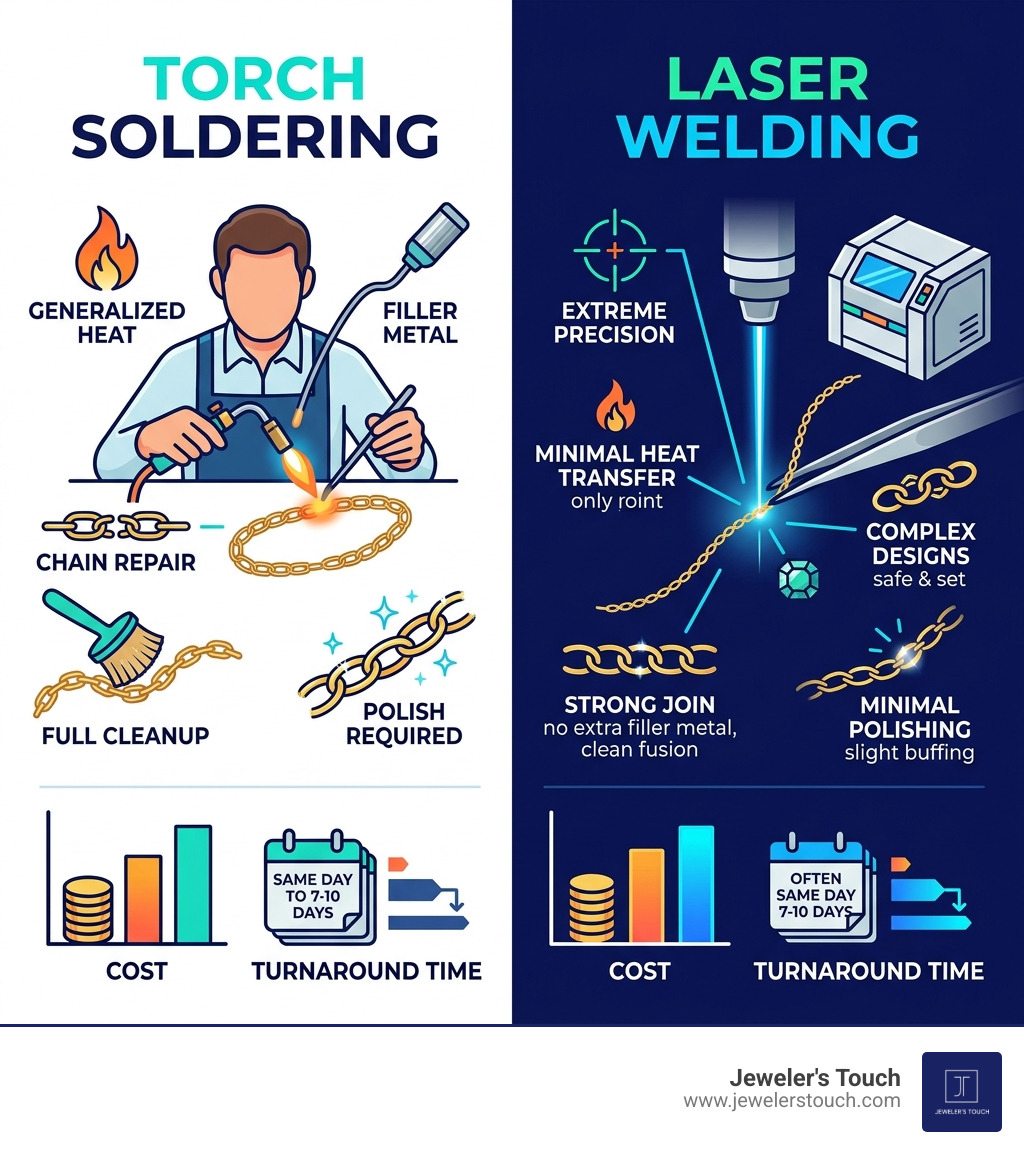
At its core, chain soldering is the process of using a filler metal (solder) with a lower melting point than the chain itself to join two broken ends together. In May 2026, modern technology has given us even more precise ways to handle these repairs, moving beyond the traditional torch to high-tech laser systems.
Laser Welding vs. Traditional Soldering
For decades, the jeweler's torch was the primary tool for repairs. While effective, traditional torch soldering requires heating a relatively large area of the metal. This can be risky for pieces with heat-sensitive gemstones, delicate enameling, or very thin metal walls.
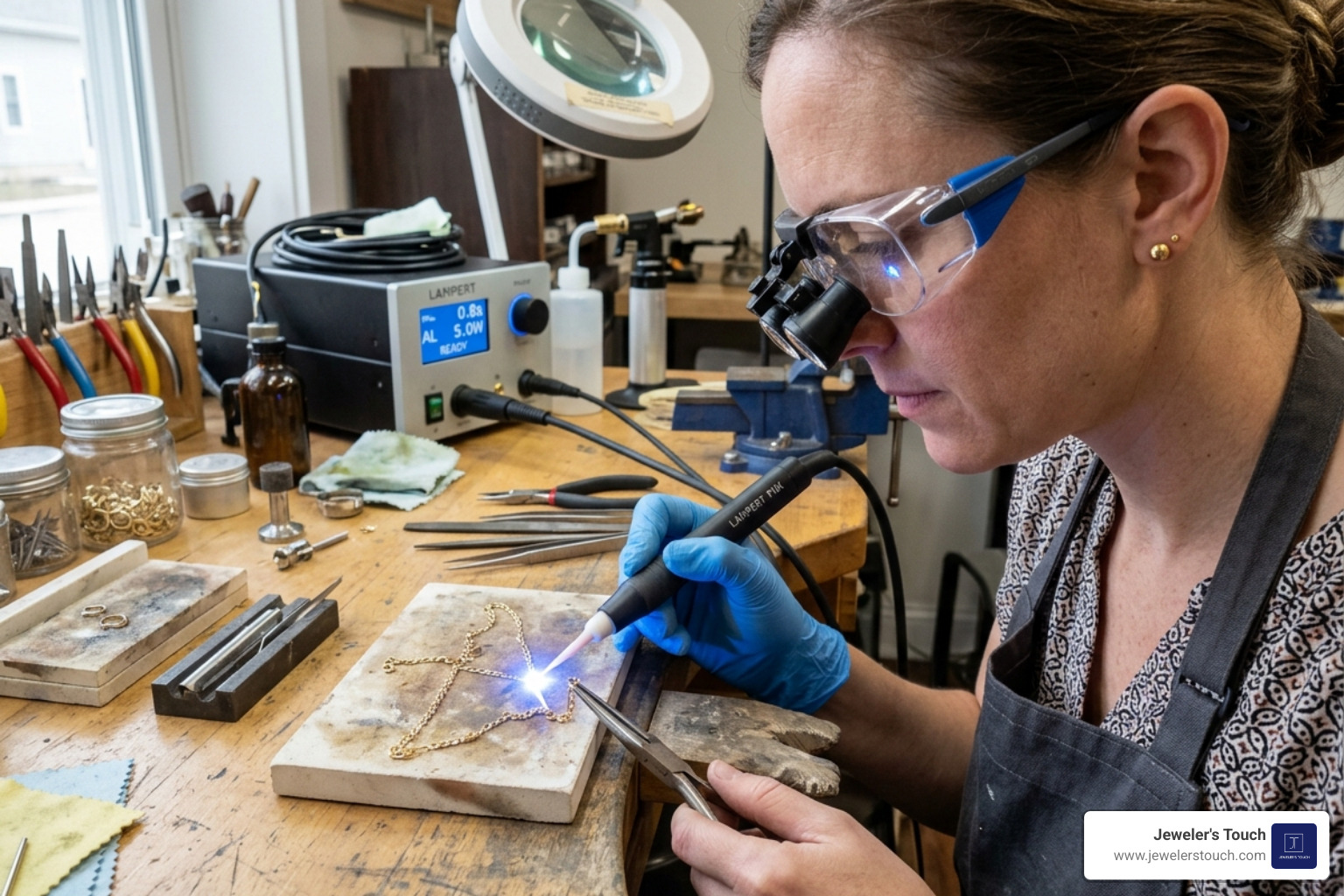
Today, many professional shops—including ours in Orange County—utilize laser welding. This technology is a game-changer for several reasons:
- Precision: The laser beam is incredibly concentrated, allowing us to apply heat only to the microscopic point where the break occurred.
- Safety: Because the heat is so localized, we can work right next to diamonds or colored stones without the risk of heat damage.
- Strength: Laser welding often creates a stronger bond by fusing the existing metal together, rather than just relying on a "bridge" of solder.
- Seamlessness: The result is an undetectable repair. When done correctly, the width, depth, and luster of the repair site match the rest of the chain perfectly.
Choosing a shop that utilizes these modern tools is a big part of How to Find a Trustworthy Jeweler in Your Area.
Repairable Chain Styles and Metals
Most fine jewelry metals are excellent candidates for soldering. Whether you have 10K, 14K, or 18K gold (yellow, white, or rose), platinum, palladium, or sterling silver, these metals can be expertly rejoined. Even newer materials like stainless steel or titanium can often be repaired using laser technology, though they were once considered "impossible" by many shops.
However, the style of the chain matters just as much as the metal:
- Solid Link Chains: Cable, curb, and box chains are generally the most straightforward to repair.
- Hollow Chains: These require extreme care. Because the links are essentially thin tubes filled with air, they can easily collapse or melt under too much heat.
- Rope and Wheat Chains: These complex "braided" styles often require weaving the links back together before soldering to ensure the pattern remains consistent.
If you’ve noticed your jewelry is starting to fail, it’s best to address it early. Just as Why Bent Earrings Should Be Professionally Reshaped prevents a total snap, catching a thinning link in a chain can save you from losing the piece entirely.
What to Expect: Costs, Turnaround, and Process
When you bring a piece in for chain soldering near me, you likely have two main questions: "How much will it cost?" and "When can I have it back?"
Average Cost of Chain Soldering Near Me
The cost of a repair isn't just about the tiny drop of gold or silver used; it's about the labor, expertise, and equipment required to make the repair permanent and invisible.
| Factor | Impact on Price |
|---|---|
| Metal Type | Silver is generally less expensive; Platinum requires higher heat and specialized solder. |
| Chain Style | Solid links are standard; hollow or complex rope chains require more time and skill. |
| Number of Breaks | Each individual break counts as a separate soldering point. |
| Severity | A simple snap is easier than a chain that has been crushed or stretched. |
Generally, you can expect a starting price of around $25 to $30 for a basic silver solder, while complex gold or platinum repairs can range up to $225 or more if the piece requires extensive reconstruction.
Typical Turnaround Times for Chain Soldering Near Me
Convenience is king, and some mall-based kiosks offer same-day service while you shop. However, for high-value or sentimental items, a slightly longer wait often ensures a higher standard of craftsmanship.
- Standard Service: Most professional jewelers have a turnaround time of 7 to 10 business days. This allows the master jeweler to properly assess, repair, polish, and quality-check the piece.
- Rush Options: Many shops offer rush services for an additional fee if you need the piece for a specific event.
- On-Site Advantage: Choosing a jeweler who performs repairs on-site (like we do here in Brea) is crucial. It means your jewelry never leaves the building, reducing the risk of loss and allowing for direct communication with the person actually doing the work.
How to Prepare Your Jewelry for Professional Repair
Before you head out to find chain soldering near me, a little preparation goes a long way in ensuring a smooth experience.
- Clean the Piece: While the jeweler will professionally clean the item after the repair, removing heavy lotions or oils helps them see the damage clearly during the initial assessment. Learn more about How to Clean and Care for Your Jewelry to keep your pieces in top shape.
- Document the Damage: Take high-resolution photos of the full chain and a close-up of the break. This is helpful for your own records and for the jeweler’s intake process.
- Gather All Pieces: If a link fell off or a charm detached, make sure to bring all the fragments with you. It’s much easier (and cheaper) to solder original pieces back together than to fabricate new ones.
Steps to Getting Your Chain Soldered
When you visit a professional like Jeweler's Touch, the process is designed to be transparent and reassuring:
- Consultation: We’ll inspect the chain under magnification to identify the break and check for other weak spots that might fail soon.
- Free Estimate: You should always receive a firm quote before any work begins.
- Repair Agreement: This document outlines the work to be done and serves as your receipt.
- The Repair: The jeweler cleans the break, aligns the links, and uses a laser or torch to join them.
- Refinishing: This is a vital step. The repaired area is polished and textured to match the rest of the chain perfectly. If it’s white gold, it may be rhodium-plated to restore that brilliant white finish.
For more tips on choosing the right shop, check out our guide on How to Find Jewelry Repair Near Me.
Preventing Future Breaks and Maintaining Your Chain
Once your chain is restored, you’ll want to keep it that way! Most breaks are avoidable with a few simple habit changes.
Common Causes of Chain Damage
- The "Sleep Snag": We often recommend taking chains off before bed. Restless sleeping can cause a chain to kink, stretch, or snag on pillowcase fibers.
- Toddler Tugs: Shiny, dangling objects are irresistible to little hands. If you’re around grabby infants, consider wearing a thicker, more durable chain or tucking your necklace inside your shirt.
- Chemical Weakening: Frequent exposure to chlorine (pools), heavy perfumes, and even certain body oils can eventually degrade the metal or the solder joints.
- Improper Removal: Never pull a chain over your head while it’s still clasped. This puts immense stress on the links and is a leading cause of stretching.
Regular inspections are your best defense. Just as you might use a Diamond Bracelet Resizing Guide: Tips for Different Styles to ensure a perfect fit, having a jeweler check your clasps and links once a year can catch a "bent" link before it becomes a "broken" one.
Frequently Asked Questions about Chain Repair
Can all broken chains be soldered?
While most can, there are a few exceptions. Snake chains and herringbone chains are notoriously difficult. Because of their tight, scale-like construction, soldering often leaves a "stiff spot" where the metal was joined, which can affect how the chain hangs. Very thin, plated fashion jewelry (base metal) often cannot be soldered because the heat will melt the entire piece or cause the plating to bubble.
Is the repair visible to the naked eye?
With a professional repair, the answer should be a resounding no. A master jeweler will ensure the color of the solder matches the metal perfectly and will polish away any seams or tool marks. The goal is a "trace-free" repair where you can't even remember where the break was.
Do repair services include a warranty?
Reputable jewelers stand behind their work. While a jeweler can't guarantee that you won't snag the chain again in the future, they should provide a warranty on the workmanship of the solder joint itself. At Jeweler's Touch, we pride ourselves on repairs that are built to last.
Conclusion
Finding reliable chain soldering near me doesn't have to be a stressful search. Whether you're in Brea, Anaheim, or anywhere in Orange County, the key is to look for expertise, on-site service, and modern technology.
Since 1992, Jeweler's Touch has been the community's trusted partner for everything from simple chain repairs to complex custom designs. With our on-site GIA gemologists and expert goldsmiths, we treat every piece—from a simple silver chain to a diamond-encrusted heirloom—with the same level of care and precision.
Don't let your favorite jewelry sit in a drawer gathering dust. Bring it in for a free inspection and estimate, and let us restore it to its former glory. For more tips on keeping your collection sparkling, visit our guide on How to Clean and Care for Your Jewelry.
Ready to get your chain fixed? We look forward to helping you!