

The Three Official August Gemstone Birthstone Varieties
August is one of only three months on the calendar that boasts three distinct birthstones, sharing this rare honor with June and December. According to the GIA official birthstone overview, having multiple official gemstones gives jewelry wearers an incredible range of personal expression.
Whether you love vibrant citrus greens, brilliant regal reds, or earthy banded patterns, August provides a versatile palette. The official modern birthstone list was standardized in the 20th century by jewelry industry organizations, but the roots of these gems stretch back thousands of years.
| Gemstone | Primary Colors | Mohs Hardness | Primary Source Localities | Wedding Anniversary Milestone |
|---|---|---|---|---|
| Peridot | Lime green, olive green, yellowish-green | 6.5 – 7.0 | USA (Arizona), China, Myanmar, Pakistan, Vietnam | 16th Anniversary |
| Spinel | Red, hot pink, cobalt blue, lavender, black | 8.0 | Myanmar, Sri Lanka, Tanzania, Vietnam, Tajikistan | 22nd Anniversary |
| Sardonyx | Reddish-brown with white zebra banding | 6.5 – 7.0 | India, Brazil, Madagascar, Germany, USA | Traditional Heritage Gem |
Peridot: The Primary August Gemstone Birthstone
Peridot is the primary and most celebrated birthstone for the month of August. As a gem-quality variety of the mineral olivine, peridot is idiochromatic, meaning its color comes from the basic chemical composition of the stone itself (iron) rather than trace impurities. This is why peridot is found exclusively in shades of green, ranging from bright lime and chartreuse to deep, golden olive.
Historically called the "evening emerald" by ancient Romans, peridot does not change color under artificial light, maintaining its radiant green shimmer even after sunset. In modern jewelry gifting traditions, peridot is also the designated gemstone for celebrating a 16th wedding anniversary.
Spinel: The Modern August Gemstone Birthstone Alternative
Spinel is the newest addition to the lineup, officially added as an August birthstone in 2016. Belonging to the isometric crystal system, spinel crystallizes into sharp octahedral shapes that look like double pyramids.
Unlike peridot, spinel comes in an extensive spectrum of hues, including intense flame red, vivid neon pink, royal cobalt blue, deep violet, and sleek black. Because of its hardness and brilliance, red spinel has become a popular alternative to ruby, and it is traditionally gifted to commemorate the 22nd wedding anniversary.
Sardonyx: The Ancient Banded Gemstone
Before modern lists highlighted peridot, sardonyx was the original, traditional birthstone for August, with historical ties reaching back to ancient Roman and biblical eras.
Sardonyx is a banded variety of chalcedony, formed by alternating, flat layers of brownish-red sard and white onyx. This natural layering creates striking reddish-brown and bright white bands, resembling zebra stripes on a warm terra-cotta base. In antiquity, sardonyx was celebrated because it was both visually dramatic and widely accessible to people across different walks of life.
History, Lore, and Geological Origins of August Birthstones
The geological origins of August gemstones read like an adventure novel, involving deep volcanic eruptions, royal deceptions, and even interstellar travel. As highlighted by EarthSky birthstone origins, the human fascination with these stones spans several millennia.
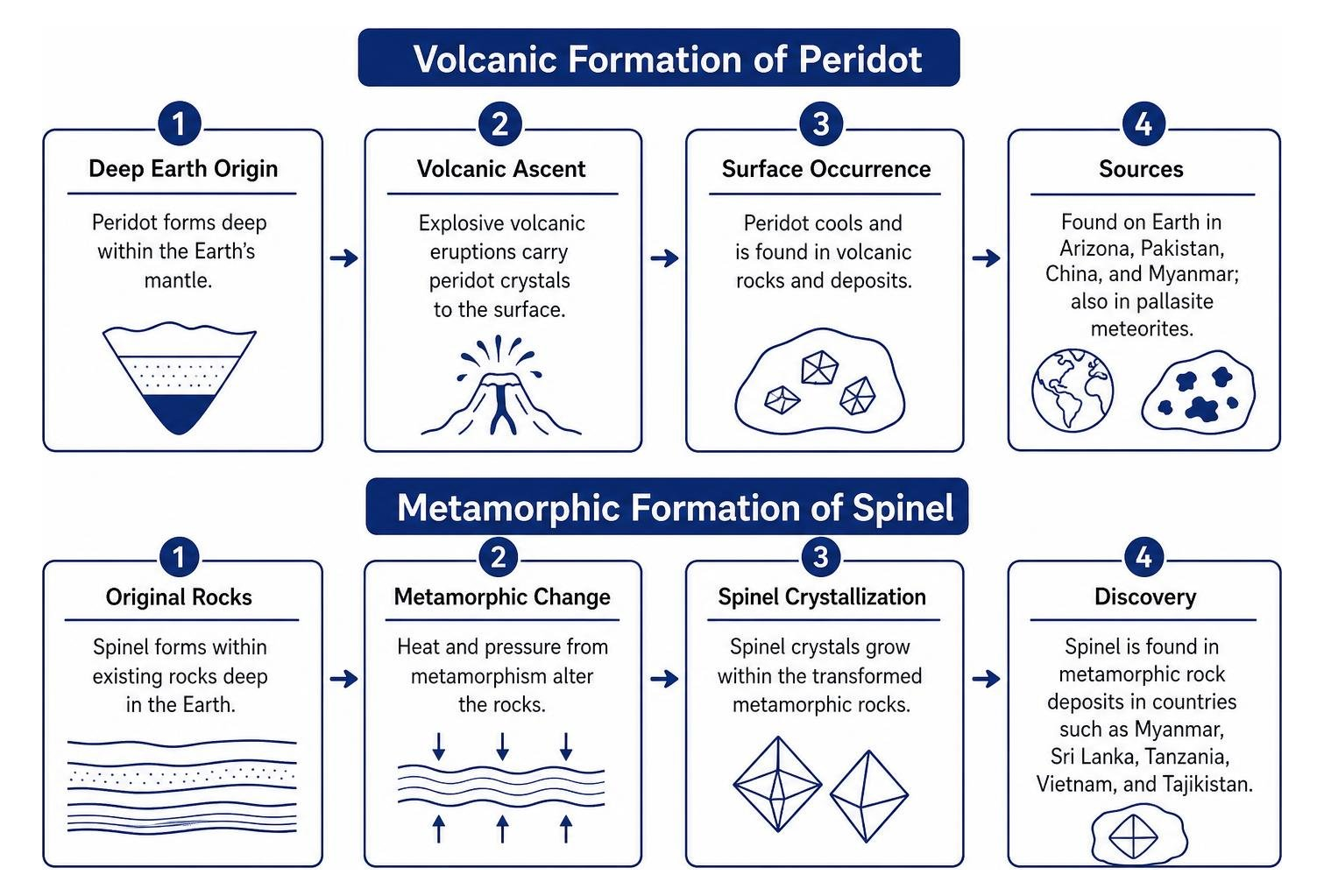
Extraterrestrial and Volcanic Peridot Formation
Unlike most gemstones that form in the Earth's crust, peridot forms deep within the Earth's mantle and is carried to the surface by explosive volcanic lava flows. Ancient Egyptians mined peridot on the remote Red Sea island of Zabargad (historically known as Topazios), referring to it as the "gem of the sun" because of its fiery brilliance.
Remarkably, peridot crystals are also found in outer space inside pallasite meteorites, embedded in nickel-iron matrices that formed during the early creation of our solar system. On Earth, substantial deposits are mined in the United States on the San Carlos Apache Reservation in Arizona, as well as in Pakistan, China, and Myanmar.
Historic peridots have frequently captured global attention:
- The Smithsonian Institution in Washington, D.C., houses the world's largest known faceted peridot, weighing an impressive 310 carats.
- The famed Three Holy Kings Shrine in Germany's Cologne Cathedral features over 200 carats of magnificent green gems that were believed for centuries to be emeralds, but are actually fine peridots.
Spinel's Royal Masquerade as Ruby
For hundreds of years, red spinel was frequently misidentified as ruby due to its identical color saturation and geological coexistence in marble deposits. The historic Badakhshan mines along the Silk Road produced spectacular crystals known as "balas rubies," which found their way into royal treasuries worldwide.
The most famous example is the Black Prince's Ruby, a centerpiece of the British Imperial State Crown in the Tower of London. This historic 170-carat crimson gem is not a corundum ruby at all, but rather a magnificent red spinel given to Edward, the Prince of Wales, in 1367. Modern gemological deposits in Tanzania, Vietnam, Tajikistan, and Myanmar continue to yield world-class natural spinels that are prized by fine gemstone collectors.
Sardonyx in Classical Antiquity and Renaissance Art
In classical antiquity, sardonyx was the stone of choice for Roman soldiers, who wore carved talismans depicting Mars, the god of war, to inspire bravery in battle. Romans also discovered that hot sealing wax would not adhere to the smooth surface of sardonyx, making it the preferred gemstone for carved signet rings and legal intaglio seals.
During the Renaissance, master lapidaries utilized the contrasting white and reddish-brown layers of sardonyx to carve intricate, three-dimensional cameo portraits and mythological brooches. Major historical and modern deposits of sardonyx are located in India, Brazil, Germany, Madagascar, and across several regions in the United States.
Properties, Durability, and Color Spectrum Comparison
When choosing birthstone jewelry for yourself or a loved one, understanding physical durability and gemological traits ensures your jewelry stands the test of time. To see how these hues fit into the wider calendar year, explore our guide to gemstone colors by month.

Peridot Gemological Profile and Rarity
Peridot rates 6.5 to 7.0 on the Mohs hardness scale. While durable enough for earrings, pendants, and brooches, it requires thoughtful mounting when set in everyday rings. Peridot possesses distinct cleavage planes, which means a sharp blow at an angle can cause a chip or fracture.
In terms of rarity, commercial peridot in smaller sizes (under two carats) is relatively abundant. However, pure grass-green, eye-clean stones weighing five carats or more are exceptionally rare and command significant collector premiums. The best specimens exhibit a rich, lively green without distracting brown or muddy undertones.
Spinel Durability and Optical Properties
With a Mohs hardness rating of 8.0, spinel is one of the most durable colored gemstones available for daily wear. It has no distinct cleavage planes, making it highly resistant to chipping, scratching, and everyday knocks.
Optically, spinel is singly refractive (like diamond), giving it an extraordinarily crisp, clean brilliance. Unlike many other gemstones that undergo heat treatment to enhance their tone, natural spinel is almost always completely untreated. While common darker tones are reasonably priced, natural vivid red, neon pink, and vibrant cobalt blue spinels are rarer than fine rubies and highly coveted by gemologists.
Symbolism, Metaphysical Lore, and Zodiac Connections
Throughout history, August gemstones have carried deep spiritual meanings and protective folklore across diverse civilizations.
Emotional and Protective Meanings
- Peridot: Historically worn to banish night terrors, ward off dark energies, and promote harmony in personal relationships. It is frequently associated with the heart chakra, believed to inspire open-hearted compassion, joy, and emotional renewal.
- Spinel: Known in gem lore as a stone of vitality, renewal, and stress relief. Red and pink spinels are thought to ease feelings of anger, promote mutual understanding, and revitalize energy reserves during difficult periods.
- Sardonyx: Long regarded as a stone of clear communication, courage, and stability. In Renaissance lore, sardonyx was thought to sharpen the mind of public orators, bolster self-confidence, and foster lasting marital fidelity.
Leo and Virgo Astrological Correspondences
August spans two distinct astrological signs, and each sign pairs naturally with the unique energies of August's birthstones:
- Leo (July 23 – August 22): As a fire sign ruled by the Sun, Leo aligns seamlessly with peridot, the ancient "gem of the sun." Peridot's radiant golden-green brilliance matches the warm, generous, and expressive character of Leo personalities.
- Virgo (August 23 – September 22): As an analytical and grounded earth sign, Virgo resonates with the balanced, stabilizing energy of sardonyx and the structured crystalline purity of fine spinel, promoting mental focus and clear purpose.
August Birthstone Jewelry Styles and Care Instructions
August birthstones offer an exciting range of styling possibilities for fine jewelry lovers:
- Earrings: Because earrings are safe from everyday impacts, peridot makes an ideal choice for vibrant, light-catching studs. For a classic, sparkling gift, our August birthstone sterling silver halo earrings surround luminous green peridot with a brilliant halo.
- Necklaces and Pendants: A solitary pop of green near the collarbone brightens any wardrobe. Our August birthstone sterling silver halo pendant pairs easily with casual or formal wear.
- Bracelets and Stacks: For dynamic, flexible everyday styling, our gold vermeil August birthstone flex bracelet adds an energetic touch of color to any mixed-metal bracelet stack.
- Rings: If you are setting peridot in a ring, low-profile bezel or halo mountings provide a metal buffer that protects the stone's edges from everyday surface bumps. Spinel, with its superior 8.0 hardness, can be set in open prong mountings with complete confidence.
Cleaning and Maintenance Guidelines
Proper care keeps your August birthstones sparkling for generations to come:
- Warm Soapy Water: The safest cleaning method for all three August gemstones is warm water, mild dish soap, and a soft-bristle toothbrush. Gently scrub behind the setting where dust and body oils accumulate, then rinse thoroughly and dry with a lint-free cloth.
- Avoid Harsh Machinery for Peridot and Sardonyx: Never use ultrasonic or steam cleaners on peridot, as rapid temperature shifts (thermal shock) or high-frequency vibrations can cause fracturing. Similarly, dyed or treated sardonyx should never be exposed to intense heat or chemicals.
- Safe Storage: Because diamonds, sapphires, and spinels are harder than peridot and sardonyx, always store your August birthstone jewelry in separate soft pouches or lined jewelry box compartments to prevent surface scratches.
Frequently Asked Questions About August Birthstones
Why Does August Have Three Official Birthstones?
August's multiple birthstones are the result of historical evolution. Sardonyx was the ancient biblical standard, prized for centuries across Europe and the Mediterranean. In 1912, the National Association of Jewelers established the standardized modern birthstone list, introducing peridot as the primary option due to its vibrant single-color appeal. In 2016, Jewelers of America and the American Gem Trade Association added spinel to provide August celebrants with a broader, highly durable spectrum of colors.
Is Peridot Suitable for an Everyday Engagement Ring?
Peridot can be worn in an engagement ring, provided the wearer exercises care. With a Mohs hardness of 6.5 to 7.0, peridot is softer than diamonds (10) or sapphires (9). To protect the stone, choose a protective bezel setting, remove your ring prior to gym workouts, gardening, or cleaning with household chemicals, and protect it from rapid temperature swings. For those seeking a vibrant daily ring with minimal maintenance, red, pink, or blue spinel is an exceptionally durable alternative.
What Is the Rarest and Most Valuable August Birthstone Color?
Among all August birthstone varieties, the most valuable and coveted gems are untreated, vivid "Jeddak" red spinels and electric cobalt blue spinels from localities like Myanmar and Tanzania. In peridots, fine, saturated "grass-green" gems weighing over ten carats with flawless clarity command the highest market prices.
Conclusion
From the extraterrestrial green sparkle of peridot and the royal crimson brilliance of spinel to the earthy carved beauty of ancient sardonyx, August offers one of the most dynamic birthstone collections in fine jewelry.
At Jeweler's Touch, we have been helping clients across Orange County, Brea CA, and beyond discover extraordinary fine jewelry since 1992. Our team includes 3 GIA Graduate Gemologists on staff and master goldsmiths working in our on-site studio, ensuring every piece of jewelry we inspect, repair, or showcase meets the highest standards of quality and craftsmanship.
Ready to celebrate a special birthday or anniversary milestone? Read our comprehensive August birthstone guide or visit our Brea showroom to explore our curated birthstone collection today.