

Understanding the 3mm Wedding Band: Width, Scale, and Proportion
When choosing a ring you plan to wear every single day, millimeter precision makes a significant difference. Band width refers strictly to the surface measurement of the band spanning along your finger, rather than its vertical height off the skin. A 3mm band occupies a sweet spot in modern jewelry design, often called the Goldilocks width. It provides a visual presence that is clearly intentional without ever dominating your finger.
The most popular range for women's bands sits comfortably between 2.5mm and 3mm, placing this profile at the upper midpoint of classic styling. For men seeking a sleek, low-profile alternative to heavier jewelry, 3mm delivers refined understatement. It does not pinch the surrounding skin or crowd adjacent rings, making it easy to wear during everyday activities like typing, lifting, and carrying groceries.
| Band Width | Visual Profile | Finger Coverage | Relative Strength | Best Suited For |
|---|---|---|---|---|
| 2mm | Ultra-dainty, delicate | Minimal coverage | Base threshold | Stacking, slender engagement rings |
| 3mm | Balanced, classic | Moderate, versatile | Exceeds base by 50% | Solo wear, balanced pairing, active lifestyles |
| 4mm | Substantial, bold | Pronounced coverage | Very high rigidity | Wide stacks, standalone statement bands |

Comparing 2mm, 3mm, and 4mm Band Profiles
Understanding scale helps eliminate guesswork. A 2mm band, such as our slender 14k white gold 2mm bands, creates an airy, minimalist aesthetic that works beautifully alongside micro-pavé engagement settings. However, it can sometimes disappear against wider diamond center stones or larger hands.
In contrast, our classic 14k white gold 3mm bands offer noticeable substance while retaining a clean, tailored line. Moving up to substantial 14k white gold 4mm bands introduces a pronounced look that commands attention.
To explore more width options, read our Ultimate Wedding Bands Guide 2026. For an additional perspective on 3mm band proportions, see this independent 3mm wedding band guide.
The Durability Advantage of a 3mm Width
Durability is where the 3mm width truly excels. Experienced bench jewelers generally recommend avoiding widths below 2mm for long-term daily wear because ultra-thin rings are vulnerable to warping under routine hand pressure.
A 3mm band exceeds that minimum durability threshold by 50%, providing substantial resistance to bending, torquing, and out-of-round deformation. This added metal mass protects your investment without making the ring feel heavy or restrictive. For further details on balancing ring dimensions with daily longevity, check our Ultimate Wedding Bands Guide 2026.
Metal Choices and Surface Finishes for Everyday Wear
Selecting your ideal metal and surface texture allows you to personalize your ring's mood and functional resilience. The right combination ensures your band looks exceptional while accommodating your daily routine and skin chemistry.
Classic Precious Metals and Alternative Materials
Precious metals offer timeless warmth and lasting value. Pairing timeless 14k yellow gold 2mm rings with wider accents offers one approach, but choosing a full 3mm profile in 14k yellow, white, or rose gold delivers a wonderful balance of hardness and luster. If you prefer heavier dimensions, wider 14k yellow gold 4mm styles are always an option.
For contemporary aesthetics and robust wear resistance, modern shoppers often look toward our modern alternative metal bands or explore men's classic wedding bands. Metals such as tantalum, cobalt chrome, and tungsten carbide deliver deep graphite and cool silver tones that resist surface abrasions remarkably well. Meanwhile, platinum remains the gold standard for hypoallergenic wear, developing a rich, soft patina over decades of devotion.
Customizing Your Look with Textures and Edges
The surface treatment you pick sets the tone for your ring:
- High Polish: A mirror-like, reflective finish that delivers traditional bridal brilliance, though it will show hairline surface marks over time.
- Satin / Brushed: Soft, linear brush strokes that scatter light, creating an understated luster that conceals minor everyday scuffs.
- Matte: A smooth, non-reflective velvety texture that looks modern and keeps maintenance low.
- Hammered: Small faceted indentations pressed into the metal that catch the light from multiple angles and naturally disguise scratches.
- Milgrain Detailing: Tiny beaded metal borders along the ring perimeter that add vintage character.
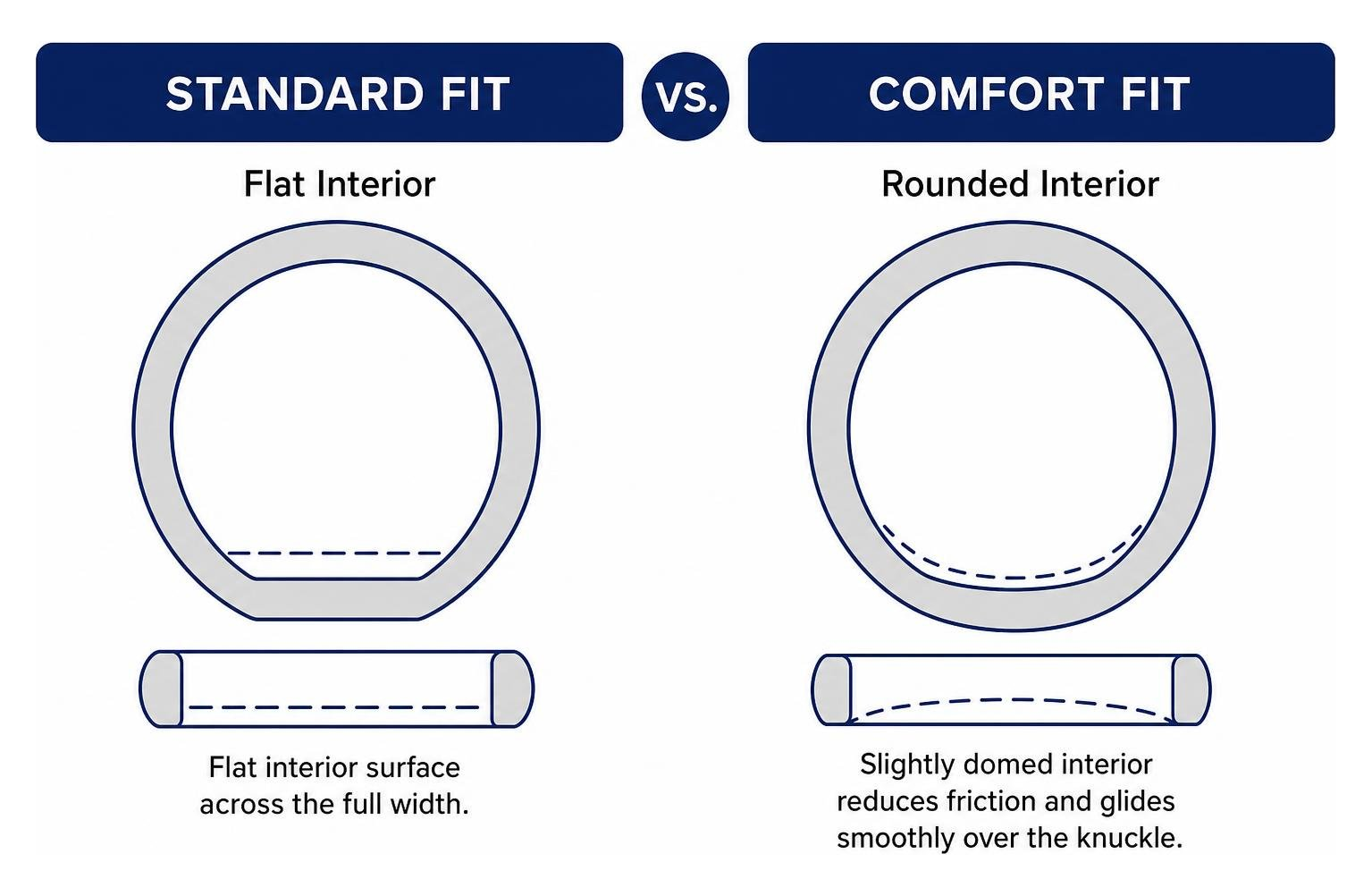
Comfort Fit vs. Standard Fit: Interior Profiles Explained
The profile on the inside of the ring determines how it feels against your skin all day. Standard-fit bands feature a flat interior surface across the full width of the ring. Comfort-fit bands, on the other hand, are engineered with a slightly domed inner wall. This rounded design reduces surface friction, allowing the ring to glide smoothly over your knuckle.
In a standard 14k gold band, a comfort-fit design typically adds about 0.5mm to the internal radius. This creates a cushion of air and space around the edges, preventing the ring from digging into your skin when gripping steering wheels or gym weights.

Why Fit Style Matters for Sizing Your 3mm Wedding Band
Because the interior center of a comfort-fit ring is slightly thicker than its edges, it touches less surface area on your finger. When shopping for bands 2mm or thicker, we generally advise sizing up by a half size to account for standard sizing variance, though comfort fit can slide on more easily. Reviewing our comprehensive wedding ring guide will help you understand how different interior contours impact your final ring measurement.
Temperature Fluctuations and Knuckle Sizing
Your hands expand and contract continuously throughout the day based on hydration, exercise, and seasonal weather changes. Fingers are often smaller in cold morning temperatures and swell during warm summer afternoons.
If you have prominent knuckles, your band must be sized to clear the joint comfortably without spinning freely at the base of your finger. We recommend measuring your ring size at room temperature in the late afternoon using a standardized sizing tool to achieve an accurate, dependable fit.
Styling and Everyday Durability Considerations
A 3mm wedding band is remarkably versatile, effortlessly transforming from a standalone statement piece into a core building block for layered styling.
Solo, Stacked, and Engagement Ring Pairings
Worn alone, a 3mm band provides clean, sophisticated minimalism. When paired with an engagement ring, it offers a grounded anchor that complements both modest solitaires and grand three-stone center settings. For hands under US finger size 6, a 3mm width looks particularly balanced, providing clear presence without overwhelming petite proportions.
Explore our curated women's wedding rings and complete bridal ring collection to see how various band profiles sit flush alongside modern settings.
The Pavé Paradox: Plain Metal vs. Diamond Accents on a 3mm Wedding Band
While diamond-accented eternity styles look stunning, adding pavé stones introduces what bench jewelers call the pavé paradox. Drilling the internal metal seats required to hold diamonds removes structural gold from the ring's core.
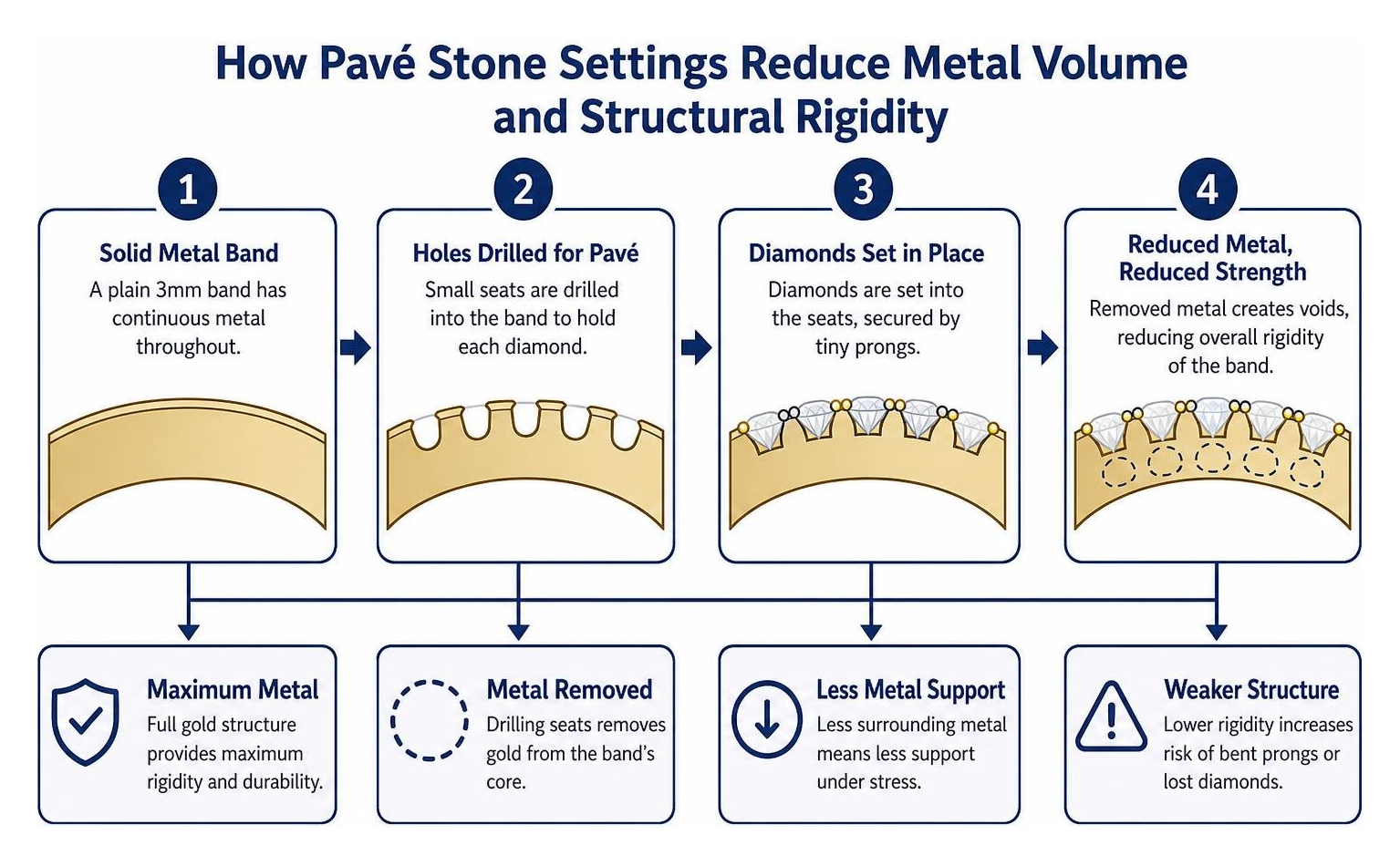
On a slender 3mm band, these metal voids can reduce overall rigidity under heavy compression, raising the likelihood of bent prongs or lost diamonds during intense physical tasks. If you maintain an active lifestyle, a solid metal band offers worry-free daily resilience.
Frequently Asked Questions About 3mm Wedding Bands
Is a 3mm wedding band too thin or too wide for daily wear?
A 3mm band represents an optimal middle ground. It is thick enough to resist bending and daily wear, yet slim enough to remain comfortable during continuous desk work, sports, or manual tasks.
Should I size up when choosing a comfort-fit 3mm band?
For bands 2mm or thicker, customers should consider ordering a half size larger to ensure proper knuckle clearance. However, because the inner curve of a comfort fit reduces skin drag, we recommend testing physical sizing rings before finalizing custom orders.
How do I clean and maintain my 3mm ring at home?
Soak your band in warm water mixed with a few drops of mild dish soap for ten minutes. Gently clean the surfaces and inner profile using a soft-bristle toothbrush, rinse with clean warm water, and dry thoroughly with a lint-free microfiber cloth. Always store rings separately in soft fabric pouches to avoid surface scratches.
Conclusion
Choosing the right wedding ring comes down to balancing aesthetic proportion, lasting metal strength, and all-day comfort. The 3mm width remains a classic favorite because it combines structural integrity with timeless styling, making it an effortless companion for every chapter of life.
At Jeweler's Touch, we have served couples with premier jewelry design, professional repairs, and on-site expert goldsmithing since 1992. Whether you are searching for your initial set or celebrating a milestone anniversary, our dedicated team is here to assist you. If you are local to Southern California, stop by our showroom for Wedding Bands in Brea, or explore our educational articles on finding your perfect wedding ring to begin your journey with confidence.