

How Big Is a One Carat Ring? Here's What You Need to Know
How big is a one carat ring in real life? Here's the quick answer:
| Detail | Measurement |
|---|---|
| Diameter (round brilliant) | ~6.5mm |
| Weight | 200 milligrams (0.2 grams) |
| Comparable object | Small pea or pencil eraser |
| Face-up size range (all shapes) | 6.3mm to 8.5mm+ depending on cut |
The exact size you see depends on the diamond's shape, cut, and even the ring setting. A one carat diamond is not huge, but it is noticeable and sits comfortably in the "classic engagement ring" range.
There is also an important distinction to keep in mind: carat measures weight, not physical size. Two one-carat diamonds can look noticeably different depending on how they are cut.
I'm Ken Rutz of Jeweler's Touch, and after years of helping couples find the perfect diamond, I know that understanding how big a one carat ring actually is makes the shopping process far less overwhelming. Let's walk through everything you need to know, from millimeter measurements to how your finger shape changes the way a stone looks.
How Big Is One Carat Ring in Millimeters and Grams?
To understand how big a one carat diamond ring is, we must first look at what a carat actually measures. Many people walk into our Orange County showroom believing that carat refers to the physical dimensions of the stone. In reality, carat) is strictly a unit of mass.
One carat weighs exactly 200 milligrams, which is equivalent to 0.2 grams. To put this in perspective, a standard plastic paperclip weighs about one gram, meaning a one carat diamond weighs only a fifth of a paperclip.
The origin of this measurement is fascinating. Centuries ago, gemstone traders used carob seeds to balance their scales. Because carob seeds have an incredibly uniform weight, they served as a reliable standard. Over time, the word carob evolved into the term carat that we use today.
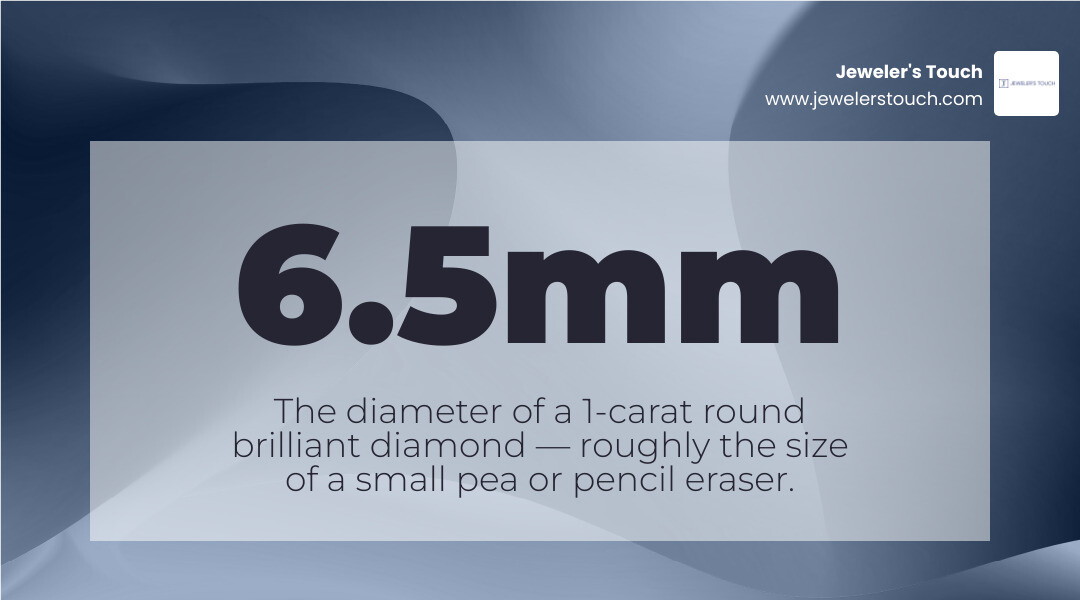
When a diamond is cut into a round brilliant shape, a well-proportioned one carat stone will typically measure approximately 6.5mm in diameter. However, because of variations in cut quality, the diameter of a one carat round diamond can range from 6.3mm to 6.5mm.
This brings us to the concept of depth percentage. If a diamond is cut too deep, much of its weight is hidden in the bottom portion of the stone (the pavilion), making the top surface look smaller than 6.5mm. Conversely, if a diamond is cut too shallow, it might have a wider diameter, but it will lack the sparkle and fire that make diamonds so captivating.
To explore this concept further, you can read our comprehensive Diamond Carat Guide to see how weight translates to visual impact. It is also important not to confuse diamond weight with metal purity. If you are wondering about the terms used in jewelry, our guide on Karat vs Carat What's the Difference explains how these homophones apply to gold and gemstones respectively.
Diamond Shapes and Cut: How Millimeter Sizes Vary
The shape of your diamond plays a massive role in how large it appears on the finger. Even though all one carat diamonds weigh exactly the same, their physical dimensions and surface area can vary dramatically.
When looking at a diamond from the top down (the face up appearance), the length to width ratio determines how the weight is distributed. Elongated shapes spread their carat weight over a longer surface, while square or deeper cuts concentrate their weight vertically, resulting in a smaller face up appearance.
Below is a comparison table showing how the typical millimeter dimensions vary across different one carat diamond shapes:
| Diamond Shape | Typical Millimeter Dimensions | Face-Up Surface Area | Visual Impression |
|---|---|---|---|
| Round Brilliant | 6.5mm x 6.5mm | Moderate | Standard reference point |
| Oval | 7.7mm x 5.7mm | Large | Appears larger than round |
| Pear | 8.5mm x 5.5mm | Large | Elegant, elongated appearance |
| Marquise | 10.0mm x 5.0mm | Very Large | Longest visual profile |
| Princess | 5.5mm x 5.5mm | Small | Compact, modern look |
| Cushion | 6.0mm x 5.5mm | Small to Moderate | Deep, soft corners |
| Emerald | 7.0mm x 5.0mm | Moderate | Sleek, hall-of-mirrors effect |
How Big Is One Carat Ring in Oval and Pear Shapes?
Oval and pear shapes are incredibly popular choices for those who want to maximize the visual size of their ring. Because of their elongated silhouettes, these fancy shapes distribute their 200 milligrams of weight over a longer and wider surface area.
An oval cut diamond of one carat typically measures around 7.7mm by 5.7mm. This elongated shape tricks the eye into seeing a larger stone, often making it look up to ten percent larger than a round brilliant of the exact same weight. Similarly, a pear shape diamond (often called a teardrop) measures around 8.5mm by 5.5mm. The pointed end of the pear shape draws the eye outward, creating a flattering, lengthening effect on the wearer's finger.
If you are trying to decide which shape matches your personal style and budget, we recommend reviewing our resource on Choosing Your Perfect Diamonds to find the ideal cut for your hand.
How Big Is One Carat Ring in Princess and Cushion Cuts?
On the other side of the spectrum, square and cushion cuts tend to look slightly smaller than round or elongated diamonds of the same weight. This is because square shapes require more depth to maintain their structural integrity and brilliance.
A princess cut diamond, which is square with sharp corners, typically measures about 5.5mm by 5.5mm at one carat. Because its weight is distributed into the deep corners and pavilion, its surface area is smaller than a 6.5mm round diamond. Cushion cuts, known for their rounded corners and romantic, pillow-like shape, usually measure around 6.0mm by 5.5mm. They have deep pavilions that hold a significant amount of weight below the girdle, resulting in a smaller face up surface.
When choosing these shapes, understanding the balance between cut, clarity, color, and carat is crucial. You can learn more about how cut quality preserves brilliance in our detailed overview of The Four Cs of Diamonds.
Visualizing a One Carat Diamond: Everyday Comparisons
Since looking at millimeter measurements on a screen can be abstract, it helps to compare a one carat diamond to everyday household items.
When trying to visualize how big is one carat ring, think of a standard pink pencil eraser. The circular flat end of a brand new pencil eraser is roughly 6.5mm in diameter, which is almost the exact size of a well-cut one carat round brilliant diamond.
Another excellent comparison is a small green garden pea. If you place a small pea on top of your finger, you will get a very accurate sense of the physical footprint and height of a one carat stone.
While these comparisons help with scale, the ultimate goal is to find a stone that brings you joy. If you are debating whether to focus on size or quality, read our thoughts on Does Size Really Matter When Buying a Diamond to help guide your decision.
Carat Weight Comparisons and Setting Styles
How does a one carat ring look when placed side by side with other popular carat weights?
A half-carat (0.50ct) round diamond measures about 5.0mm, which looks delicate and modest. Stepping up to a one carat diamond (6.5mm) provides a noticeable increase in surface area and visual presence. If you move up to a two carat diamond, the diameter increases to approximately 8.1mm, which commands significant attention on the hand.
For those looking at even larger options, you can explore our 3 Carat Diamond Size Guide or see the impressive scale of ultra-premium options in our guide on How Big Is a 5 Carat Diamond Ring.
Beyond the diamond itself, the setting style you choose can dramatically alter the perceived size of your ring:
- Solitaire Setting: A classic solitaire features a single diamond held by prongs. This clean style highlights the true size and sparkle of the stone without distraction.
- Halo Setting: A halo setting surrounds the center diamond with a border of smaller accent stones. A halo can make a one carat center stone look like a 1.5 or 2 carat diamond from a distance.
- Pave Setting: This setting features tiny diamonds embedded along the band. The continuous sparkle of the band draws attention to the center stone, enhancing its overall presence.
Finger Shape, Ring Sizing, and Pricing Dynamics
The hand of the wearer acts as the canvas for the ring. A one carat diamond will look very different depending on the size and shape of the finger it sits on.
On slender fingers (ring sizes 3 to 5), a one carat diamond will look remarkably large, often covering a significant portion of the finger's width. On larger hands or wider fingers (ring sizes 8 and up), the same one carat diamond can look more delicate and understated. Selecting the right setting and diamond shape can help balance these proportions.
When budgeting for a ring, it is important to understand that diamond pricing is not linear, it is exponential. Because larger diamond crystals are much rarer in nature, a one carat diamond will cost significantly more than two half-carat diamonds of equal quality.
To get a complete picture of how quality factors influence these prices, we recommend reading about What Are the 5 Cs of Diamonds. If you are ready to start planning your purchase, our Diamond Engagement Ring Guide offers practical advice.
Of course, before making any purchase, ensuring a comfortable fit is essential. You can learn the best methods for finding your perfect fit by reading How to Size a Ring.
Frequently Asked Questions About One Carat Rings
Does a 1-carat diamond look big on a hand?
Yes, a 1-carat diamond generally has a beautiful visual impact on the hand. On the average US women's ring size (which is about a 6 or 6.5), a 1-carat round diamond covers roughly 35 to 40 percent of the finger's width, making it stand out beautifully without feeling overly heavy or bulky.
Is a 1-carat diamond ring considered a good size?
Absolutely. A 1-carat diamond is widely considered the industry standard and a classic choice for engagement rings. It strikes a perfect balance between stunning visual presence and daily wearability, making it the most popular weight category for couples worldwide.
Why do some 1-carat diamonds look larger than others?
This comes down to cut quality and shape. If a diamond is cut too shallow (often called a "spread" cut), it will have a wider diameter, though it may sacrifice some sparkle. Additionally, elongated shapes like ovals, marquises, and pears naturally look larger than square or round cuts of the same weight.
Conclusion
At Jeweler's Touch, we believe that choosing an engagement ring should be an exciting and joyful experience. Since 1992, our family-owned jewelry store in Orange County has helped couples find and design their dream rings. With our on-site GIA gemologists and expert goldsmiths, we are always here to help you understand the nuances of diamond sizes, shapes, and settings.
Whether you are looking for a classic round brilliant solitaire or a custom-designed vintage halo, we invite you to visit our showroom in Brea, California. If you already have a ring that needs a adjustment, read our resource on how does ring resizing work your complete guide to see how we can help you achieve the perfect fit. We invite you to contact us to schedule a personal consultation today!