

How to Compare Gold Earrings
To compare gold earrings, start with a style you would enjoy wearing, such as studs, hoops, huggies, or drops. Then check the metal: 10k and 14k gold are practical choices for everyday wear, while 18k has a richer gold color. Look for a karat stamp, confirm whether the earrings are solid gold or plated, and ask about the alloy if you have sensitive ears. Finally, compare the weight, clasp, and price.
I’m Ken Rutz of Jeweler’s Touch, where our work with fine jewelry and repairs has shaped how I evaluate gold earrings. This guide walks you through those checks, one step at a time.
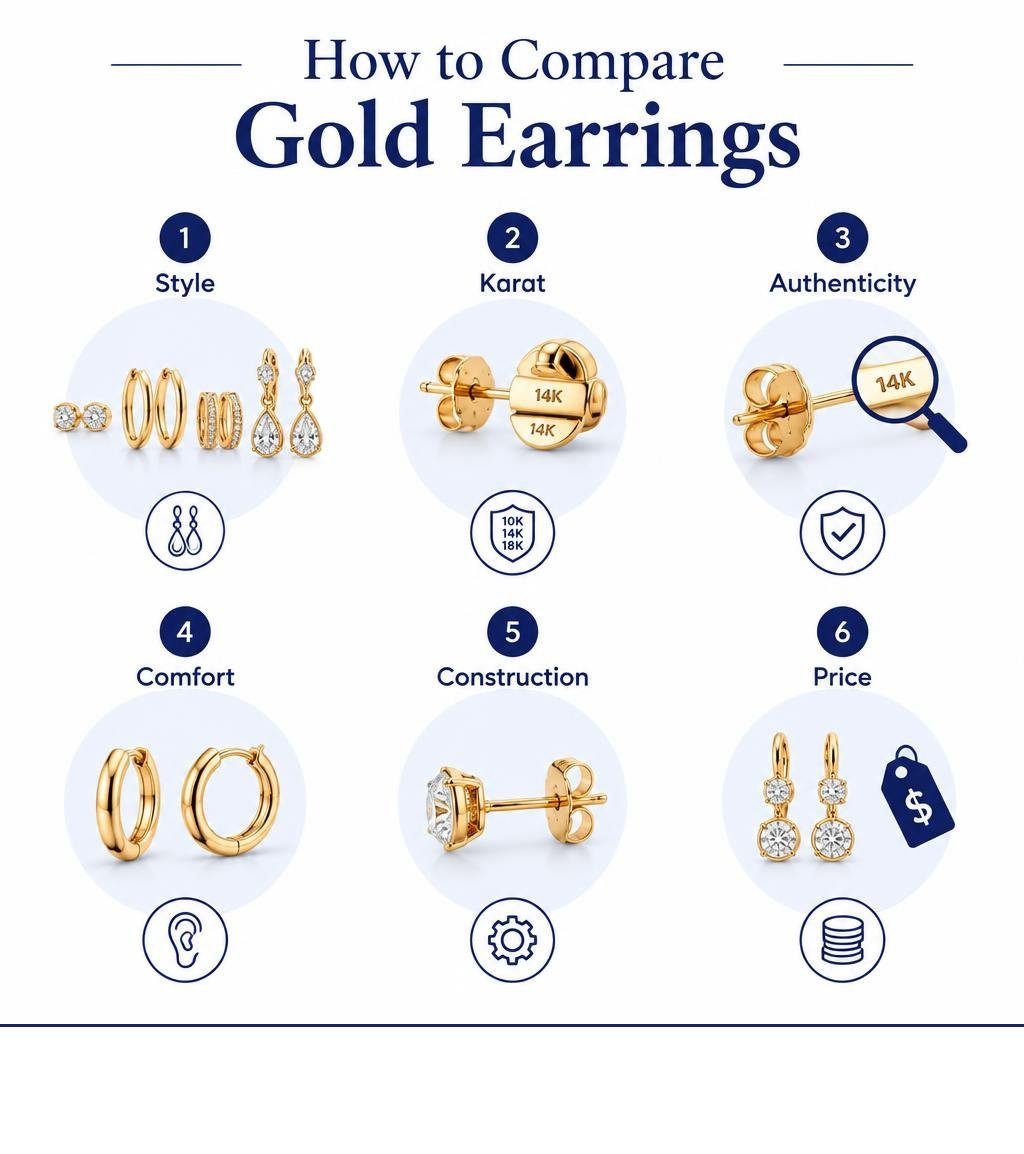
Step 1: Evaluating Popular Styles and Silhouettes of Gold Earrings

Finding the right pair of earrings begins with understanding how different silhouettes interact with your daily routine, wardrobe, and face shape. A pair of dramatic statement chandeliers might be breathtaking for an evening gala, but they will likely catch on your knit sweaters during a busy morning commute.
When evaluating silhouettes, pay attention to weight distribution and lobe comfort. Earrings that pull heavily on the earlobe can cause fatigue by mid-afternoon. Whether you want an effortless staple or an eye-catching accent, our guide to buying women's gold earrings explores how to pair classic shapes with your everyday lifestyle.
Classic Designs and Types of Gold Earrings
Classic designs remain staples in fine jewelry collections because of their unmatched versatility:
- Stud Earrings: Sitting directly against the earlobe without dangling, studs provide an understated, elegant look. Minimalist spheres like our 14k yellow gold 5mm ball stud earrings deliver everyday polish. If you prefer texture and vintage charm, designs such as our 14k yellow gold fluted tear drop stud earrings offer dimension while staying secure against the lobe.
- Hoop Earrings: Hoops range from petite circles to bold statement rings. Compact options like our 14k yellow gold small hoop earrings offer subtle elegance, while larger profiles like our 10k yellow gold 35mm hoop earrings provide dramatic movement.
- Drop and Dangle Earrings: Extending below the earlobe, drop earrings sway with movement to catch the light. They can feature stationary geometric shapes, delicate gold chains, or articulated links.
- Threader Earrings: Featuring a fine chain that pulls through the piercing, threaders allow you to adjust the drop length in front and behind the earlobe.
- Pure Gold Designs: While most fine jewelry relies on karat alloys for everyday resilience, purists sometimes seek pure metal. You can explore how high-purity pieces behave in our 24k gold stud earrings guide.
Modern Trends: Huggies, Ear Stacking, and Chunky Silhouettes
Ear curation has transformed how we wear jewelry. Instead of wearing a single matching pair, many clients create layered ear stacks across multiple piercings.
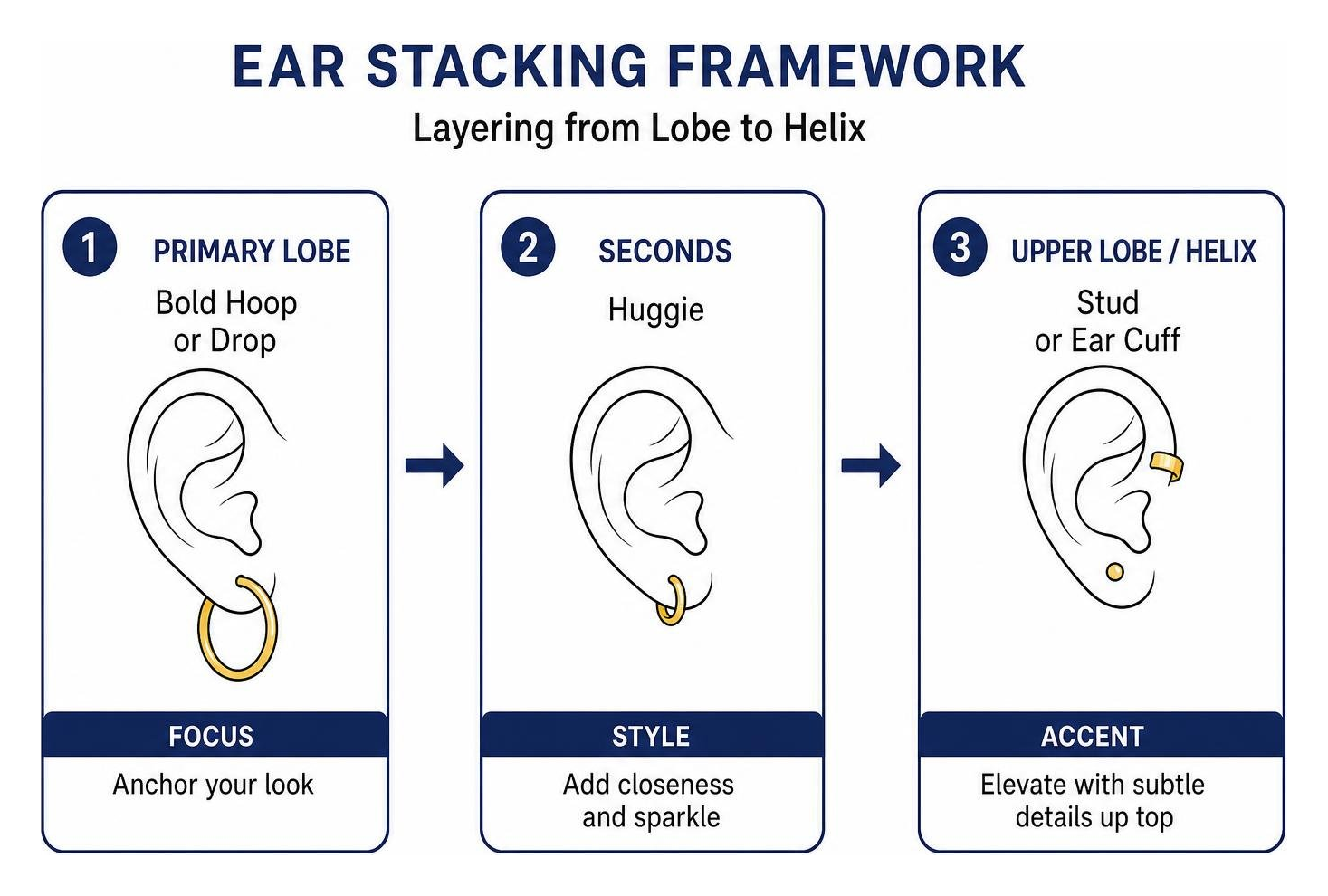
Huggies are central to this modern look. Designed as small, thick hoops that sit close to the earlobe, they often feature seamless clicker closures that do not poke the neck during sleep or phone calls. A sparkling design like our 14k yellow gold diamond huggie earrings adds a refined touch to any curated stack.
For those who love bold, sculptural looks, our 14k yellow gold chubby hoop earrings deliver modern volume without weighing down the lobe. If you want to combine precious gems with bold metalwork, our diamond hoop earrings buying guide breaks down setting styles, carat weights, and closure mechanisms.
Step 2: Understanding Karat Purity, Durability, and Metal Composition
Pure 24k gold is naturally soft, malleable, and bright orange-yellow. While gorgeous, pure gold bends, dents, and scratches easily when crafted into fine jewelry posts and clasps. To provide structural strength, master jewelers alloy pure gold with metals such as copper, silver, zinc, and nickel.
| Karat Rating | Gold Purity Percentage | Scratch Resistance | Color Tone | Ideal Use Case |
|---|---|---|---|---|
| 10k Gold | 41.7% Pure Gold | Exceptional (Hardest) | Soft, subtle pale yellow | Active lifestyles, high-wear daily hoops |
| 14k Gold | 58.5% Pure Gold | Excellent (Balanced) | Classic warm golden hue | The US standard for daily fine jewelry |
| 18k Gold | 75.0% Pure Gold | Moderate (Softer) | Rich, vibrant deep yellow | Luxury statement pieces, high-end bridal |
| 24k Gold | 99.9% Pure Gold | Low (Very Soft) | Intense fiery orange-yellow | Ceremonial jewelry, collector pieces |
The Federal Trade Commission establishes strict guidelines for precious metal marketing, as outlined in the eCFR :: 16 CFR 23.10 quality mark rules.
Comparing 10k, 14k, and 18k Gold Alloys
Choosing the right karat comes down to balancing purity, price, and durability:
- 10k Gold: Containing 41.7% pure gold, 10k is the most scratch-resistant and budget-friendly karat rating. Its higher alloy content makes it exceptionally tough, though its color is slightly paler than higher karats.
- 14k Gold: With 58.5% pure gold, 14k is the most popular choice in the United States. It strikes an ideal balance between warm golden color, structural durability, and lasting value.
- 18k Gold: Featuring 75% pure gold, 18k displays a rich, vibrant yellow hue. Because it contains less alloy metal, it is softer than 14k but offers elevated prestige and rich tone.
Alloy formulas also dictate the gold's color:
- Yellow Gold: Blended with equal parts silver and copper to retain gold's natural warmth.
- White Gold: Alloyed with nickel, zinc, or palladium and plated with rhodium to create a mirror-bright silvery finish.
- Rose Gold: Mixed with a higher percentage of copper to produce a warm pink blush.
Solid Gold vs. Gold-Plated and Vermeil Options
When comparing jewelry across price points, understanding base construction prevents buyer regret:
- Solid Gold: The entire piece consists of a consistent karat alloy inside and out. It will never flake, chip, or wear down to reveal a different base metal underneath. Solid gold earrings retain their intrinsic value for generations.
- Gold Vermeil: A sterling silver base coated with a layer of gold at least 2.5 microns thick. While higher in quality than standard plating, vermeil will eventually wear thin along friction points like posts and clasps.
- Gold-Plated: A thin layer of gold (often less than 0.5 microns) electroplated over inexpensive base metals like brass, bronze, or copper. Plated jewelry tarnishes quickly and often flakes, exposing reactive metals that can turn skin green and irritate piercings.
Step 3: Assessing Authenticity, Skin Sensitivity, and Sourcing
Earrings interact directly with delicate, vascular ear tissue. Verifying metal purity and hypoallergenic properties ensures your jewelry remains safe and comfortable to wear. When shopping for fine earrings in Brea, working with an established jeweler ensures you receive authentic, properly tested precious metals.
Authenticity Hallmarks on Genuine Gold Earrings
Legitimate gold jewelry features standardized hallmark stamps indicating its purity:
-
10k Gold: Stamped
10K,10KT, or417(signifying 41.7% purity). -
14k Gold: Stamped
14K,14KT, or585(signifying 58.5% purity). -
18k Gold: Stamped
18K,18KT, or750(signifying 75.0% purity).
Look for these tiny stamps on earring posts, inner hoop curves, or friction backs. If a piece is marked 14K GP (Gold Plated), 14K HGE (Hydrostatic Gold Electroplate), or 14K GF (Gold Filled), it is not solid gold.
Hypoallergenic Safety and Responsible Sourcing
Contact dermatitis in ear piercings is almost always caused by nickel leaching from low-grade alloys or thin plating. If you experience redness, swelling, or itching, look for solid 14k or 18k yellow gold crafted with nickel-free alloys.
Modern fine jewelry also prioritizes ethical sourcing. Recycled solid gold refines existing precious metal back to its elemental purity, eliminating new mining footprint without sacrificing quality or shine.
Step 4: Maintenance, Safe Storage, and Long-Term Value
Gold does not rust or tarnish like silver, but daily wear leaves behind body oils, hair products, sunscreen, and soap residue that dull its natural luster. Proper maintenance protects both its appearance and structural integrity.
Cleaning and Safe Storage Practices
Cleaning your fine earrings at home is simple and safe:
- Soak: Submerge your gold earrings in a bowl of warm water mixed with a few drops of mild, lotion-free dish soap for 10 to 15 minutes.
- Brush: Use an extra-soft baby toothbrush to gently clean around posts, prongs, and behind gemstone mountings.
- Rinse: Rinse the earrings thoroughly in a bowl of clean, lukewarm water (never over an open drain).
- Dry: Pat dry with a clean, lint-free microfiber cloth.
Store each pair in individual fabric pouches or compartmented jewelry boxes. Because diamonds and karat alloys have different hardness ratings, loose storage can lead to scratched gold surfaces.
Evaluating Budget, Craftsmanship, and Investment Value
When comparing prices, evaluate craftsmanship alongside raw metal weight. Hollow hoops offer a lightweight feel at an accessible price point, but solid cast earrings resist denting over decades of wear.
Examine stone settings closely. Secure prongs should sit smooth against gemstones without snagging fabric. High-grade construction, durable hinges, and quality solid gold ensure your earrings retain heirloom value and timeless beauty.
Frequently Asked Questions About Gold Earrings
Are 14k gold earrings safe for sensitive ears?
Yes, high-quality 14k gold earrings crafted from nickel-free alloys are generally hypoallergenic and comfortable for sensitive skin. Because 14k gold contains 58.5% pure gold, it resists corrosion from body chemistry, making it a reliable choice for healing and sensitive piercings.
Can you wear solid gold earrings daily and in the shower?
Solid gold earrings can be worn daily and tolerate water exposure without rusting or peeling. However, exposure to shower gels, shampoos, and hard water minerals will create a dull soapy film over the metal and gemstones. Regular gentle cleanings keep them looking bright.
How do you confirm whether gold earrings are genuine solid gold?
Start by checking the post or clasp for official purity stamps such as 10K (417), 14K (585), or 18K (750). You can also visit a professional jeweler who can verify the piece using non-destructive electronic testing or professional assay methods.
Conclusion
Finding the perfect pair of earrings comes down to choosing a style that fits your lifestyle, selecting the right karat purity, and investing in solid craftsmanship. Since 1992, Jeweler's Touch has served Southern California families with custom designs, jewelry repairs, and appraisals. Our team of expert goldsmiths ensures every piece meets the highest standards of fine jewelry artistry.
Complete your look by pairing your new earrings with our curated collection of fine gold bracelets, or stop by our Brea showroom to try on classic studs, hoops, and modern huggies in person.