

Key Factors Influencing the Cost and Quality of Diamonds Jewelry
When shopping for fine jewelry, two items that look nearly identical in a display case can carry drastically different price tags. The total cost reflects diamond rarity, precious metal market weight, manufacturing precision, and brand heritage. Understanding these baseline factors helps you invest your budget into the details that matter most.
| Metal / Diamond Tier | Composition & Purity | Common Clarity Grades | Typical Use Case | Durability & Value Profile |
|---|---|---|---|---|
| 14K Gold Diamond Settings | 58.3% Pure Gold + Alloy | SI1 to VS2 | Daily-wear rings, studs, tennis bracelets | Highly scratch-resistant, budget-friendly, ideal for active lifestyles |
| 18K Gold Fine Jewelry | 75.0% Pure Gold + Alloy | VS1 to VVS2 | Luxury necklaces, heirloom bridal sets | Rich yellow/rose tone, hypoallergenic, premium metal pricing |
| Platinum Mountings | 95.0% Pure Platinum | VVS1 to Flawless | High-carat solitaire mountings | Naturally white, dense heft, superior prong retention, premium labor cost |
The 4Cs and Metal Purity Impact on Diamond Jewelry Pricing
The universally recognized standard for diamond quality revolves around the 4Cs: Carat, Cut, Color, and Clarity. Every element directly dictates market value:
- Carat Weight: Diamond pricing does not increase in a flat line; it jumps exponentially at magic thresholds like 0.50, 1.00, 1.50, and 2.00 carats. A single 2.00-carat solitaire will command a much higher price than four 0.50-carat stones of equivalent grade due to the rarity of larger natural rough diamonds.
- Cut Grade: Cut influences fire, brilliance, and scintillation more than any other characteristic. An excellent cut maximizes light return, making a diamond appear larger and brighter.
- Color Classification: Graded from D (completely colorless) to Z (light yellow or brown), stones in the D through F range command the highest price tiers. Near-colorless diamonds (G through J) offer exceptional beauty while delivering substantial savings.
- Clarity Scale: Ranging from Flawless down to Included (I1 to I3), clarity measures internal inclusions and surface blemishes. Premium multi-stone designs, such as luxury necklaces containing EF color and VVS clarity stones, reflect superior optical purity and market value.
Beyond the stones themselves, precious metal selection drives overall cost. For instance, 18-carat gold contains 75 percent pure gold compared to 58.3 percent in 14-carat gold. A heavy multi-stone necklace crafted in 18K gold requires significantly more gold weight (often exceeding 35 grams of alloyed metal) than its 14K counterpart (around 29 grams), adding to the raw material investment. To master these attributes before making a decision, you can study The Four Cs of Diamonds and learn how to balance your budget by Choosing Your Perfect Diamonds.
Evaluating Certified vs. Non-Certified Diamonds Jewelry
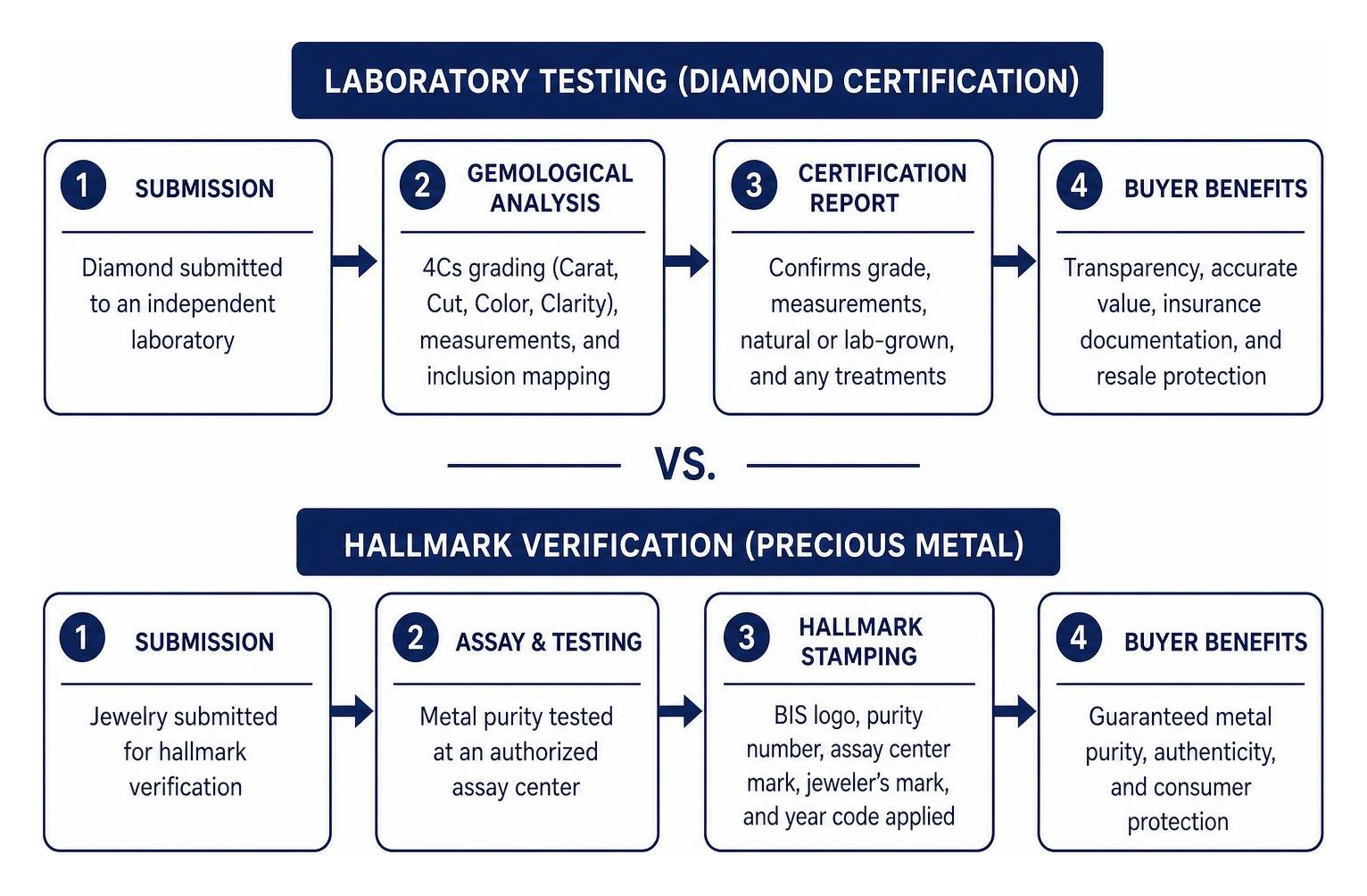
Third-party certification provides an unbiased evaluation conducted under strict gemological criteria. Independent reports verify whether a stone is natural or lab-grown, confirm its exact millimeter measurements, document any clarity treatments, and map internal inclusions. When you purchase certified Diamond Jewelry, you gain complete transparency, guaranteed resale protection, and accurate paperwork for insurance replacement policies.
Comparing Gemological Certifications and Hallmarks: GIA, IGI, SGL, and BIS
-
GIA (Gemological Institute of America) Established in 1931, GIA is an independent nonprofit that protects the gem and jewelry buying public through research, education and laboratory services. It is widely known as the industry standard. Headquartered in Carlsbad, CA (USA) it has labs all over the world including, New York, NY, Ramat Gan, Antwerp, London, Bangkok, Hong Kong, Mumbai, Osaka, Seoul, Taipei, Tokyo, Gaborone, and Johannesburg.
- IGI (International Gemological Institute): Operating across 17 global cities, IGI is the world's largest independent gem certification and appraisal institute. They provide diamond dossiers and jewelry identification reports, serving as an objective assessment of multi-stone jewelry, lab-grown gems, and natural diamonds.
- SGL (Solitaire Gemological Laboratories): With primary centers in London and across major jewelry hubs like Mumbai, Bangalore, Jaipur, and Chennai, SGL provides comprehensive grading reports and authenticity verification for diamond jewelry collections.
- BIS Hallmarking (Bureau of Indian Standards): Introduced for gold in April 2000, the BIS hallmark guarantees precious metal purity. An authentic hallmark includes the official BIS logo, a 3-digit purity number (such as 750 for 18K or 585 for 14K gold), the assay center logo, the jeweler's unique identification mark, and a specific year code.
Design Styles, Setting Craftsmanship, and Market Trends
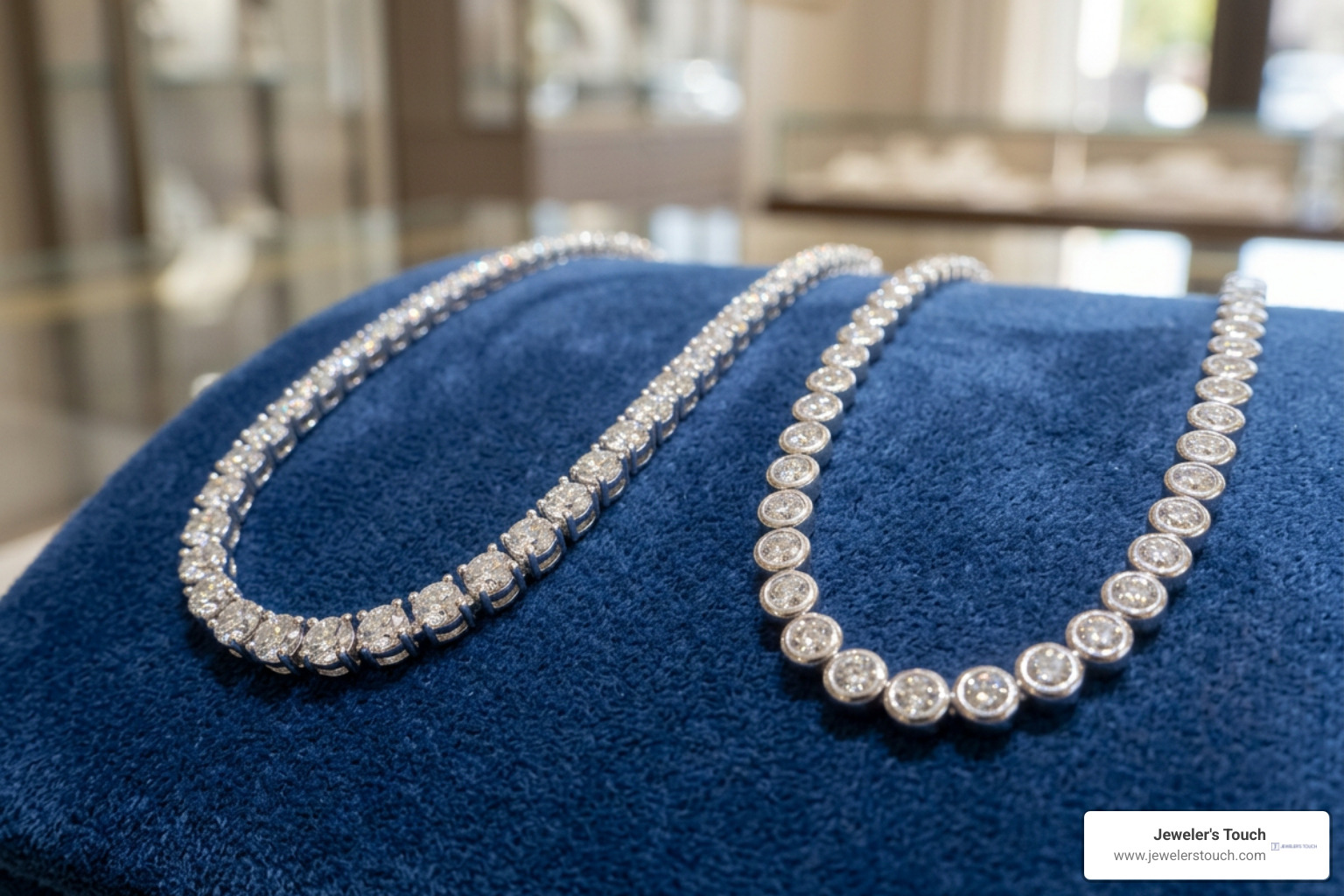
The artistic architecture of a piece influences how diamonds interact with ambient light and determines how comfortably the item wears over decades. Setting complexity also affects the total workshop labor hours required.
How Craftsmanship and Setting Styles Define Diamonds Jewelry Value
Master jewelers use specialized setting techniques to achieve different visual effects and security levels:
- Prong Settings: Classic 3-prong, 4-prong, or 6-prong mountings elevate stones above the mounting, allowing maximum light to enter through the sides and pavilion. Fine prong work requires precise alignment and tip rounding so the metal holds the girdle securely without snagging fine fabrics.
- Pavé and Micro-Pavé: By drilling tiny bead seats directly into the metal and raising microscopic beads of gold over each girdle, jewelers create a continuous field of brilliance. This labor-intensive technique demands high magnification and extreme bench precision.
- Bezel Settings: A smooth rim of precious metal wraps around the perimeter of the stone, offering superior protection against impacts. While bezels require meticulous hand-burnishing, they provide a sleek, snag-free profile.
- Kinetic and Floating Designs: High-luxury collections incorporate free-moving or dancing diamonds enclosed between layers of transparent, scratch-resistant sapphire crystal. Conceived in the mid-1970s, this mechanical technique allows diamonds to move freely with the wearer's motion, reflecting light across every angle without stationary metal prongs.
Popular Styles: Solitaires, Pendants, and Tennis Bracelets
Modern collections combine traditional stone cuts with clean geometric silhouettes. Popular jewelry wardrobe essentials include:
- Princess-Cut and Round Solitaires: Architectural princess-cut solitaires with geometric edges contrast against soft round brilliant pavé bands, making them popular for engagement rings and statement rings alike.
- Diamond Pendants and Necklaces: From classic bezel-set floating solitaires to multi-stone graduated drops, Diamond Pendants offer versatile styling for day-to-night transitions. Luxury multi-stone necklaces containing up to 1.69 carats or more of brilliant round diamonds deliver high-impact elegance for milestone events.
- Everyday Earring Essentials: For timeless daily wear, classic Diamond Stud Earrings remain the ultimate standard of understated luxury.
- Flexible Line Bracelets: Known as Tennis Bracelets, these continuous rows of individually set diamonds require matched color and clarity across dozens of stones. Before purchasing one, review the Top 5 Considerations When Buying Diamond Bracelets for Women to evaluate clasp security, link flexibility, and mounting strength.
Ethical Sourcing, Material Standards, and Quality Verification
Fine jewelry should feel good to wear in every sense. Modern consumers prioritize sustainability, conflict-free guarantees, and responsible metal mining practices.
Natural vs. Lab-Grown Diamonds and Ethical Gold Standards
Today's jewelry market offers two distinct diamond paths:
- Natural Mined Diamonds: Formed billions of years ago under intense heat and pressure deep within the Earth's mantle, natural diamonds carry geological rarity and enduring resale value. Responsible jewelers source natural diamonds through the Kimberley Process to ensure conflict-free origins.
- Lab-Grown Diamonds: Created using High Pressure High Temperature (HPHT) or Chemical Vapor Deposition (CVD) processes, lab-grown diamonds share the identical chemical, optical, and physical properties of mined stones. They offer significant price savings per carat, allowing buyers to select larger stones or higher clarity grades within a given budget.
Precious metal sourcing has evolved alongside gemstone tracking. Leading international design houses and responsible custom jewelers use 100 percent recycled gold or certified ethical 18-carat gold, ensuring supply chains adhere to fair-trade labor standards and minimize environmental disruption.
How to Verify Authenticity and Navigate Retail Return Policies
Purchasing fine jewelry requires practical consumer due diligence. Always complete these verification steps before finalizing your transaction:
- Match Stone Inscriptions to Paperwork: High-grade and/or larger carat weight diamonds often feature laser-inscribed report numbers on their girdles. Verify that the microscopic inscription matches your independent lab certificate under a gemological microscope.
- Verify Invoice Specifications: Ensure the bill of sale lists the precise metal karat (e.g., 14K, 18K, 950 Platinum), total carat weight, color, clarity, and gross item weight. Gold jewelry weights can fluctuate slightly during casting and hand-polishing.
- Understand Return Windows and Restocking Fees: Fine jewelry return policies typically range from 2 to 30 days. Custom orders, engraved rings, and resized pieces are normally non-refundable. Certain online retailers also apply restocking fees (often up to 20 percent) if an order is canceled post-production.
- Confirm Warranty Coverage: Inquire about manufacturer warranties. High-end luxury houses often extend standard coverage up to 2 years upon online registration, while custom jewelers provide complimentary lifetime cleaning and prong tightening services.
Long-Term Care, Maintenance, and Protection for Fine Diamonds
Diamonds are the hardest known natural mineral, rating a 10 on the Mohs hardness scale, but they are not indestructible. Hard blows can chip a diamond along its natural cleavage planes, and daily residue quickly builds up behind mountings, dulling sparkle.
- Clean at Home Safely: Soak your jewelry in warm water mixed with mild, lotion-free dish soap. Gently brush behind the stones using a soft-bristled baby toothbrush to remove body oils and lotions, then rinse thoroughly over a closed drain and pat dry with a lint-free microfiber cloth.
- Exercise Caution with Ultrasonic Cleaners: While plain diamond solitaires handle ultrasonic sound waves well, avoid using ultrasonic machines for micro-pavé settings, fractured stones, emeralds, or dynamic sapphire crystal cases. Rapid vibrations can dislodge tiny accent stones or damage water-resistant seals.
- Perform Regular Prong and Clasp Checks: Gently tap your diamond with a wooden toothpick near your ear; if you hear or see the stone wobble, the prongs need tightening. Inspect clasp safety latches on tennis bracelets and necklaces regularly.
- Schedule Professional Bench Inspections: Visit an expert bench jeweler/goldsmith every six months. Professional cleaning restores metal luster, while on-site gemologists check for metal wear, bent tips, and micro-fissures before a stone is lost.
- Store Pieces Individually: Diamonds scratch other diamonds, precious metals, and soft gemstones like pearls. Always store fine pieces inside fabric-lined compartments or individual velvet pouches.
Frequently Asked Questions About Diamond Jewelry
What is the difference between 14K and 18K gold in diamond settings?
The primary difference lies in gold purity, color depth, and daily durability. 14K gold contains 58.3 percent pure gold alloyed with stronger metals like copper, silver, and zinc. This composition makes 14K gold harder and more resistant to scratches, making it well-suited for everyday engagement rings.
In contrast, 18K gold contains 75 percent pure gold. It offers a deeper, richer yellow or warm tone, feels heavier in hand, and can provide a more hypoallergenic surface for sensitive skin. However, 18K gold is slightly softer and may show micro-scratches more quickly over years of continuous wear.
Why is third-party gemological certification for larger diamonds something to consider before buying?
Third-party certification provides an unbiased evaluation of a gemstone's authentic properties. Independent grading laboratories (such as GIA or IGI) do not have a financial stake in the sale of the jewelry. Their reports confirm whether a diamond is natural, untreated, or lab-grown, while establishing verified cut, color, and clarity grades. This independent paperwork ensures you pay fair market value and gives insurance appraisers the documentation needed to provide full replacement coverage in the event of loss or theft.
How often should fine diamond jewelry be professionally cleaned and inspected?
You should bring your fine diamond jewelry to a professional jeweler for inspection and deep cleaning every six months. Daily wear puts constant friction on metal prongs, bezel walls, and bracelet links. During a professional bench visit, goldsmiths inspect stone mountings under magnification, tighten loose prongs, check safety catches on chains, and polish away surface tarnish, helping preserve the structural integrity of your pieces for generations.
Conclusion
Understanding the interplay between independent certification, the 4Cs, precious metal choices, and setting craftsmanship takes the stress out of buying fine jewelry. By checking for hallmarks, verifying independent laboratory reports, and choosing metal purities that match your lifestyle, you ensure every purchase delivers lasting value, secure wearability, and exceptional beauty.
At Jeweler's Touch, we have served our community as a family-owned jeweler since 1992. Our team features on-site GIA graduate gemologists and expert goldsmiths ready to guide you through diamond selections, custom heirloom designs, precision repairs, detailed insurance appraisals, and flexible financing options. Visit our showroom in Brea, CA, to explore our comprehensive diamond education guides and find your next treasured piece with complete confidence.