

Why Finding the Best Chain for a Pendant Matters More Than You Think
Finding the best chain for a pendant is one of those decisions that looks simple but can make or break your entire jewelry look, and even cost you a beloved piece if you get it wrong.
Here are the top chain choices for pendants at a glance:
| Chain Type | Best For | Pendant Weight |
|---|---|---|
| Cable chain | Everyday versatility, most pendants | Light to medium |
| Rope chain | Heavy pendants, bold looks | Medium to heavy |
| Box chain | Preventing flipping, clean aesthetic | Light to medium |
| Wheat chain | Heavy pendants, refined style | Medium to heavy |
| Curb chain | Statement pieces, men's jewelry | Medium to heavy |
| Figaro chain | Mid-weight pendants, classic style | Light to medium |
The right chain does two things at once: it supports your pendant safely and frames it the way a good picture frame sets off a painting. Get the match wrong and you risk stretched links, a broken chain, or a pendant that looks completely off.
A thin 0.5mm cable chain holding a 12-gram stone pendant, for example, won't snap all at once, it will slowly stretch under the constant tension until the pendant is gone. That's a loss no one wants.
I'm Ken Rutz from Jeweler's Touch, and after years of working with fine jewelry, custom designs, and helping customers find the best chain for pendant pairings, I've seen how the right match protects both your investment and your style. In this guide, I'll walk you through everything you need to know to get it right.
Key Factors for Choosing the Best Chain for Pendant
Choosing the best chain for pendant wear isn't just about picking the sparkliest metal in the case. It’s a bit like engineering, you have to balance physics with fashion. In our Orange County studio, we always tell clients to start with the pendant itself. Is it a dainty diamond solitaire or a heavy gold medallion?
The weight of the pendant is the primary "stress test" for your chain. If a pendant is too heavy for its support, the links will gradually deform. Beyond weight, you must consider your lifestyle. If you're active, chasing toddlers, or heading to the gym in your jewelry, you need a chain with high tensile strength and a secure clasp.
We also look at the metal durability. While 18K gold is prestigious, 14K gold is actually more durable for daily wear because it contains a higher percentage of strengthening alloys. This makes 14K often the best chain for pendant support when you plan on wearing the piece every single day. For more on the basics of necklace selection, check out our guide on How to Choose the Right Necklace and this external How to Choose the Right Chain for Your Pendant — SageStone.
Why the Cable Chain is the Best Chain for Pendant Versatility
If there were a "universal" winner in the jewelry world, it would be the cable chain. Composed of uniform oval or round links connected in a simple alternating pattern, it is the most popular style for a reason.
Its flexibility is its greatest strength. Because the links are independent, the pendant’s bail can slide smoothly across the surface without snagging or causing the chain to kink. For the best security, we recommend cable chains with soldered links. This means each individual loop is welded shut, preventing them from pulling open under tension.
At Jeweler's Touch, we frequently use cable chains when creating personalized diamond necklaces because they don't distract from the focal point. They are the "quiet supporters" that let the diamond do the talking. Plus, if a cable chain does break, it’s one of the easiest and most affordable styles for our expert goldsmiths to repair.
Durable Options: Rope and Wheat Chains for Heavy Pendants
When you move into the category of "substantial" jewelry, think large crosses, heavy coins, or thick gemstone sliders, you need a chain with serious tensile strength. This is where rope and wheat chains shine.
Rope Chains: These mimic the look of a nautical rope with intertwined metal strands. They are incredibly durable because each link is connected to multiple others. This redundancy means that if one tiny part of a link wears down, the rest of the structure still holds the weight. They also have a wonderful texture that catches the light from every angle.
Wheat Chains (Espiga): Often called the "Espiga" style, wheat chains are made of four strands of intertwined oval links. They look like a stalk of grain and are virtually indestructible under normal wear. Because of their dense, braided construction, they distribute the weight of a heavy pendant evenly across the entire length of the necklace. This prevents "V-necking," where a heavy pendant pulls a thin chain into a sharp, unattractive point.
Comparing Popular Chain Styles for Security and Aesthetics
Selecting the best chain for pendant use also involves looking at how the chain’s "personality" matches the pendant. A boxy, modern pendant might look strange on a delicate, rounded rope chain, while a vintage locket might feel right at home.
| Chain Style | Visual Profile | Security Level | Best Pairing |
|---|---|---|---|
| Box Chain | Square, geometric links | High | Modern, minimalist pendants |
| Curb Chain | Flat, interlocking links | Very High | Large medallions, men's styles |
| Franco Chain | Dense, V-shaped links | Excellent | Heavy statement pieces |
| Figaro Chain | Patterned (3 small, 1 long) | Medium | Classic religious or name pendants |
The Box Chain is a favorite for many because its flat surfaces provide a mirror-like shine. It’s also surprisingly strong for its thickness because the square links fit together seamlessly, providing more "contact surface" than a standard oval link.
The Curb Chain and Franco Chain are the heavy hitters. A curb chain is essentially a flattened cable chain, designed to lie flat against the skin. In industry testing, even a moderately heavy curb chain has been known to withstand hundreds of pounds of force. For a deep dive into 2026's top-rated options, see these Best Chains For Pendants - 2026 Reviews - Fast Lighting Supply.
Avoiding Kinks: Why Herringbone and Omega Chains Clash with Pendants
As much as we love the liquid-gold look of a Herringbone or the architectural curve of an Omega chain, they are almost never the best chain for pendant use.
These chains are "rigid" or "semi-rigid." They are designed to sit in a perfect circle or curve around the neck. When you add a pendant, you are adding a single point of downward pressure. This pressure causes the flat, delicate links of a herringbone to "peak" or kink. Once a herringbone chain kinks, it is nearly impossible to repair to its original smooth state.
Additionally, these styles are notorious for catching fine neck hairs—ouch! Save the Omegas and Herringbones for standalone statement looks and stick to flexible, link-based chains for your pendants.
Technical Compatibility: Thickness, Length, and Bail Size
Now for the "nitty-gritty" that separates a professional jewelry pairing from a DIY disaster. You have to measure.
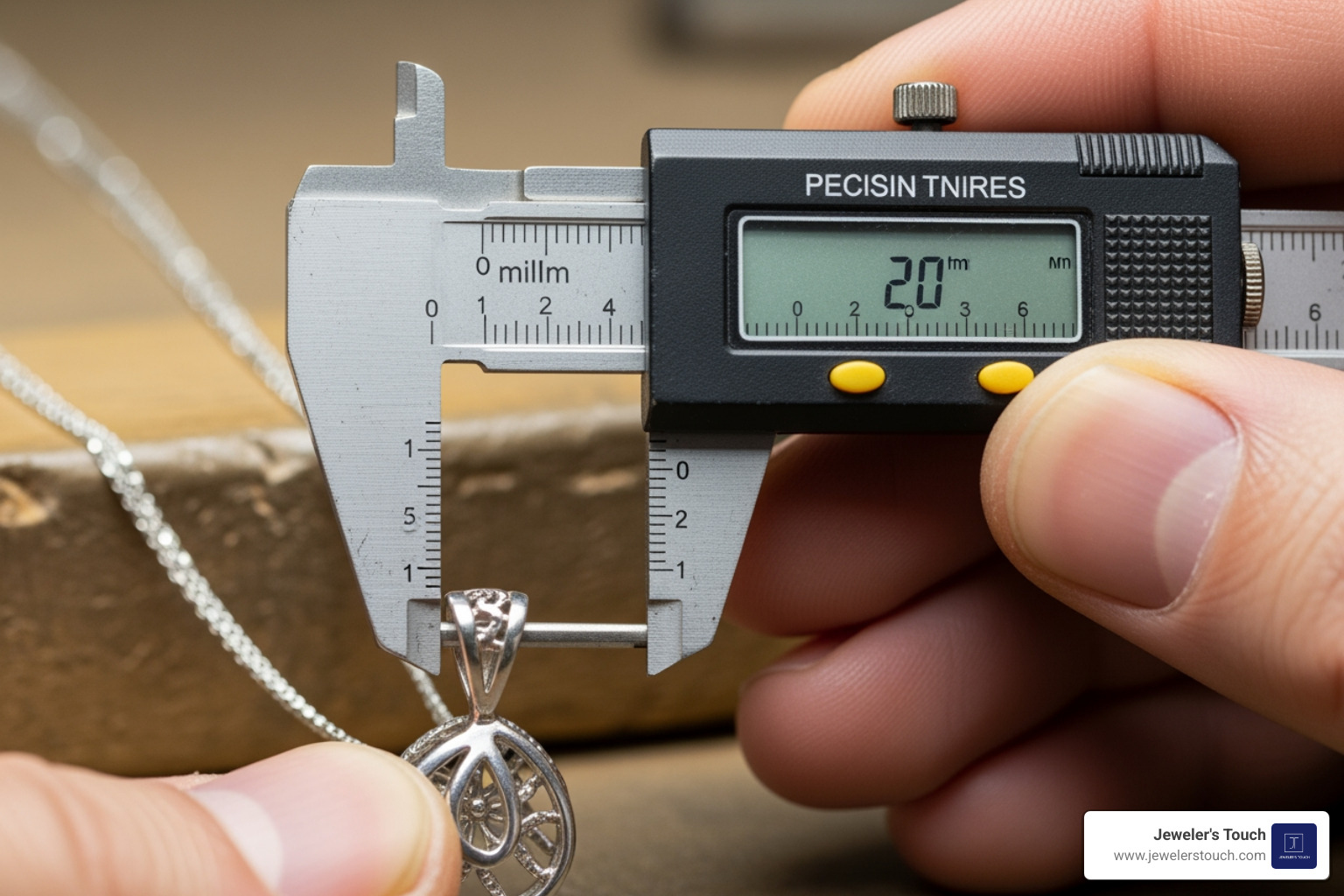
The 1.2mm Rule: For most daily-wear pendants, we recommend a chain thickness (gauge) of at least 1.2mm. Anything thinner than 1mm is considered "dainty" or "fashion-weight" and should only be used for the lightest of charms. If your pendant weighs more than 15 grams, you should be looking at 2.5mm or thicker.
Length Matters:
- 16-inch (Choker): Sits at the base of the throat. Best for small solitaires.
- 18-inch (Princess): The most common length, sitting just below the collarbone.
- 20-24 inch (Matinee/Opera): Best for larger pendants worn over clothing or for those who prefer a plunging look.
When looking for diamond pendants for sale, always check the bail size in the product description.
Matching the Best Chain for Pendant Weight and Bail Clearance
The "bail" is the loop at the top of the pendant that the chain slides through. It is the most common point of failure and frustration.
- Bail Diameter: Your chain's clasp (usually the widest part) must be able to fit through the bail. There is nothing more frustrating than buying a beautiful new chain only to realize the lobster clasp won't pass through the pendant's loop.
- Jump Rings: If your chain is too thick for the bail, don't try to force it. Our goldsmiths can often add a larger, laser-welded jump ring to your pendant to act as an adapter.
- Clasp Choice: For any pendant of value, we recommend a lobster claw clasp over a spring ring. Lobster clasps are sturdier, easier to handle, and much less likely to "spring open" accidentally.
Styling and Layering Your Pendant Necklaces
In May 2026, the trend of "more is more" is still going strong. Layering multiple pendants is a fantastic way to tell your personal story through jewelry. However, without a plan, your chains will end up in a tangled bird's nest.

The 2-Inch Rule: To prevent clashing and tangling, vary your chain lengths by at least two inches. For example, pair a 16-inch dainty cable chain with a 18-inch box chain and a 20-inch rope chain.
Metal Matching: While the "old rules" said you must never mix metals, modern style says otherwise! However, for a polished look, we recommend keeping the finish consistent. If you are mixing a 14K yellow gold pendant with a white gold chain, make sure both are high-polish. If you have sensitive skin, 316L stainless steel is a durable, hypoallergenic alternative that mimics the look of silver or white gold without the tarnish.
For more styling inspiration, explore our professional tips on Ways to Layer Real Diamond Necklace and Stylish Ways to Wear Your Natural Diamond Necklace Everyday.
Frequently Asked Questions about Pendant Chains
Which chain is strongest for a heavy pendant?
The strongest options are the Wheat (Espiga) chain and the Rope chain. Both use a multi-link interlocking system that provides incredible tensile strength. For maximum security, ensure the chain is at least 1.5mm to 2.5mm in gauge and features a lobster claw clasp.
Can I wear a pendant on a herringbone chain?
We strongly advise against it. The structure of a herringbone chain is flat and prone to kinking if bent at a sharp angle. A pendant creates a "V" shape that will eventually cause the links to overlap and break, leading to permanent damage.
How do I prevent my pendant from flipping?
Pendants usually flip because the chain is too light or the bail is too wide for the chain. A Box Chain is the best chain for pendant stability because its square edges provide a flat surface that helps keep the pendant facing forward. You can also look for "swivel bails" that allow the pendant to move independently of the chain's rotation.
Conclusion
The best chain for pendant wear is the one that offers the perfect marriage of security, durability, and aesthetic harmony. Whether you are looking for a classic cable chain for a daily diamond or a robust wheat chain for a family heirloom, the technical details, like bail size and link construction, matter just as much as the gold karat.
At Jeweler's Touch, we’ve been serving the Orange County, Brea, and surrounding areas since 1992. Our family-owned business is built on the expertise of our on-site GIA gemologists and master goldsmiths. We don't just sell jewelry; we help you maintain and protect it. If you're unsure which chain is right for your piece, bring your pendant into our showroom. We can measure your bail, weigh your pendant, and let you try on various styles to find the perfect match.
Ready to find your next centerpiece? Explore How to Find Diamond Pendants for Sale and visit us in Brea to see our full collection of high-quality gold and platinum chains.